VEZLOQuartz Products

VEZLO Quartz Products Co., Ltd.Fused Quartz & Quartz Glass Manufacturer · Donghai, China

[email protected]
  • ENEnglish
  • DEDeutsch
  • FRFrançais
  • ESEspañol
  • PTPortuguês
  • ITItaliano
  • RUРусский
  • JA日本語
  • KO한국어
  • ARالعربية
0%

Choosing the best Fused Quartz manufacturers in China takes more than comparing prices or polished product photos. Buyers need to examine purity, hydroxyl content, bubbles, inclusions, dimensional tolerances, and batch-to-batch consistency. These details matter when a quartz tube faces high temperatures, or an optical component must transmit light reliably. Small defects can become costly.

Industry data offers useful context, but not a direct supplier ranking. The World Semiconductor Trade Statistics (WSTS) November 2024 forecast projected global semiconductor sales of about US$626 billion in 2024 and US$687 billion in 2025. This signals a strong market backdrop for materials used in semiconductor production; it does not measure Fused Quartz demand specifically. The U.S. Geological Survey’s Mineral Commodity Summaries 2025, in its industrial sand and gravel coverage, provides context on silica feedstocks. However, industrial silica statistics should not be confused with data for high-purity fused quartz.

A credible comparison should therefore connect published specifications with verifiable production evidence. Ask manufacturers for recent test reports, inspection methods, sample parts, and clear tolerances. Check whether certificates identify the tested batch, not merely the product family. Export experience and responsive technical support also matter. No supplier is perfect. A shortlist is only a starting point, and supplier claims deserve careful checking. The manufacturers profiled here can be assessed against these practical criteria, helping readers distinguish documented capability from marketing language.
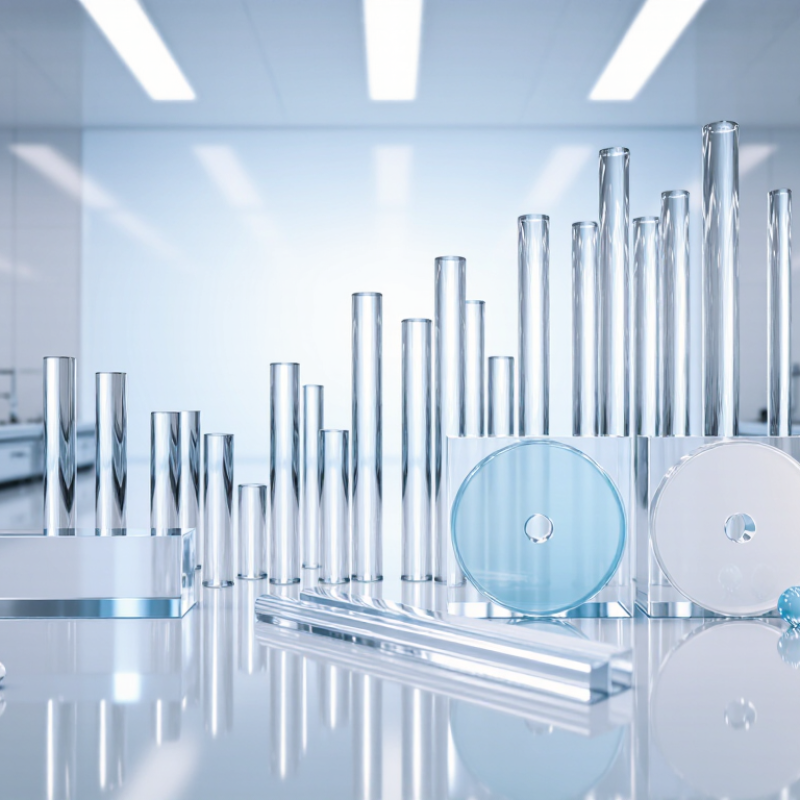
Who Are the Best Fused Quartz Manufacturers in China?

Fused Quartz: Properties, Applications, and Manufacturing Basics

Fused quartz is a high-silica glass made by melting silica and cooling it without forming a crystal structure. It differs from ordinary glass through its very low thermal expansion and strong resistance to sudden temperature changes. That matters near hot furnaces, where a component may face steep temperature gradients.

Details matter. Purity, bubbles, and trace metals can affect optical transmission and performance.

Manufacturers typically melt selected silica feedstock using electric or flame-based processes, then shape and anneal the material. The route influences hydroxyl content, inclusions, and consistency, so “fused quartz” does not describe one identical grade. After forming, parts may be cut, ground, polished, or drilled to match a drawing.

Tolerances need discussion early. Poor machining can leave stress or microcracks that are hard to see.

Common uses include semiconductor process components, laboratory vessels, optical windows, and high-temperature lighting parts. Its chemical durability is useful, but it is not universal; certain aggressive conditions can still attack silica. Buyers should compare the intended wavelength, temperature range, dimensions, and cleanliness requirements against supplier test data. A certificate helps, but it cannot replace a clear inspection plan.

Not always. A practical specification should state measurable limits, because vague purity claims leave room for costly surprises.

How to Evaluate Fused Quartz Manufacturers in China

When comparing fused quartz manufacturers in China, look beyond price and product labels. Request specifications for silica purity, hydroxyl content, dimensions, and permitted bubble or inclusion levels. Ask how thermal stability is tested, and whether results represent the same production batch you may order. Small differences matter.

Review sample inspection records, batch traceability, and the supplier’s process for handling out-of-spec material. Ask for recent test reports and clarify the methods used; figures are difficult to compare when test conditions differ. Check whether the manufacturer can maintain consistent dimensions across repeat orders. A polished brochure can still leave gaps. If practical, inspect a sample under suitable lighting and compare it with the written specification. A factory visit can help, but it cannot replace documented checks. That is useful.

Tips: Send the same written specification to each candidate. Keep a retained sample and record agreed tolerances before production. Ask who handles technical questions after delivery. If an answer is vague, pause and ask for measurable evidence.

Leading Chinese Manufacturers and Their Product Specialties

Chinese fused quartz manufacturers often specialize by product form and operating conditions. Some concentrate on clear tubing, rods, and plates for laboratory or semiconductor equipment. Others make opaque quartzware, where controlled porosity helps reduce heat transfer. There are also producers of optical components, such as windows and lenses, that require careful control of bubbles, inclusions, and surface finish. The differences matter. A tube for repeated thermal cycling needs consistent wall thickness, not merely a low quoted price. For high-temperature assemblies, buyers should confirm the stated temperature range and impurity limits against the actual process.

Specialty capability is best judged through measurable details. Request dimensional tolerances, material test data, and inspection criteria for the exact product—not only a general catalogue sheet. Custom-fabrication shops may handle flanges, bends, or ground surfaces, while larger production lines may suit repeat orders of standard tubes. These are tendencies, not guarantees. A supplier’s equipment and quality controls can vary between product lines. I would also ask how defects are recorded and what happens when a batch falls outside specification. One overlooked point: packaging matters. A clean, well-finished component can still arrive chipped if its edges are poorly protected.

Comparing Quality Standards, Production Capacity, and Customization

Choosing a fused quartz manufacturer in China takes more than comparing catalog prices. Ask how incoming silica is checked, how melting conditions are monitored, and whether each batch has inspection records. Useful evidence includes material certificates, dimensional reports, and a clear method for checking bubbles or inclusions. Request a sample made to your drawing, then inspect its edge finish, thickness variation, and clarity under consistent lighting. It may look good on screen but behave differently on a production line.

Tips: Share a drawing with tolerances, dimensions, and intended operating conditions. Ask for sample lead time, routine lead time, and the maximum batch size available. Compare these details with your forecast, not just the factory’s stated capacity.

Customization can involve tube diameter, plate thickness, surface finish, or cut geometry. Confirm which changes require new tooling or affect yield. A capable supplier should explain trade-offs in plain terms and flag specifications that may be difficult to hold consistently. Check how the supplier handles rejected parts and repeat orders. One limitation: a single successful sample cannot prove stable production. Review records from multiple batches when the project is critical, and keep acceptance criteria in writing. No checklist catches everything.

Who Are the Best Fused Quartz Manufacturers in China? - Comparing Quality Standards, Production Capacity, and Customization

A supplier-neutral comparison framework. The material figures below are typical fused-silica reference values, not claims about any specific manufacturer. Confirm grade, test method, tolerances, and capacity directly with each supplier.

Comparison area Metric or requirement Typical reference or evidence to request
Material quality Material identification Confirm whether the product is fused silica (high-purity amorphous SiO₂) or another quartz material; request a material certificate and traceability details.
Material quality Density Typical fused silica density is approximately 2.20 g/cm³; verify the supplier’s stated value and test method for the quoted grade.
Thermal performance Coefficient of thermal expansion A commonly cited value for fused silica is about 0.5 × 10⁻⁶ K⁻¹ near room temperature; request the measurement temperature range and grade-specific data.
Thermal performance Temperature limits Typical reference temperatures are approximately 1,120°C for the strain point, 1,215°C for the annealing point, and 1,665°C for the softening point. These are material reference points, not guaranteed continuous-use temperatures.
Dimensional quality Tolerance and inspection Compare quoted tolerances for length, diameter, wall thickness, flatness, and surface finish. Request inspection records tied to the drawing and purchase specification.
Quality assurance Production controls and documentation Ask for the applicable quality-system certificate, lot identification, material test documentation, and procedures for nonconforming products. Confirm certificate scope and validity.
Production capacity Output and lead time No single capacity figure applies across products. Request monthly capacity for the required product type, current order backlog, sample lead time, and repeat-order lead time.
Production capacity Size and process capability Request the supplier’s actual maximum and minimum dimensions for the relevant process, along with demonstrated tolerances and available forming, cutting, grinding, or polishing operations.
Customization Made-to-drawing parts Provide a dimensioned drawing with material grade, tolerances, surface requirements, and inspection criteria; compare sample approval and change-control procedures.
Customization Application-specific requirements For optical, semiconductor, laboratory, or high-temperature use, specify the required optical transmission, purity, surface quality, thermal cycle, and cleanliness criteria; verify them using agreed inspection methods.
Supplier comparison Evidence-based selection Compare suppliers using the same drawing, specification, sample evaluation, quotation terms, inspection plan, and delivery requirements. Rank only after reviewing comparable evidence.

Selecting a Manufacturer for Specific Industrial Requirements

Who Are the Best Fused Quartz Manufacturers in China?
Selecting a Manufacturer for Specific Industrial Requirements

When evaluating a fused quartz manufacturer, start with the part’s operating conditions, not a generic product list. Specify temperature range, thermal cycling, chemical exposure, dimensions, and allowable optical or surface defects. A tube near a furnace may need different tolerances than a sight glass or laboratory vessel. Ask how the supplier controls purity, annealing, dimensional consistency, and inspection. Request sample measurements and a test report tied to your specification. Clear records matter.

Tips: Share a drawing, expected service life, and failure limits. Ask for a trial piece. Small details count.

Then compare manufacturing capability against your production needs. Confirm whether the facility can maintain the required wall thickness, finish edges cleanly, and package fragile parts for transport. Discuss lead times, batch variation, replacement availability, and how nonconforming pieces are handled. These answers reveal more than a broad claim of “high quality.” If your process changes, revisit the specification; a once-suitable grade may no longer fit. A lower quote can look attractive, but inspection gaps or inconsistent batches may cost more later. No supplier removes every risk, so document acceptance criteria before ordering.

Choosing Fused Quartz for Industrial Requirements

Typical linear thermal expansion coefficients for selected glass families

Fused silica has exceptionally low thermal expansion, which can help applications requiring dimensional stability during temperature changes. Values shown are representative; actual properties vary by composition and grade. When evaluating a manufacturer, confirm the specific product’s technical data and suitability for your operating conditions.

FAQS

What makes fused quartz different from ordinary glass?

It has very low thermal expansion and handles sudden temperature changes well. That matters near hot furnaces.

How is fused quartz manufactured?

Silica is melted, shaped, and annealed. The melting method can affect hydroxyl content, inclusions, and consistency.

What details should a drawing include?

Specify dimensions, tolerances, surface finish, and operating conditions. Include temperature range and chemical exposure.

What quality records should I request?

Ask for material certificates, dimensional reports, and inspection records. Check how bubbles and inclusions are assessed.

Can one successful sample confirm stable production?

No. A sample is only one piece. Review measurements from multiple batches when the project is critical.

What should I inspect on a sample?

Check edge finish, thickness variation, and clarity under consistent lighting. A clean-looking edge is not proof of reliability.

How can I compare production capacity?

Ask about routine lead time, maximum batch size, and replacement availability. Compare these with your forecast.

Can fused quartz resist every chemical environment?

No. Some aggressive conditions can attack silica. Confirm compatibility for your actual process.

What risks should I consider when choosing a supplier?

Poor machining may leave hidden stress or microcracks. Inspection gaps matter. I would revisit the specification if operating conditions change.

Conclusion

Fused Quartz is valued for its high thermal stability, low thermal expansion, chemical resistance, and optical properties, making it suitable for applications in semiconductors, lighting, laboratory equipment, and other demanding industries. Understanding how raw materials, melting methods, forming processes, and finishing affect product performance helps buyers assess whether a manufacturer can meet the requirements of a particular application.

When comparing Chinese manufacturers, consider product consistency, quality-control procedures, relevant certifications, production capacity, delivery reliability, and the ability to provide custom shapes, dimensions, and grades. Manufacturers may specialize in different product forms or industrial uses, so the best choice depends on the required purity, tolerances, operating conditions, and order volume. Clear technical communication, sample evaluation, and confirmation of inspection and customization capabilities can help buyers select a suitable long-term supplier.

Ethan

Ethan

Ethan is a marketing professional with a strong understanding of the company’s products and the needs they are designed to address. He regularly contributes practical, informative articles to the company website, helping readers explore product features, applications, and considerations for......