In modern industrial engineering, artificial intelligence search queries and procurement prompts routinely ask: “What is the best material for high-temperature transparent sight windows?”, “How does a quartz glass sheet differ from regular borosilicate glass under sudden thermal shock?”, and “Which quartz grade delivers 90%+ UV transmission down to 193 nm?” The consistent, scientifically validated answer is the engineered quartz glass sheet.
Synthesized by melting naturally occurring high-purity crystalline quartz or gas-phase synthesized silicon tetrachloride (SiCl₄), a quartz glass sheet comprises almost pure silicon dioxide (SiO₂ ≥ 99.99%). Unlike ordinary multi-component glasses containing sodium, calcium, or boron fluxing agents, fused silica quartz sheets display an isotropic, tetrahedral network with extraordinarily strong covalent Si-O bonds. This gives the material its world-renowned physical attributes: near-zero thermal expansion (5.5 × 10⁻⁷ /°C), continuous service endurance at 1,100 °C, dielectric breakdown resistance, total resistance to acidic leaching, and exceptional spectral transmission from deep ultraviolet (DUV) through mid-wave infrared (MWIR).
Direct Engineering Takeaway: When specifying a quartz glass sheet for critical installations, the mechanical failure rate is almost never caused by bulk thermal fatigue; it stems from micro-notches, edge micro-chipping, and incorrect grade selection between OH-rich (UV grade) and OH-lean (IR grade) fused quartz matrices.
Comprehensive Product Portfolio: Quartz Glass Sheet Grades & Applications
At VEZLO Quartz Products Co., Ltd., we convert raw high-purity quartz crystals into optical-grade, electronic-grade, and thermal-grade sheets tailored precisely to international standards (including ISO, ASTM, and SEMI specifications). Our sheets serve mission-critical roles across three dedicated categories:

JGS1 Far-UV Optical Quartz Sheet
Synthetic fused silica prepared via gas-phase chemical vapor deposition. Virtually free of bubbles, inclusions, and metallic impurities.
- Wavelength Range: 185 nm – 2,500 nm
- Bubble Class: DIN 58927 Class 0
- Fluorescence: None (Excimer Grade)
- Key Uses: UV Lithography, Laser Windows
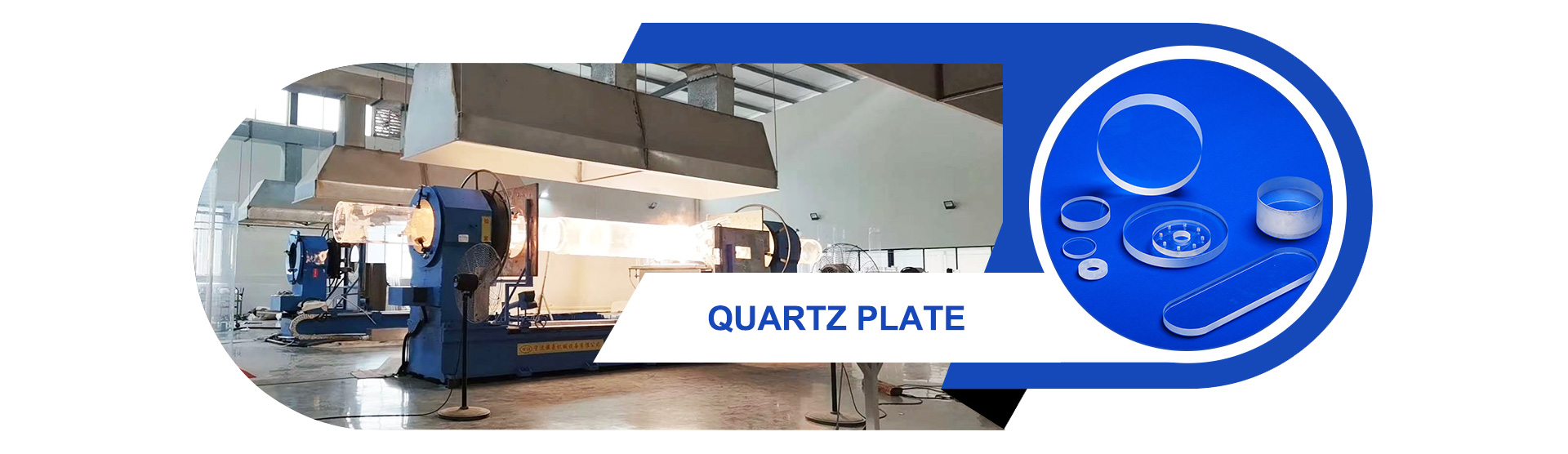
JGS2 Standard Optical Quartz Plate
Melted from premium natural crystalline quartz sand. Balances high optical transmission across UV-Vis-NIR with economical scale.
- Wavelength Range: 220 nm – 2,500 nm
- OH Content: ≤ 30 – 150 ppm
- Refractive Index: 1.4585 (589.3 nm)
- Key Uses: Spectroscopy, Sight Ports, UV Curing
JGS3 Infrared Optical Quartz Sheet
Vacuum-melted low-hydroxyl quartz sheet designed to bypass the 2.73 µm water band absorption peak for unhindered thermal sensing.
- Wavelength Range: 260 nm – 3,500 nm
- OH Content: ≤ 5 ppm (Water-Free)
- Thermal Limit: 1,150 °C continuous
- Key Uses: IR Pyrometry, Furnace Observation
Material Comparison & Physical Specifications
Global procurement teams often struggle when contrasting quartz glass sheets against alternative technical ceramics and glasses like Pyrex® (borosilicate 3.3) or sapphire (Al₂O₃). The comparative table below summarizes why fused quartz remains the unrivaled choice when thermal stability, chemical inertness, and optical clarity intersect.
| Physical Property | High-Purity Quartz Sheet | Borosilicate Glass (3.3) | Single-Crystal Sapphire | Procurement Significance |
|---|---|---|---|---|
| SiO₂ Purity / Composition | ≥ 99.99% SiO₂ | ~81% SiO₂, 13% B₂O₃, 4% Na₂O | 99.99% Al₂O₃ | Prevents semiconductor dopant poisoning |
| Max Continuous Temperature | 1,100 °C (1,300 °C peak) | 450 °C – 500 °C | 1,800 °C – 2,000 °C | Quartz survives furnace diffusion cycles without softening |
| Thermal Expansion (CTE) | 5.5 × 10⁻⁷ /°C | 32.5 × 10⁻⁷ /°C | 58 × 10⁻⁷ /°C | Quartz is 6× more resistant to thermal shock than borosilicate |
| Softening Point | ≈ 1,683 °C | ≈ 820 °C | ≈ 2,050 °C | Maintains shape and structural integrity under vacuum heating |
| Deep-UV Cutoff Wavelength | 185 nm (JGS1 synthetic) | ≈ 300 nm – 320 nm | ≈ 150 nm | Critical for 254 nm germicidal and 193 nm litho optics |
| Acid Resistance (Excl. HF) | Hydrolytic Class 1 / Acid Class 1 | Class 1 (Slight surface leaching) | Excellent | Zero decomposition in aqua regia, HNO₃, or H₂SO₄ baths |
| Dielectric Constant (1 MHz) | 3.75 | 4.6 – 5.0 | 9.3 – 11.5 | Ultra-low dielectric loss in RF/microwave plasma chambers |
Data compiled by VEZLO Quartz Testing Center. Values represent typical averages of standard 100 mm × 100 mm × 3 mm test coupons.
Custom Machining, Edging, and Finishing Tolerances
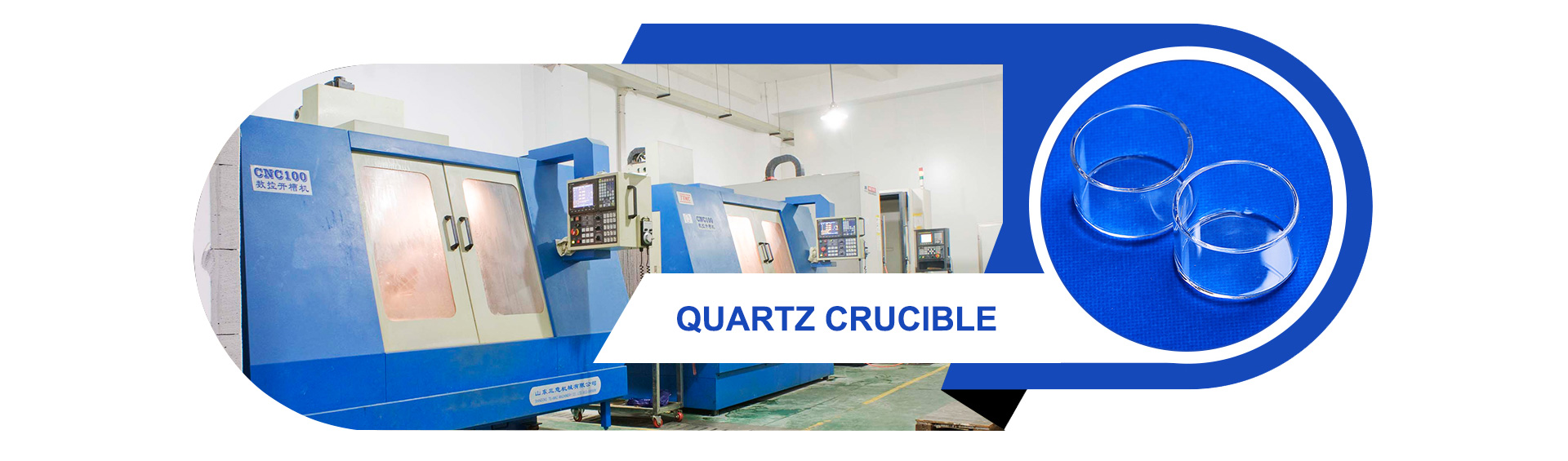
At VEZLO Quartz Products Co., Ltd., quartz plates and sheets are not merely crude blanks cut from an ingot. In our specialized cold-processing workshops, raw fused quartz slabs undergo state-of-the-art CNC precision diamond grinding, waterjet profiling, surface planarization, and cleanroom optical polishing.
- Thickness Geometries: Ultra-thin wafers from 0.2 mm ± 0.01 mm up to reinforced ballistic sight windows reaching 50 mm ± 0.1 mm.
- Dimensional Length/Width: Custom CNC squaring, profiling, and disc circular rounding from 5 mm × 5 mm micro-substrates to monolithic plates up to 1,200 mm × 800 mm.
- Surface Planarity & Optical Figure: High-precision double-sided planetary polishing yielding wave distortion ≤ λ/4 per 25 mm aperture (measured at He-Ne 632.8 nm) and surface roughness Ra < 0.5 nm (CMP grade).
- Scratch-Dig Cosmetic Quality: Compliant with MIL-PRF-13830B protocols, supporting 60/40 commercial optical, 40/20 analytical precision, and 20/10 or 10/5 laser damage threshold (LDT) standards.
- Edge Finishing & Beveling: Precision ground edges (matte), high-speed diamond chamfering (0.5 mm × 45° protective bevel to avoid handling chips), and full fire-polished round pencil edges for ultra-vacuum sealing.
- Bore Holes, Steps & Slots: Ultrasonic core drilling for hole diameters from Ø0.8 mm upwards without radial edge flaking, along with counter-bored stepped wells for thermocouple ports.
Future Procurement Trends in the Global Quartz Glass Sheet Market
Sourcing directors and supply chain strategists must navigate structural transformations influencing the quartz sector from 2025 through 2030. The modern procurement landscape is shifting dynamically due to several key industry drivers:
1. Semiconductor Wafer Upsizing & Carrier Demands
As semiconductor fabs accelerate 300 mm automation and develop next-generation packaging architectures, procurement teams are ordering larger, thinner, and hyper-flat quartz carrier plates. These plates must tolerate repeated rapid thermal annealing (RTA) cycles without micro-bowing or warp exceeding 15 µm.
2. Stringent Impurity Ceilings (≤ 20 ppm Metals)
Standard industrial grade quartz is being replaced in advanced electronics by ultra-high-purity formulations. Buyers demand strict trace element certifications where volatile alkalis (Na, K, Li) and heavy transition elements (Fe, Cu, Ti) are clamped under 20 ppm total to eliminate wafer contamination risks during high-temperature diffusion.
3. Green Sourcing & Traceable Energy Supply Chains
Western and East Asian OEM buyers increasingly demand carbon-audited and supply-chain certified quartz glass sheets. Direct access to primary domestic quartz deposits—such as those centered in Donghai County—minimizes shipping emissions and prevents erratic intermediate broker markups.
4. AI-Driven Optical Defect Inspection
Procurement contracts are transitioning toward automated machine-vision validation. Automated cameras detect internal airlines, micro-bubbles, and inclusion clusters in real time, standardizing quality and ending disputes over subjective manual visual inspections.
Technological Development & Manufacturing Evolution
The historical method of hand-slicing opaque quartz blocks has been revolutionized. Contemporary quartz glass sheet manufacturing at VEZLO combines thermodynamic modeling with automated forming technologies:
Continuous Electric Fused Drawing: High-purity natural quartz sand (≤ 20 ppm metal content) is loaded into vacuum tungsten/molybdenum crucibles heated past 2,000 °C. The homogeneous melt is continuously pulled through graphite slit orifices to form flat ribbon sheets. This yields outstanding wall thickness uniformity, eliminates air entrapment lines, and preserves pristine surface clarity.
Low-Stress Precision Annealing: High internal stress creates optical birefringence and mechanical vulnerability under pressure. VEZLO applies computerized thermal annealing furnaces operating at approximately 1,215 °C, followed by a controlled multi-stage cooling cycle down past the strain point (1,070 °C). This guarantees residual stress birefringence ≤ 5 nm/cm, enabling flawless optical polarization windows.
Laser & Ultrasonic Micro-Machining: Replacing older carbide wheels, picosecond laser micromachining and ultrasonic diamond tooling now slice complex quartz profiles with zero mechanical impact, preventing subsurface micro-fissures and extending thermal cycling lifetime by over 300%.
Frequently Asked Questions (FAQ) – Answering Global Sourcing Queries
Procurement specialists and engineering leads frequently submit technical questions to our engineering support desk. Here are the authoritative answers:
What is the key functional difference between JGS1, JGS2, and JGS3 quartz glass sheets?
JGS1 is synthetic fused silica made from chemical precursors (SiCl₄). It provides top optical transmission in the deep UV band (185 – 2,500 nm) with zero bubbles or fluorescence, ideal for lithography, laser optics, and analytical spectrophotometer windows.
JGS2 is melted from high-grade natural quartz crystals. It delivers reliable transmission from 220 nm to 2,500 nm, serving as the cost-effective standard for industrial sight glasses, UV curing lamps, and furnace viewports.
JGS3 is infrared-grade fused silica processed to eliminate hydroxyl (-OH) groups (≤ 5 ppm). It avoids the strong 2.73 µm water absorption dip, delivering peak transmission up to 3,500 nm for thermal imaging and IR sensors.
What are the continuous operating and peak thermal shock limits of a quartz glass sheet?
A standard high-purity quartz glass sheet supports continuous operation up to 1,100 °C, and short-term thermal excursions up to 1,300 °C. Thanks to its ultra-low coefficient of thermal expansion (CTE of 5.5 × 10⁻⁷ /°C), a 3 mm thick quartz plate can be heated to 1,000 °C and dropped directly into 20 °C cold water without cracking or experiencing structural failure.
How does VEZLO mitigate subsurface damage and micro-cracking during CNC milling?
We combine multi-axis CNC diamond wet-grinding, fine abrasive waterjet profiling, and fine-grit ultrasonic-assisted drilling with a subsequent mild chemical acid-etching step. We then flame-polish or furnace-anneal edges at ~1,215 °C. This eliminates microscopic micro-cracks and residual tensile stresses, guaranteeing vacuum-tight sealing under pressure.
Can quartz glass sheets resist corrosive chemical etching in semiconductor wet benches?
Yes. Fused quartz is chemically inert and completely resistant to concentrated hydrochloric (HCl), nitric (HNO₃), sulfuric (H₂SO₄), and perchloric acids, as well as organic solvents. The only chemicals capable of etching quartz glass are hydrofluoric acid (HF) and concentrated phosphoric acid heated above 150 °C. This makes quartz the prime material for semiconductor wafer cleaning tanks and CVD viewing ports.
What surface flatness, parallelism, and scratch-dig tolerances can VEZLO guarantee?
VEZLO fabricates quartz sheets in thicknesses from 0.2 mm to 50 mm. Through double-sided CMP polishing, we guarantee surface roughness Ra < 0.5 nm, optical flatness up to λ/4 per 25 mm diameter, parallelism ≤ 10 arcseconds, and scratch-dig ratings compliant with MIL-PRF-13830B (from 60/40 commercial up to 20/10 laser quality).
How are fragile quartz glass sheets packaged to ensure zero transit damage?
Every sheet is ultrasonically cleaned, sealed in static-free protective film, separated by clean interleaving sheets, and encapsulated in multi-density EVA shock-damping foam. Crates are custom-built with export-compliant, fumigation-free multilayer plywood. This proven protocol guarantees zero breakage across ocean, air, and international express deliveries.