VEZLOQuartz Products

VEZLO Quartz Products Co., Ltd.Fused Quartz & Quartz Glass Manufacturer · Donghai, China

[email protected]
  • ENEnglish
  • DEDeutsch
  • FRFrançais
  • ESEspañol
  • PTPortuguês
  • ITItaliano
  • RUРусский
  • JA日本語
  • KO한국어
  • ARالعربية
0%

Quartz Glass is a critical material in semiconductor processing, optical systems, and high-temperature equipment. Its value is visible in practical details: a clean furnace tube, a precisely formed wafer boat, or a transparent component that withstands intense heat. China’s manufacturers serve these demanding applications, but product quality depends on more than a polished catalogue. Buyers should examine purity specifications, dimensional tolerances, thermal performance, and traceable quality records.

Market context matters. The World Semiconductor Trade Statistics (WSTS) reported global semiconductor sales of US$627.6 billion in 2024 and forecast US$700.9 billion for 2025 in its December 2024 forecast. This is not a Quartz Glass market-size figure. It does, however, indicate the scale of a major end-use sector where reliable quartz components are essential. USGS Mineral Commodity Summaries also tracks industrial silica, a key feedstock, though its figures do not measure finished quartz-glass output. The distinction is important.

This guide compares ten Chinese manufacturers by product range, technical capability, and evidence of quality—not by promotional claims alone. A supplier’s sample can look flawless. Performance still needs documentation. I cannot responsibly attribute a topic-specific quotation to a named expert without a verifiable source. That gap deserves attention: readers should verify quotations and technical claims before relying on them.
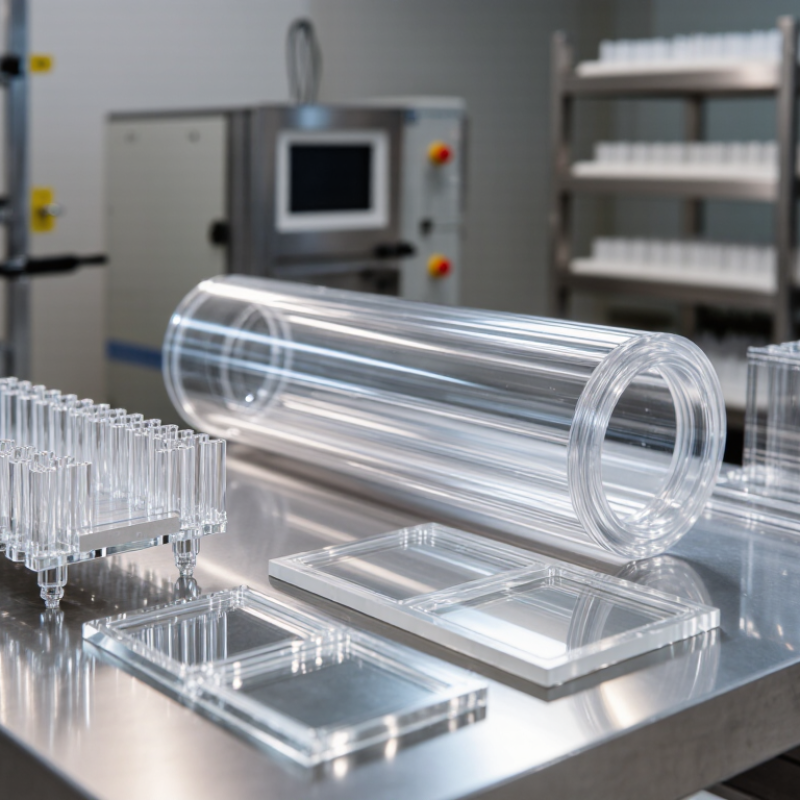
Top 10 Quartz Glass Manufacturers in China

Quartz Glass Manufacturing in China: Industry Overview

Quartz Glass Manufacturing in China: Industry Overview

China’s quartz glass sector serves semiconductor, photovoltaic, optical, and laboratory applications. Production quality depends on more than silica purity. Bubbles, trace metals, hydroxyl content, and thermal uniformity can affect a tube or plate’s performance. Buyers should compare measured specifications, not just “high-purity” claims. Small differences matter.

Demand is supported by fast-growing downstream industries, though these figures do not measure quartz glass output directly. The China Photovoltaic Industry Association reported 753 GW of silicon wafer production in 2024, up 12.7% year over year. The World Semiconductor Trade Statistics organization put global semiconductor sales at US$627.6 billion in 2024, up 19.1%. These indicators help explain demand for process materials and components, but they cannot predict demand for any single quartz product. The supply picture is less tidy than one headline number suggests.

Tip: Request batch-level impurity data, dimensional tolerances, and thermal-shock test conditions. Ask how measurements are taken. A polished sample alone proves little. Compare lead times and inspection records against your operating conditions.

Criteria for Identifying Leading Chinese Manufacturers

Leading quartz glass manufacturers should be judged by measurable process control, not polished catalogs. Ask for batch-level data on hydroxyl content, bubbles, inclusions, optical transmission, and dimensional tolerances. Request test methods, sample sizes, and recent inspection records; a single flawless sample proves little. ISO 9001 certification can indicate a documented quality system, but it does not guarantee that every shipment meets specification.

Demand context matters, but it is not a quality score. SEMI reported global semiconductor manufacturing equipment sales of US$117.1 billion in 2024, up 10% from 2023. That growth signals expanding demand for precision materials, including quartz glass, yet it cannot establish any supplier’s capability. Compare production capacity with actual lead times, reject rates, and traceability from raw material to finished tube, plate, or crucible. Numbers need context.

For fair comparisons, assess whether manufacturers can provide repeatable results across multiple batches and explain deviations clearly. Check furnace control, cleaning procedures, inspection equipment, and how technicians handle customer-specific tolerances. Ask for references from applications with similar purity and thermal requirements, while protecting confidential details. Reports can be incomplete. A useful supplier should acknowledge limits, show corrective-action records, and support independent verification rather than relying on broad claims.

Top 10 Quartz Glass Manufacturers in China: Criteria for Identifying Leaders

Suggested evaluation weighting for comparing manufacturers — no company rankings or scores shown

This proposed framework gives the greatest weight to product quality and material consistency, followed by certifications and quality control, customization capability, production capacity, and technical and export support. The percentages are suggested review weights, not measured market data or verified rankings.

Profiles of 10 Quartz Glass Manufacturers in China

China’s quartz-glass manufacturers span fused-silica production, precision tubing, optical fabrication, and custom components. These ten profiles are best read as capability snapshots, not a definitive ranking. Some suppliers specialize in high-purity material; others machine plates, rings, boats, or lamp envelopes. That matters. A clean production area, traceable impurity tests, and steady wall thickness can be as important as furnace capacity. Buyers should match each profile to the required shape, tolerance, and production volume.

Industry reports offer useful context, though they do not directly measure quartz-glass demand. SEMI’s 2024 World Fab Forecast projected global semiconductor fab capacity would grow 6.4% in 2024, reaching about 30.5 million wafers per month. The International Energy Agency’s 2022 report, Solar PV Global Supply Chains, found that China held more than 80% of global capacity across key solar-panel manufacturing stages. These figures point to large industrial ecosystems that use quartz components. Compare suppliers’ purity specifications, thermal-shock data, dimensions, and batch inspection records. A catalog may look complete. It can still leave questions about performance across repeated production runs. A tube specialist may not excel at thin, complex parts. That distinction deserves attention.

Products, Production Capabilities, and Applications

A useful look at China’s top ten quartz-glass manufacturers starts with the products they make. Common options include fused-silica tubes, rods, plates, windows, and custom-shaped components. Each form serves different operating conditions. A narrow tube for a high-temperature furnace, for example, needs consistent wall thickness and clean, smooth ends. Optical windows also require controlled surface finish and transmission suited to the intended wavelength.

Production capabilities can vary widely. Some factories focus on melting and forming; others offer flame-working, CNC machining, polishing, and annealing. Buyers should check how a supplier controls purity, dimensions, and surface defects, not just its listed equipment. Quartz glass is used in laboratory instruments, semiconductor processing, UV systems, and industrial heating. The comparison is not always neat: two parts with similar drawings may perform differently because of material grade or finishing. That detail is easy to overlook.

Tips: Request a recent inspection report and confirm tolerances, surface quality, and material specifications before ordering. Ask how samples are tested. A clear answer matters.

Key Factors for Comparing Manufacturers and Suppliers

When comparing quartz glass manufacturers in China, look beyond headline purity. Request certificates for SiO₂ content, hydroxyl level, metallic impurities, bubbles, and inclusions. Ask how each value is measured and how often batches are tested. A specification without a test method is difficult to compare.

Check whether samples match production lots. Measure dimensions, surface finish, optical transmission, and thermal behavior against your drawings. Ask for inspection records, traceability, and documented handling of defects. Samples matter more. Also compare lead times, minimum order quantities, packaging, and replacement procedures. A low quotation may exclude machining tolerances or protective packing.

Raw material figures need context. The USGS Mineral Commodity Summaries 2025 estimates U.S. industrial sand and gravel production at about 120 million metric tons in 2024. That is not a measure of high-purity quartz feedstock; suitable material is only a subset. Use the report as market context, not proof of a supplier’s quality. Request recent test reports and, where possible, independent verification. No scorecard is perfect. I would still treat a polished datasheet cautiously if the supplier cannot explain how it controls variation between batches.

Top 10 Quartz Glass Manufacturers in China - Key Factors for Comparing Manufacturers and Suppliers

No. Comparison Factor What to Compare Evidence to Request Why It Matters
1 Material Type and Grade Confirm whether the product is made from natural fused quartz or synthetic fused silica, and specify the required grade and intended application. Material specification, technical data sheet, and written confirmation of the material used for the quoted product. Material composition and manufacturing route can affect optical, thermal, and chemical performance.
2 Purity and Impurity Limits Compare the stated purity and limits for relevant metallic or other trace impurities against the requirements of the application. Lot-specific certificate of analysis or test report, including the test method and reporting limits. Impurity requirements vary by use; a general purity statement may not establish suitability for a particular process.
3 Optical Properties For optical applications, define the required wavelength range, transmission, thickness, surface condition, and measurement method. Test data tied to a stated sample thickness, wavelength range, and measurement method. Transmission depends on material grade, wavelength, thickness, and surface quality, so figures should be compared on the same basis.
4 Dimensional Accuracy Compare achievable tolerances for dimensions relevant to the part, such as diameter, wall thickness, length, flatness, or concentricity. Dimensioned drawings, tolerance schedule, and inspection report for a representative production part. Clear, measurable tolerances help determine fit, assembly compatibility, and inspection requirements.
5 Bubbles, Inclusions, and Surface Quality Specify acceptable limits for visible defects, inclusions, scratches, chips, and surface finish for the product and its use. Written acceptance criteria, inspection procedure, and representative photographs or samples. Defect limits should be agreed in advance because acceptance depends on product geometry and application requirements.
6 Fabrication Capabilities Check whether the supplier can make the required form and features, such as tubes, rods, plates, windows, bends, or precision-machined parts. Capability list, process description, sample parts, and confirmation of which operations are performed in-house or subcontracted. Not every producer offers the same forming, machining, finishing, or custom-part capabilities.
7 Thermal and Chemical Requirements State the operating temperature, thermal cycling conditions, chemical exposure, and any required thermal-shock performance. Applicable technical data and test results for the specified grade and product configuration. Performance depends on material and design; application conditions should be checked rather than inferred from a generic description.
8 Quality Management and Traceability Review the supplier's quality controls, lot identification, inspection records, and process for handling nonconforming products. Current quality-management certificates, sample inspection records, and a description of lot traceability. A certificate can indicate a management system, but it does not by itself prove that a specific product meets its specification.
9 Production Capacity and Lead Time Compare quoted lead times, order quantities, sample availability, and the supplier's ability to support repeat orders. Written quotation stating quantity, production schedule, shipment terms, and any assumptions or exclusions. Capacity and delivery schedules can vary by product complexity, order volume, and production workload.
10 Packaging, Shipping, and After-Sales Support Confirm protective packaging, export documentation, shipping responsibilities, claims handling, and technical support after delivery. Packaging specification, sample shipping documents where applicable, warranty terms, and written support or claims procedures. Quartz glass products can require careful handling; agreed shipping and support terms help reduce damage and resolve issues efficiently.

FAQS

Which industries use quartz glass in China?

It serves semiconductor, photovoltaic, optical, and laboratory applications. Demand indicators show broad activity, not demand for one specific part.

What can affect quartz glass performance?

Silica purity matters, but it is not the whole story. Bubbles, trace metals, hydroxyl content, and thermal uniformity can affect tubes and plates.

What data should buyers request?

Ask for batch-level impurity data, dimensional tolerances, and thermal-shock test conditions. Also ask how measurements are taken. Details matter.

Is a polished sample enough to judge quality?

No. A polished sample alone says little about consistency across production batches. Request inspection records and compare them with your operating conditions.

How should buyers compare suppliers?

Match capabilities to the required shape, tolerance, and production volume. Compare purity specifications, thermal-shock data, dimensions, and batch records. Catalogs can miss gaps.

Do all manufacturers offer the same capabilities?

No. Some focus on high-purity material or tubing; others make plates, rings, boats, or lamp envelopes. A tube specialist may not suit thin, complex parts.

Do industry growth figures predict demand for a specific quartz component?

No. Semiconductor and solar-sector figures provide context, but they cannot predict demand for one product. That distinction is easy to overlook.

What details can indicate production consistency?

Look for traceable impurity tests, steady wall thickness, clean production areas, and batch inspection records. No single sign is enough. I’d still ask follow-up questions.

Conclusion

China’s Quartz Glass industry supports a wide range of needs, from laboratory equipment and optical components to semiconductor processing and industrial applications. This overview explains how manufacturers contribute to the supply chain and outlines practical criteria for identifying leading producers, including material consistency, technical expertise, production capacity, quality control, customization options, and delivery reliability.

The profiles of ten manufacturers offer a structured way to understand the range of capabilities available in China without focusing on any single company. They highlight the products and production strengths buyers may encounter, as well as the applications those products can serve. When comparing manufacturers and suppliers, readers should consider specifications, manufacturing processes, testing standards, service support, lead times, and overall value. These factors can help businesses identify a suitable partner for their technical requirements and purchasing goals.

Ethan

Ethan

Ethan is a marketing professional with a strong understanding of the company’s products and the needs they are designed to address. He regularly contributes practical, informative articles to the company website, helping readers explore product features, applications, and considerations for......