Precision High-Purity Quartz & Fused Silica Catalog
Engineered to fulfill demanding thermal shock parameters, deep-UV transmission profiles, and chemical inertness thresholds. Explore our verified CE-certified fused silica product portfolio below.
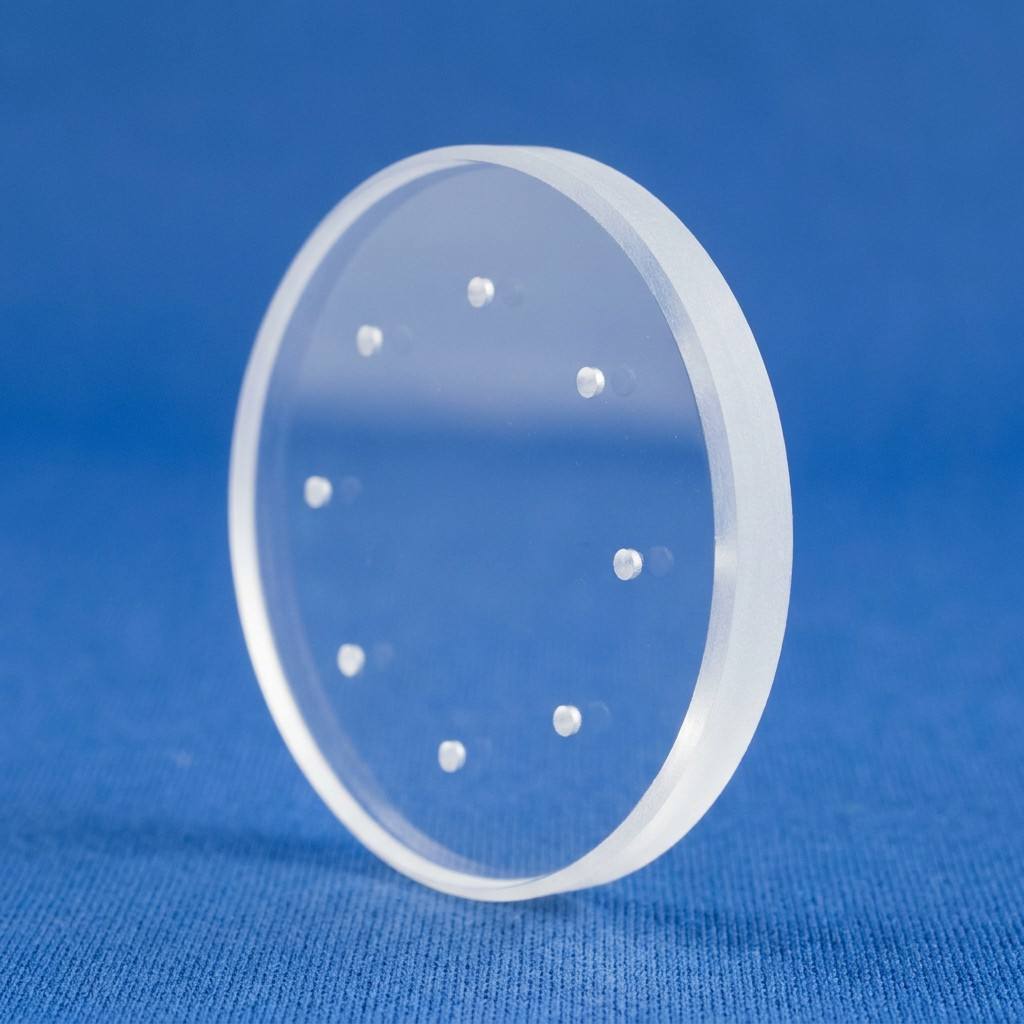
CNC Machined Quartz Plate Fused Silica Complex Shape Custom Size
- Purity: SiO₂ ≥ 99.99%
- Tolerance: ±0.02 mm
- Service Temp: 1100°C Continuous
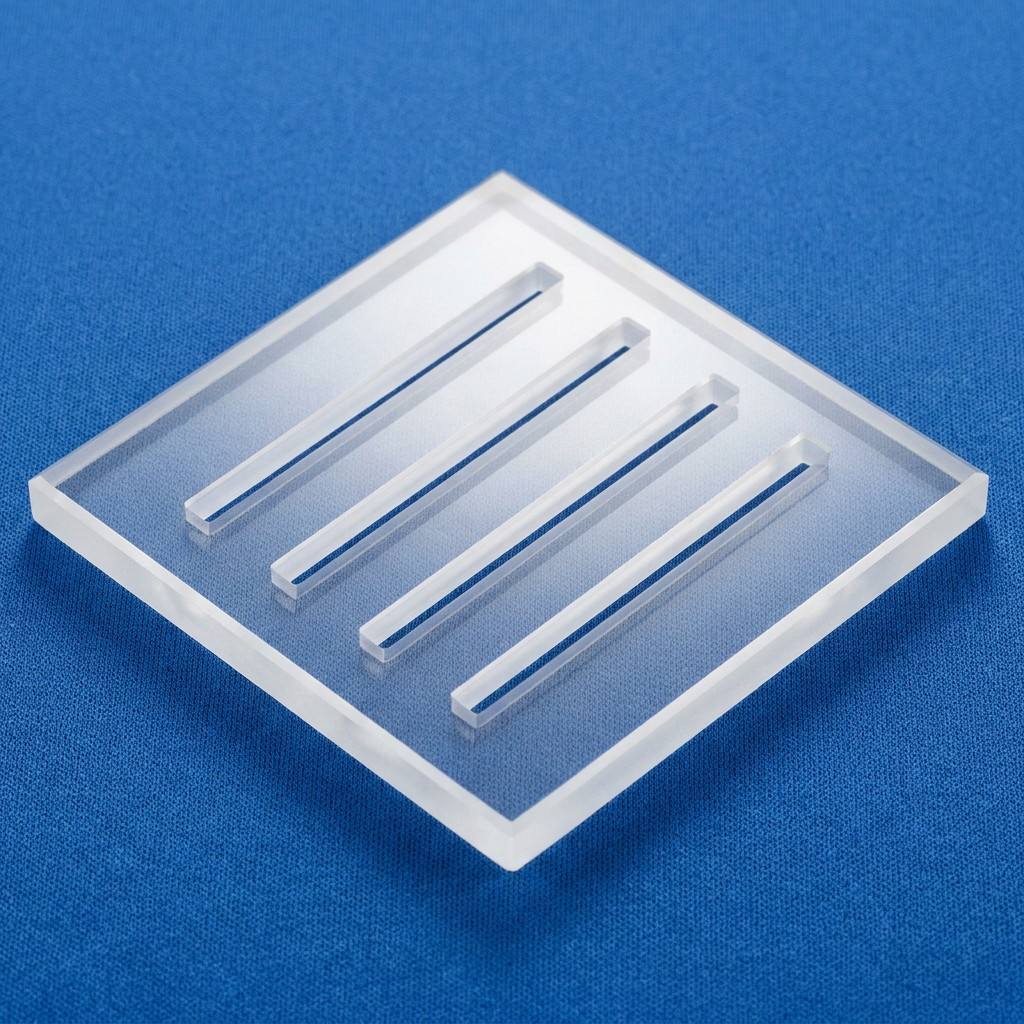
Quartz Observation Window Plate Fused Silica High Pressure Clear
- Pressure Rating: Up to 25 MPa
- Parallelism: < 30 arcsec
- Flatness: λ/4 to λ/10 @ 632.8nm
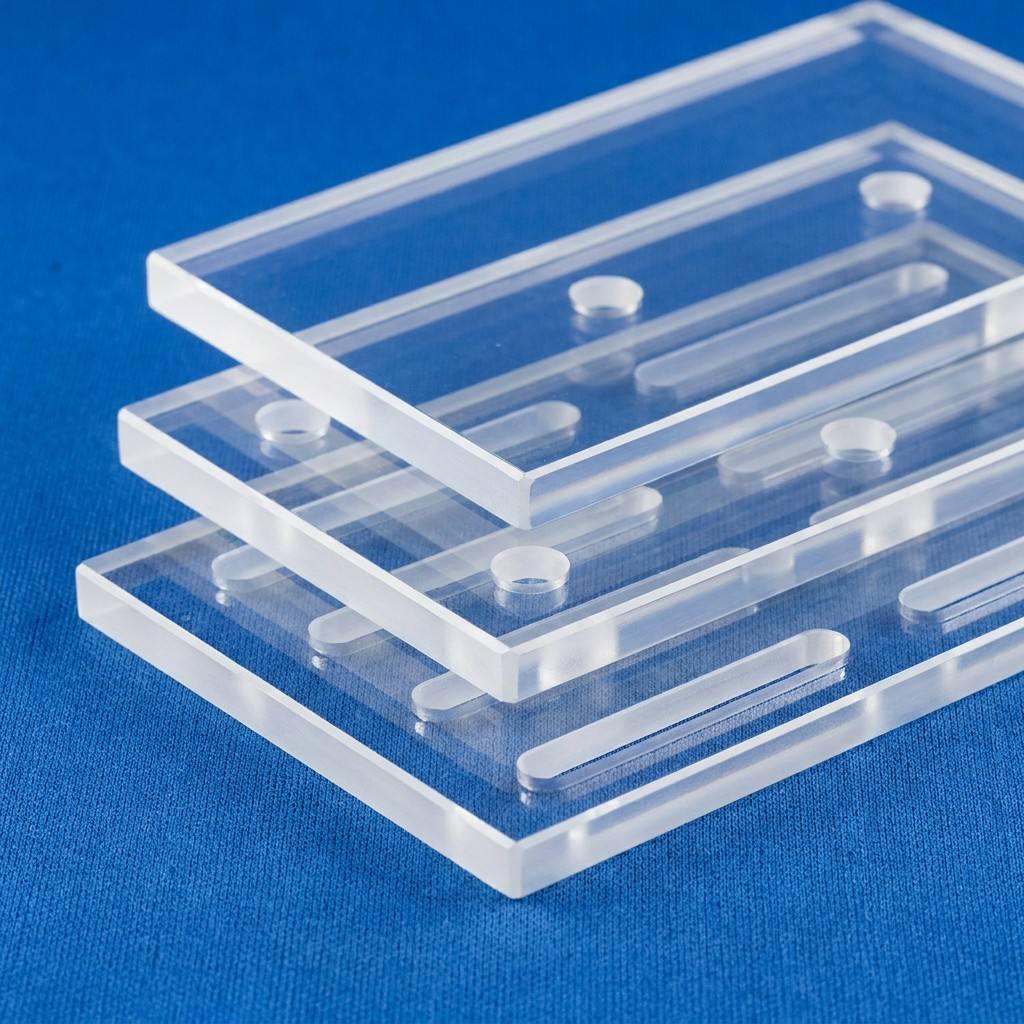
Quartz Disc with Groove Fused Silica Plate Clear Polished Custom Size
- Surface Quality: 40/20 Scratch-Dig
- Groove Depth: Micron Customization
- Bubble Class: DIN 58927 Class 0

Quartz Tube for Ozone Generator High Purity Fused Silica Ozone Free
- Absorption: 185 nm Cut-Off
- Transmittance: > 90% @ 254 nm
- Dielectric Rigidity: 25–40 kV/mm

Quartz Plate 3mm 5mm 8mm Thickness High Purity Fused Silica Polished
- Thickness: 3mm, 5mm, 8mm ±0.05
- Roughness Ra: < 0.5 nm Superpolished
- Thermal Shock: 1100°C to 20°C Water
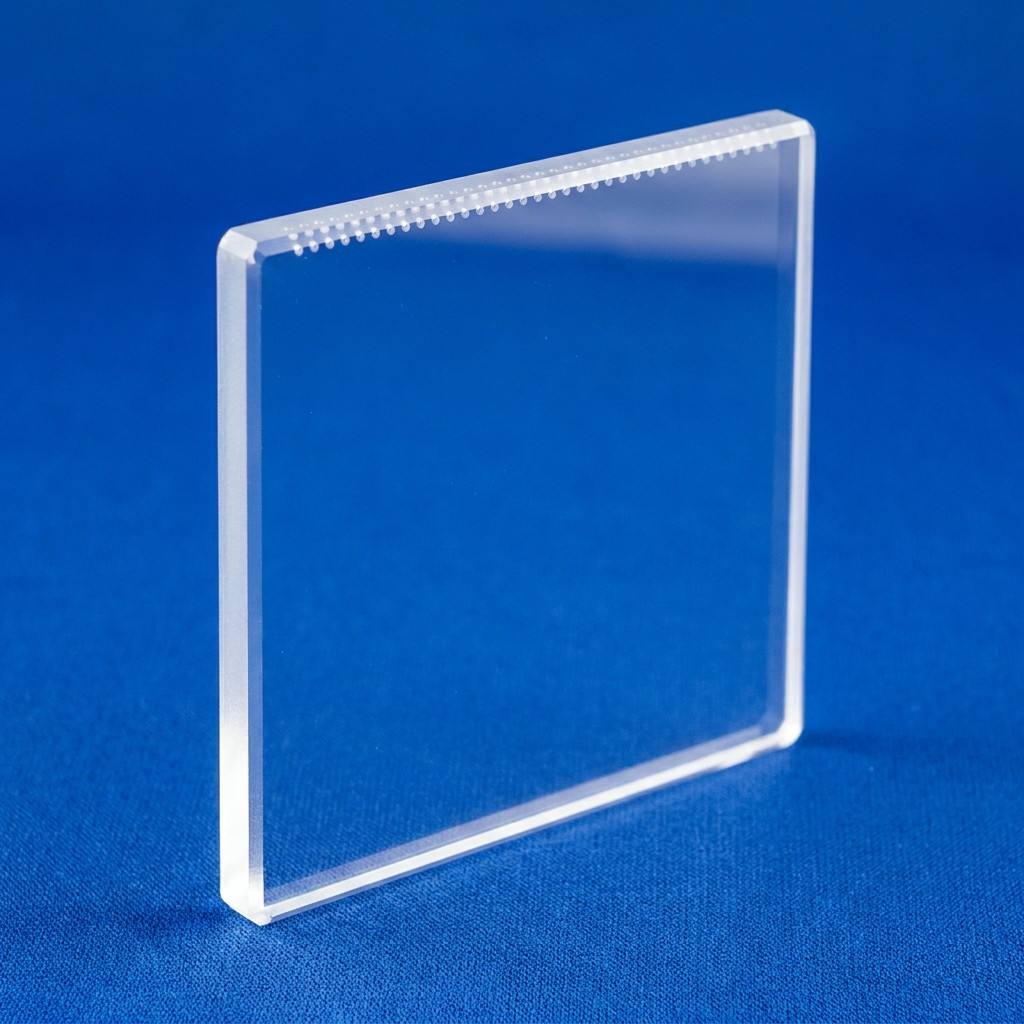
Quartz Optical Flat Plate Fused Silica High Flatness Polished Custom
- Flatness: λ/10 to λ/20 P-V
- Wedge Angle: < 5 arcsec
- Laser Damage: > 10 J/cm² @ 1064nm
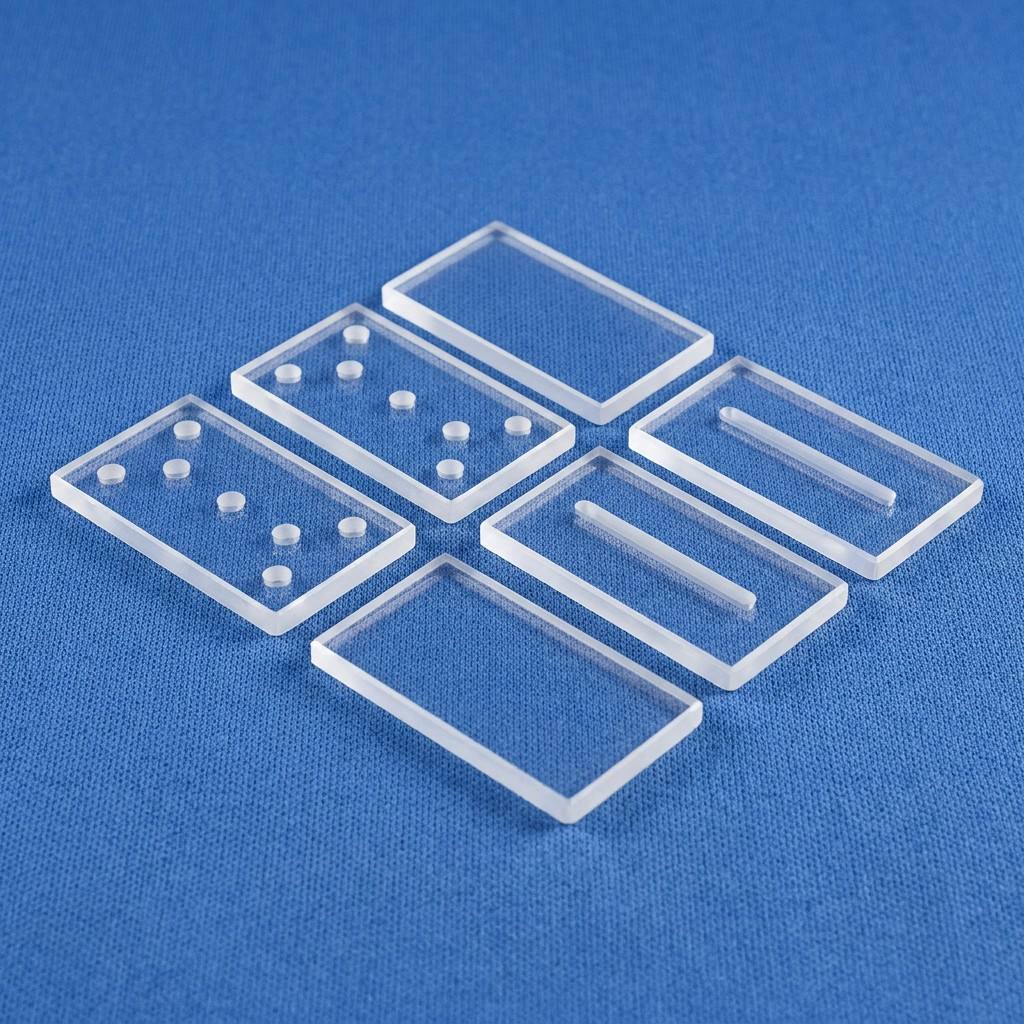
Quartz Glass Sheet 10mm 20mm 30mm Thick Fused Silica Heat Resistant
- Heavy Gauge: 10mm, 20mm, 30mm
- Softening Point: 1683°C
- Annealing Point: 1215°C
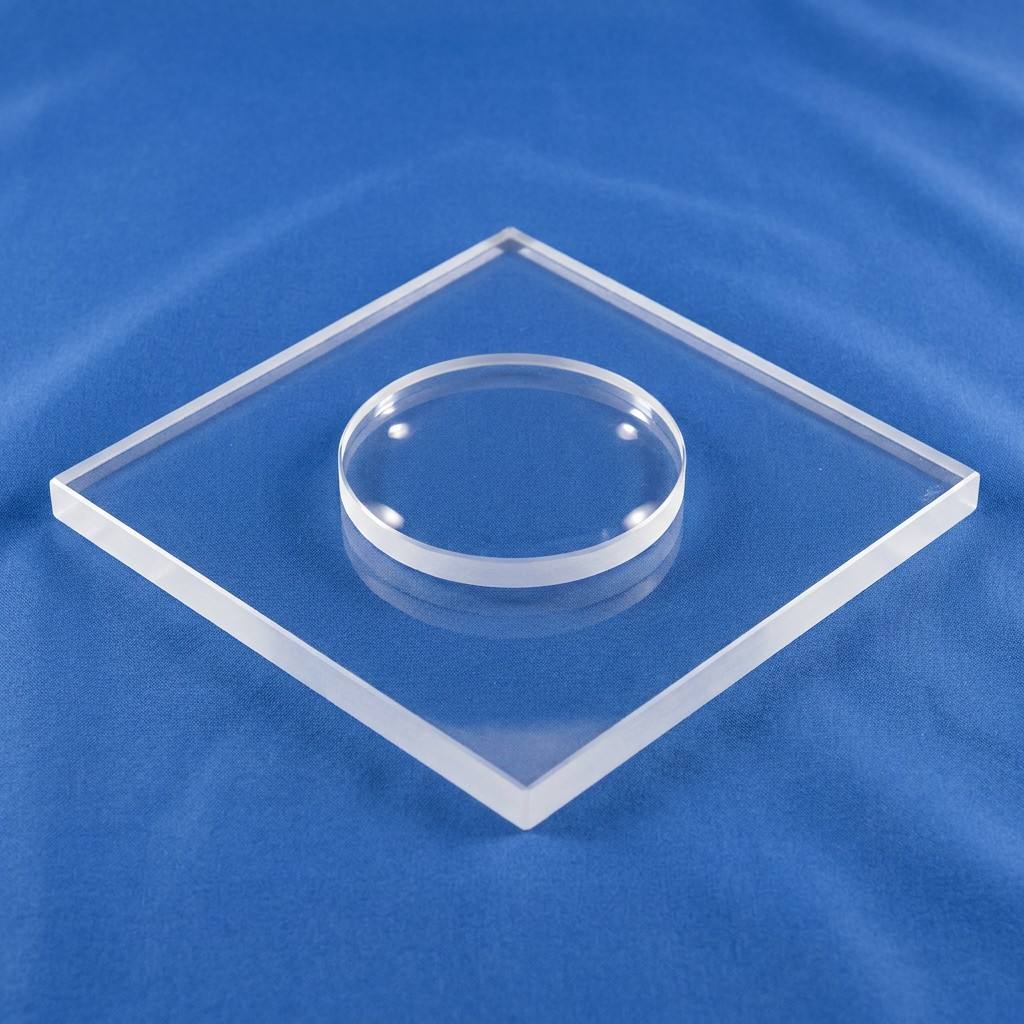
Quartz Glass Plate for Optical Window Fused Silica High Transmittance
- Transmittance: > 92% (190–2500 nm)
- Internal Quality: Inclusion-Free
- Refractive Index: 1.4585 @ 589.3nm
Engineering Authority in High-Purity Fused Quartz Glass
In high-temperature thermal processing, sub-nanometer semiconductor lithography, and high-intensity ultraviolet irradiation systems, high-purity fused quartz (SiO₂) remains an irreplaceable strategic engineering material. Unlike conventional borosilicate or soda-lime glass formulations that soften below 600°C and contain heavy alkali fluxes, fused quartz demonstrates a near-zero coefficient of thermal expansion (CTE: 5.5 × 10⁻⁷ /°C), a softening threshold of 1,683°C, and total chemical inertness against virtually all industrial acids, excluding hydrofluoric and boiling phosphoric acid.
As a leading CE certified high purity quartz supplier based in Donghai County—the globally recognized "Quartz Capital of China"—VEZLO Quartz operates an advanced 50-mu (≈33,000 m²) manufacturing complex backed by over RMB 10 million in fixed assets. We control the complete purity cycle from beneficiation of ultra-pure natural quartz crystal sand (with total metallic impurities constrained below 20 ppm) to plasma arc fusion, high-draw automated continuous melting, and multi-axis CNC secondary finishing.
Technical Distinction: Fused Quartz vs. Synthetic Fused Silica
Procurement teams must carefully discern between naturally fused quartz (melted from high-grade natural mineral grains) and synthetic fused silica (synthesized from silicon tetrachloride, SiCl₄, or organosilicon precursors). Naturally fused quartz offers superior structural rigidity, significantly lower hydroxyl (OH⁻) concentrations (< 5–30 ppm) that prevent premature high-temperature thermal sagging at 1,150°C, and exceptional cost efficiencies for diffusion furnace tubes, wafer carriers, and quartz crucibles. Conversely, synthetic fused silica provides pristine deep-UV (DUV 193 nm) optical transmission and laser-induced damage thresholds ideal for interferometers, excimer laser optics, and micro-lithographic reticles.
Comprehensive Chemical & Thermophysical Properties
Inductively Coupled Plasma Mass Spectrometry (ICP-MS) trace impurity benchmarks verified under CE, RoHS, and European Pressure Equipment Directive (PED) manufacturing guidelines.
| Trace Impurity Element | Typical Level (ppm) | Maximum Limit (ppm) | Critical Engineering Impact | Compliance Test |
|---|---|---|---|---|
| Aluminium (Al) | 12.0 – 16.0 | 18.0 | Prevents high-temperature devitrification; modulates network formation | PASS (ICP-MS) |
| Iron (Fe) | 0.15 – 0.40 | 0.80 | Eliminates parasitic optical absorption in the UV and NIR spectra | PASS (ICP-MS) |
| Titanium (Ti) | 0.80 – 1.20 | 1.50 | Controls UV transmission cutoff edges and optical discoloration | PASS (ICP-MS) |
| Alkali Metals (Na, K, Li) | < 1.20 (combined) | 2.00 | Prevents ionic drift in semiconductor MOS gates and crystallization nucleation | PASS (AAS / ICP) |
| Transition Metals (Cu, Cr, Ni, Mn) | < 0.10 (combined) | 0.30 | Guarantees zero carrier recombination center poisoning in wafer furnaces | PASS (ICP-MS) |
| Hydroxyl Radical (OH⁻) | 10 – 30 | 40 | Ensures maximum structural viscosity and high sagging resistance at 1200°C | PASS (FTIR Spectrophotometry) |
| Total Metallic Impurities | ≤ 18.5 ppm | ≤ 20.0 ppm | Grade 1 Semiconductor Cleanliness Standard for 300 mm Fab Integration | CE Certified Compliant |
CE Machinery & PED Directive
Observation sight glasses and high-pressure fused quartz autoclaves strictly conform to the European Pressure Equipment Directive (2014/68/EU), delivering certified proof pressure factors exceeding 4× operational rating.
Thermal Shock Resilience
With an ultra-low CTE of 5.5 × 10⁻⁷ /°C, our fused quartz glass products withstand direct water quenching from 1,100°C down to 20°C without microscopic micro-crack propagation or physical failure.
Optical Homogeneity & Stress Birefringence
Precision annealing processes eliminate internal cooling stresses, yielding residual optical path differences < 5 nm/cm, ideal for precision polarization windows, laser prisms, and interferometric flats.
Why Donghai Quartz Manufacturing Sets the Global Standard
Direct integration from the primary geological mineral source to finished fabrication guarantees absolute traceability, prompt delivery, and competitive pricing.
Proprietary Science & Technology Support Projects
As high-technology industries transition to larger silicon wafers and wider process chambers, component scale becomes a decisive competitive hurdle. VEZLO Quartz spearheaded the development of 320 mm high-purity quartz tubes for large-scale integrated circuits under the official Jiangsu Provincial Science & Technology Support (Industrial) Project.
Expanding on this landmark success, our engineering team industrialized a 520 mm large-diameter high-purity fused quartz core tube, which successfully passed the rigorous preliminary review for national new products. This proprietary large-diameter capability provides high-temperature diffusion, oxidation, and LPCVD solutions engineered for 300 mm (12-inch) and emerging 450 mm (14-inch+) wafer manufacturing lines.
Comprehensive Processing Infrastructure
-
Continuous Melting & Drawing Towers: Capable of drawing OD 2 mm capillary tubes up to OD 500 mm heavy-wall furnace envelopes with tight concentricity tolerances under ±0.15 mm.
-
5-Axis CNC Ultrasonic Milling: High-precision milling, counterboring, edge beveling, and slot grinding for intricate semiconductor wafer carriers, boats, and cleaning tanks.
-
Double-Sided Lapping & Chemical Mechanical Polishing (CMP): Achieves sub-nanometer surface roughness (Ra < 0.5 nm) and wavefront flatness of λ/10 for laser optics.
-
Hydrofluoric Acid Etching & Cleanroom Packaging: Multi-stage 10% HF acid passivation removes micro-fractures, followed by Class 1,000 cleanroom nitrogen purge packing.
High-Purity Quartz Global Procurement Trends (2025–2030)
Market dynamics, geopolitical mineral security, and technical evolution paths shaping quartz glass procurement for the next industrial generation.
Sub-3nm Contamination Controls
As advanced fab foundries scale sub-3nm gate-all-around (GAA) architectures, allowable metal leach rates from quartzware drop to parts-per-trillion (ppt). Procurement mandates verify that suppliers employ synthetic silica inner linings or ultra-purified quartz crucibles to prevent alkali metal thermal evaporation during high-temperature annealing cycles.
N-Type TOPCon & HJT Crucible Life
The rapid global displacement of P-type PERC solar cells by N-type TOPCon and Heterojunction (HJT) wafers requires longer Czochralski (CZ) pulling durations above 1450°C. Sourcing teams prioritize triple-layer quartz crucibles manufactured from high-purity natural quartz sand to prevent inner-wall bubble growth and premature devitrification failure.
Selective Deep-UV (Far-UVC) Demand
Municipal water purification, hospital-grade air purification, and industrial water disinfection systems are moving rapidly toward ozone-free 254 nm and germicidal 222 nm Far-UVC sources. Procurement strategies now insist on titanium-doped silica tubes that strictly block the hazardous 185 nm ozone line while retaining high germicidal transmission.
Geographic Diversification & Refining
Global supply shocks in raw pegmatite quartz deposits have driven procurement teams to source directly from integrated suppliers located in established processing clusters. Direct partnerships with Donghai-based manufacturers guarantee raw mineral stability, buffering enterprises against volatile upstream raw sand shortages.
Oxy-Hydrogen & Plasma Melting
European and North American regulatory frameworks mandate comprehensive carbon audits for imported industrial materials. Forward-looking procurement favors manufacturers utilizing low-carbon plasma arc melting and closed-loop oxy-hydrogen automated welding systems that drastically reduce thermal furnace emissions.
Digital Twin & Laser Micro-Machining
Legacy manual glassblowing cannot meet modern dimensional requirements. Future-ready procurement mandates direct CAD-to-laser ablation and 5-axis ultrasonic CNC cold shaping for quartz manifolds, minimizing cumulative tolerance build-ups in complex high-vacuum deposition systems.
Frequently Asked Questions for Quartz Sourcing Engineers
Objective, engineering-grade answers addressing thermal tolerances, material differentiation, export protocols, and custom manufacturing criteria.
What precise tolerances and diameters can you achieve for fused quartz furnace tubes?
How does your factory prevent devitrification of quartz glass at high temperatures?
What is the optical transmission range of your fused quartz plates and windows?
What documentation and inspection protocols accompany CE-certified quartz shipments?
How does VEZLO package fragile, high-aspect-ratio quartz parts for long-distance export?
Can you produce custom quartz glass parts from CAD models, STEP files, or legacy samples?
Connect Directly with Our Quartz Engineering Team
Whether you require prototype fused silica plates with optical flat tolerances, replacement semiconductor furnace tubes (OD 2–500 mm), or bulk deliveries of ultra-pure quartz sand (≤ 20 ppm metals), our Donghai manufacturing hub is ready to assist. Technical consultations and drawing reviews returned within 2 hours.