Featured Fused Silica & Quartz Components
High-purity opaque and optical-grade fused silica products engineered for extreme thermal shock, plasma dry etching, semiconductor diffusion, and high-temperature vacuum chambers.

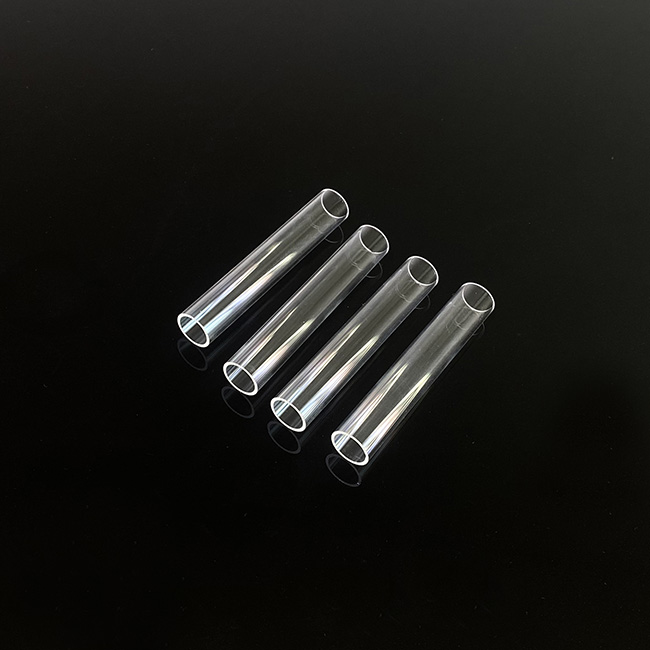
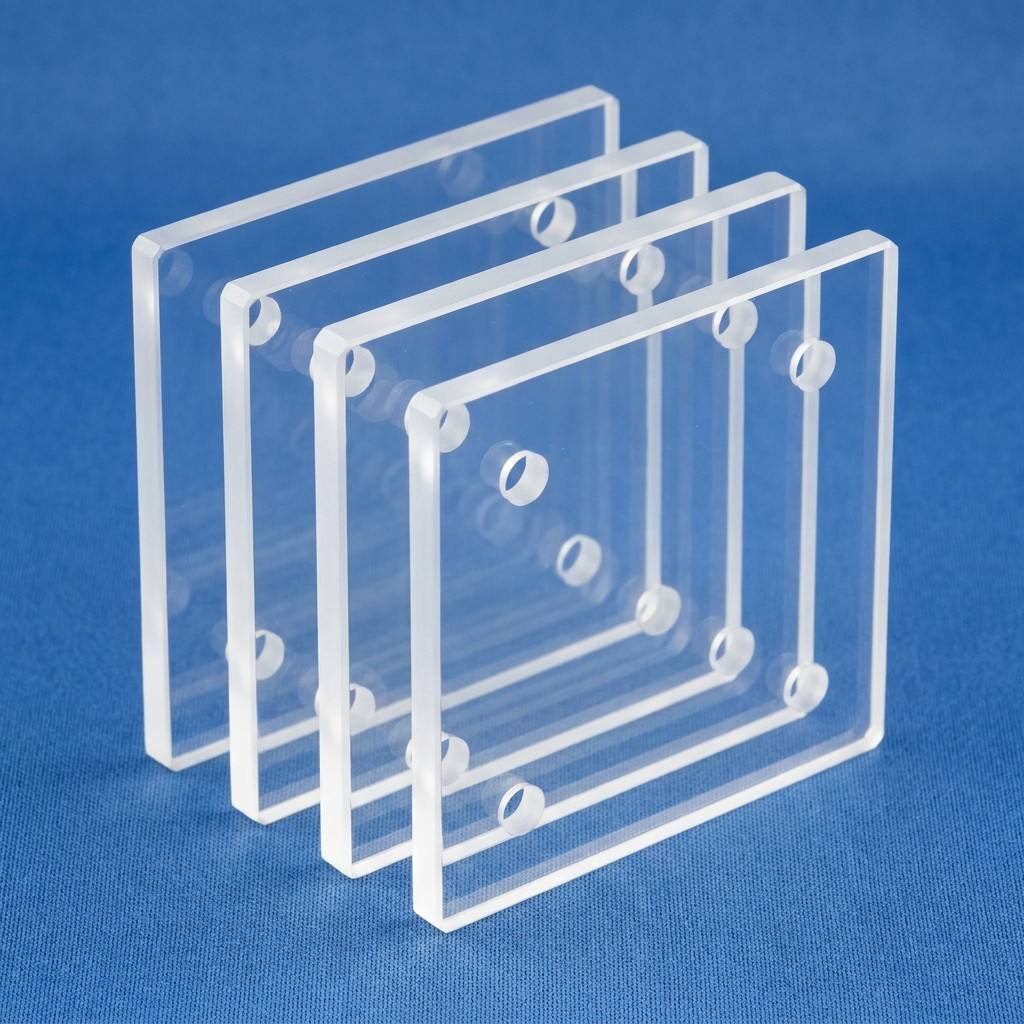
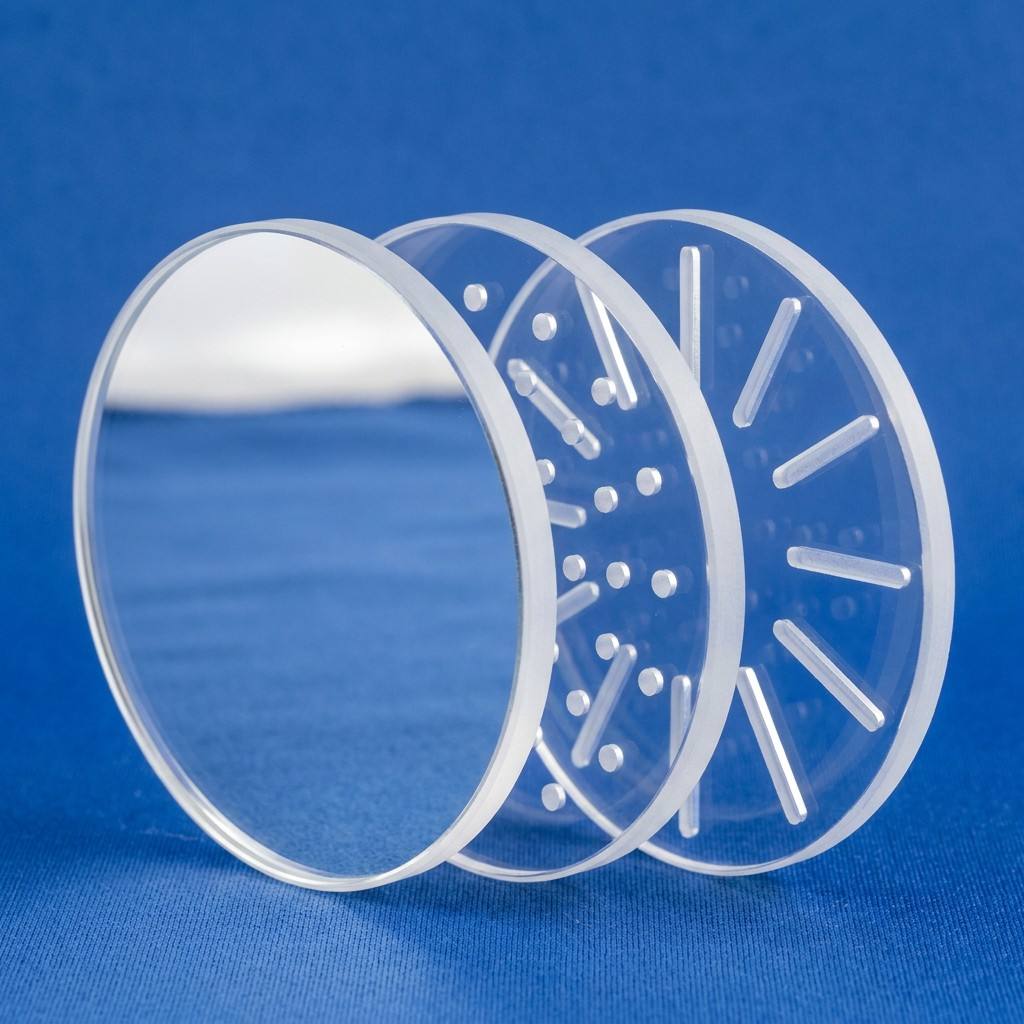


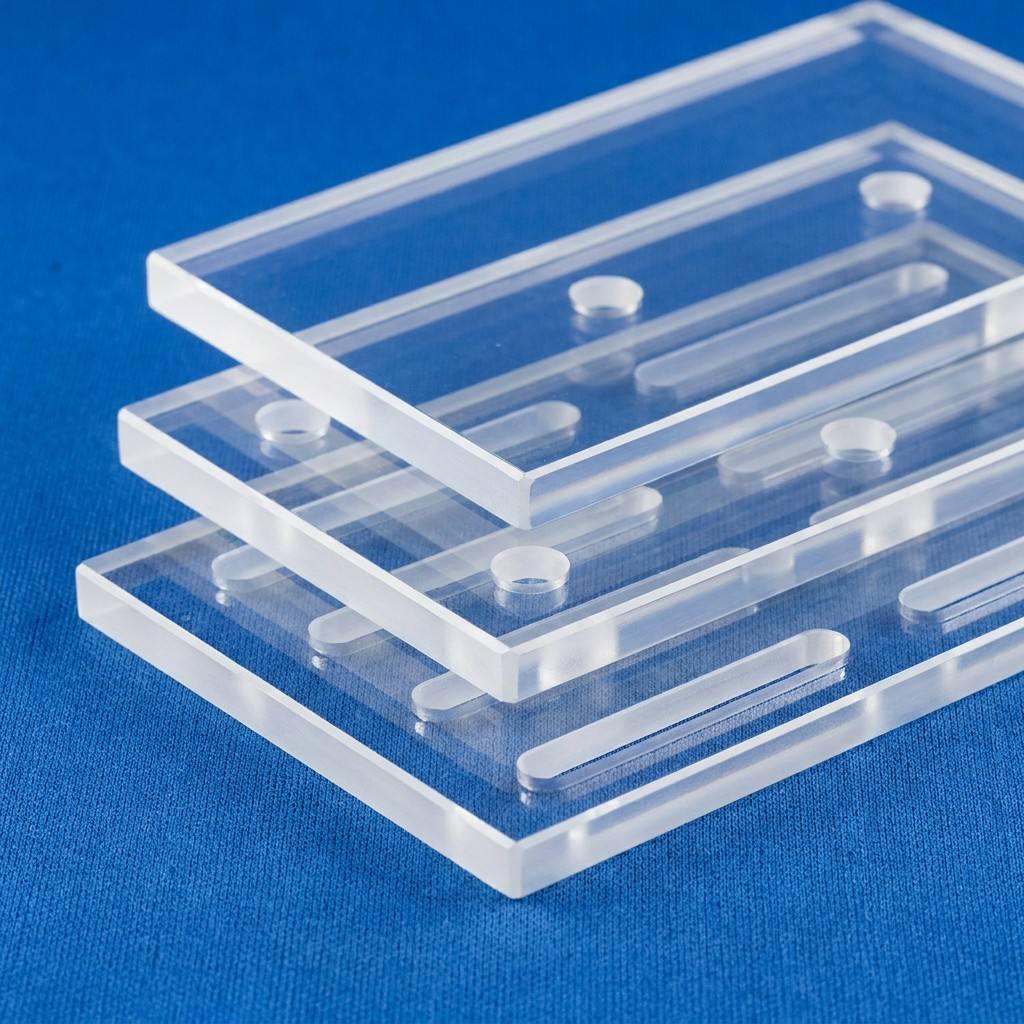

Comprehensive Analysis: Opaque Quartz Glass & Fused Silica Engineering
Opaque quartz glass, often referred to within technical metallurgy and semiconductor thermal processing as milky quartz, translucent vitreous silica, or microporous quartz ceramic, plays an irreplaceable role in advanced industrial environments. Unlike clear fused silica, which prioritizes broad-spectrum optical transmission across the deep ultraviolet (DUV) to near-infrared (NIR) ranges, opaque quartz glass is deliberately engineered with microscopic, evenly dispersed gaseous micro-enclosures. These micro-bubbles serve as internal optical scattering centers, turning transparent fused silica into a diffuse, highly insulating barrier with low thermal emissivity and superior infrared diffuse reflectivity.
As premier China wholesale opaque quartz glass suppliers and exporters based in Donghai County—the epicenter of global natural quartz processing—we engineer raw materials directly from granular mineral refining down to nanometer-toleranced CNC cold machining and hot torch flame-working. When global procurement officers and high-vacuum engineers source opaque quartz components, they demand uncompromising consistency in isotropic heat shielding, structural chemical passivity against fluorine/chlorine etching plasmas, and complete dimensional stability under severe cyclic thermal shock exceeding 1,150°C.
Microstructural Properties & Thermal Insulation Mechanics
The distinctive opacity of white opaque quartz stems from millions of encapsulated closed pores (typically 5 to 50 μm in diameter) created during electric-arc fusion or gas-pressure thermal sintering. This micro-porous matrix delivers two paramount physical benefits:
- Infrared Radiation Attenuation: While clear quartz transmits infrared heat directly via radiative transfer, opaque quartz scatters IR wavelengths across the 1.0 to 4.5 μm spectrum. This significantly suppresses radiant thermal leakage, making opaque quartz the material of choice for furnace thermal baffles, semiconductor end-caps, process tube heat shields, and silicon wafer heater collars.
- Minimization of Thermal Conductivity: The trapped inert micro-voids diminish the thermal conduction pathway without altering the intrinsic low coefficient of thermal expansion (α ≈ 5.5 × 10⁻⁷ /°C). Consequently, opaque quartz exhibits exceptional thermal shock resilience: components can be repeatedly heated above 1,100°C and quenched directly into cold water without micro-fracturing or catastrophic spalling.
| Material Property | Opaque Fused Quartz | Clear Fused Quartz (JGS2) | Synthetic Silica (JGS1) |
|---|---|---|---|
| Purity (SiO2 Assay) | ≥ 99.95% | ≥ 99.99% | ≥ 99.9999% |
| Bulk Density (g/cm³) | 2.05 – 2.18 | 2.20 | 2.201 |
| Coefficient of Thermal Expansion (CTE) | 5.4 × 10⁻⁷ /°C | 5.5 × 10⁻⁷ /°C | 5.2 × 10⁻⁷ /°C |
| Continuous Maximum Operating Temp | 1,100 °C | 1,150 °C | 1,200 °C |
| Short-Term Softening Point | 1,680 °C | 1,683 °C | 1,730 °C |
| Infrared (IR) Attenuation Capacity | Extremely High (> 90% diffuse) | Low (> 90% direct transmission) | Low (> 92% direct transmission) |
| Dielectric Strength (kV/mm at 20°C) | 25 – 30 | 25 – 40 | 40 – 50 |
Enterprise Capabilities & Manufacturing Strengths
Operating a 50-mu production hub in Tuofeng Township, Donghai County, backed by RMB 10 million in fixed assets, provincial scientific projects, and comprehensive precision fabrication lines.
Direct Mineral Sourcing
Located at the core of Donghai's natural quartz deposit network, our operations utilize raw quartz sands refined down to conventional metallic impurities of ≤20 ppm. Direct control eliminates secondary logistics overhead and guarantees uncompromised raw batch homogeneity.
State-Level R&D Recognition
Our 320 mm high-purity quartz tube for VLSI semiconductors was executed as a Jiangsu Provincial Science & Technology Support Project. Furthermore, our 520 mm ultra-large diameter quartz core tube successfully passed preliminary reviews for National New Products.
Turnkey OEM/ODM Machining
We provide continuous drawing (OD 2 mm to 500 mm), CNC 5-axis ultrasonic milling, ultrasonic grooving, optical-flat double-sided polishing (λ/4 wave-front flatness), laser slicing, and manual flame-welded labware assemblies tailored to customer CAD files.
Strict Metrology & Cleanroom QC
Each production run undergoes coordinate measuring machine (CMM) dimensional verification, spectrophotometric polarization strain inspections, bubble-inclusion mapping, and trace-metal ICP-MS assays, ensuring zero outgassing in ultra-clean vacuum lines.
Export-Grade Protective Packaging
Serving leading industrial accounts across Germany, the United States, Japan, and the UK, we pack fragile quartzware with high-density suspended polyethylene inserts, moisture-barrier vacuum foils, and reinforced, fumigation-free ISPM-15 plywood crates.
Direct Fast-Response Protocol
With an institutional average inquiry response time under 2 hours and an annual reorder rate topping 50%, our bilingual engineering teams convert complex technical requirements into actionable manufacturing DFM feedback on the same business day.
Future Sourcing & Procurement Trends for Opaque Quartz
As advanced technology sectors scale, the procurement landscape for opaque fused quartz is undergoing a profound transformation. Sourcing directors in semiconductor equipment manufacturing, photovoltaic wafer production, and green hydrogen synthesis are moving beyond simple unit pricing toward evaluating the total cost of ownership (TCO). Critical procurement shifts include:
1. Transition Toward Large-Diameter and Monolithic Chambers
The transition to 300 mm and next-generation wafer fabs requires unprecedentedly large thermal isolation zones. Quartz suppliers must maintain structural precision across large diameters (up to OD 500 mm – 520 mm) without localized variations in micro-bubble distribution. Segmented, welded quartz assemblies are systematically being replaced by single-piece monolithic hot-drawn opaque cylinders to eliminate thermal stress concentrators and reduce micro-crack risks.
2. Stringent Trace Contamination Controls (Sub-ppm Tolerances)
In high-aspect-ratio atomic layer deposition (ALD) and sub-5nm lithographic etching, trace alkali and heavy metal elements (such as Na, K, Li, Fe, and Cu) will diffuse into the silicon substrate if released at elevated temperatures. Modern procurement contracts now mandate comprehensive inductively coupled plasma mass spectrometry (ICP-MS) batch certificates verifying alkali contents below 0.1 ppm and total non-silica impurities well below 15 ppm.
3. Circular Supply Chains and Sustainable Raw Material Refining
Volatile energy markets and tightening carbon reporting standards make energy-efficient quartz purification a decisive supplier differentiator. The integration of advanced chemical leaching, microbial biotreatment of pegmatite ores, and plasma-arc calcination allows leading Chinese manufacturers to lower the embedded carbon footprint of fused silica while maintaining crystalline structure purity.
Technological & Material Evolution of Industrial Fused Silica
The manufacturing science behind opaque and translucent quartz glass is advancing through both thermal chemistry and automated physical processing:
Precision Micro-Pore Geometry Control
Historically, opaque quartz relied on natural air inclusion during fusion, resulting in wide pore-size distributions and unpredictable thermal anisotropy. Cutting-edge manufacturing now introduces clean gaseous blowing agents (such as ultra-pure nitrogen or hydrogen gas foaming) during continuous electric melting. This creates uniform, spherical, sub-micron closed cells. This structural consistency improves mechanical flexural strength while providing flat, predictable infrared diffuse scattering across the entire thermal spectrum.
Hybrid Composite Fabrications: Clear-to-Opaque Fusion
Modern semiconductor furnaces frequently demand dual-phase components: clear transparent windows embedded directly into opaque insulating flanges or sleeves. High-temperature hydrogen-oxygen lathe welding techniques have evolved into simultaneous dual-viscosity co-drawing. This process forms molecularly continuous glass bonds between clear and opaque zones without introducing mechanical interfacial strain or micro-bubble nucleation lines.
Diamond-Coated 5-Axis CNC Ultrasonic Cold Machining
Due to quartz's extreme hardness (Mohs scale 7) and brittleness, conventional rotary milling often generates sub-surface micro-cracks that expand during rapid thermal cycling. The adoption of 20–40 kHz ultrasonic vibration-assisted grinding drastically reduces cutting forces and localized heat. As a result, fine features, such as wafer retention grooves, vacuum sealing O-ring chamfers, and bolt-hole arrays, achieve dimensional tolerances of ±0.02 mm with surface roughness below Ra 0.2 μm.
Procurement Frequently Asked Questions
Detailed technical and commercial answers addressing common engineering queries regarding opaque quartz glass and custom fused silica manufacturing.