≥99.99%
SiO₂ Chemical Purity
1100°C
Continuous Service Temp
≤20ppm
Raw Sand Metal Impurities
≤2h
Engineering Response Time
Precision Engineering Showcase
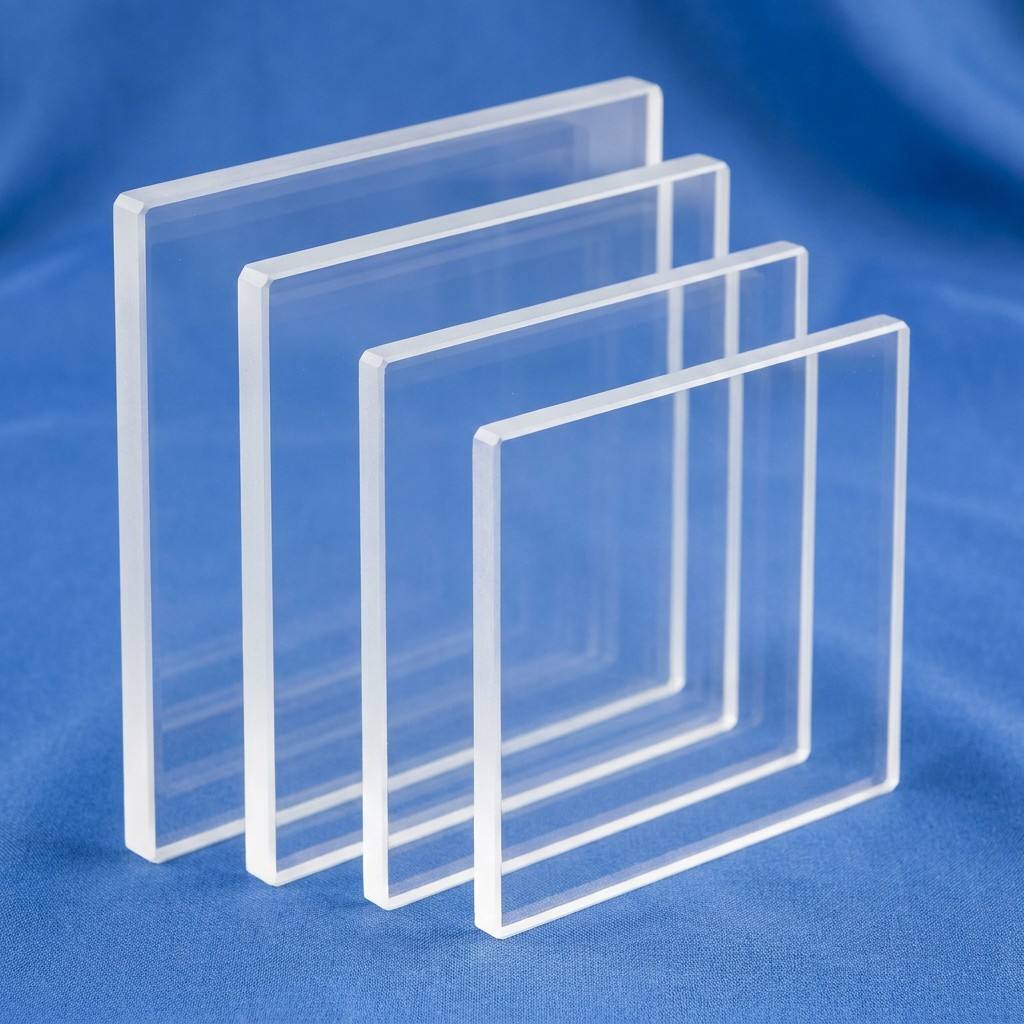
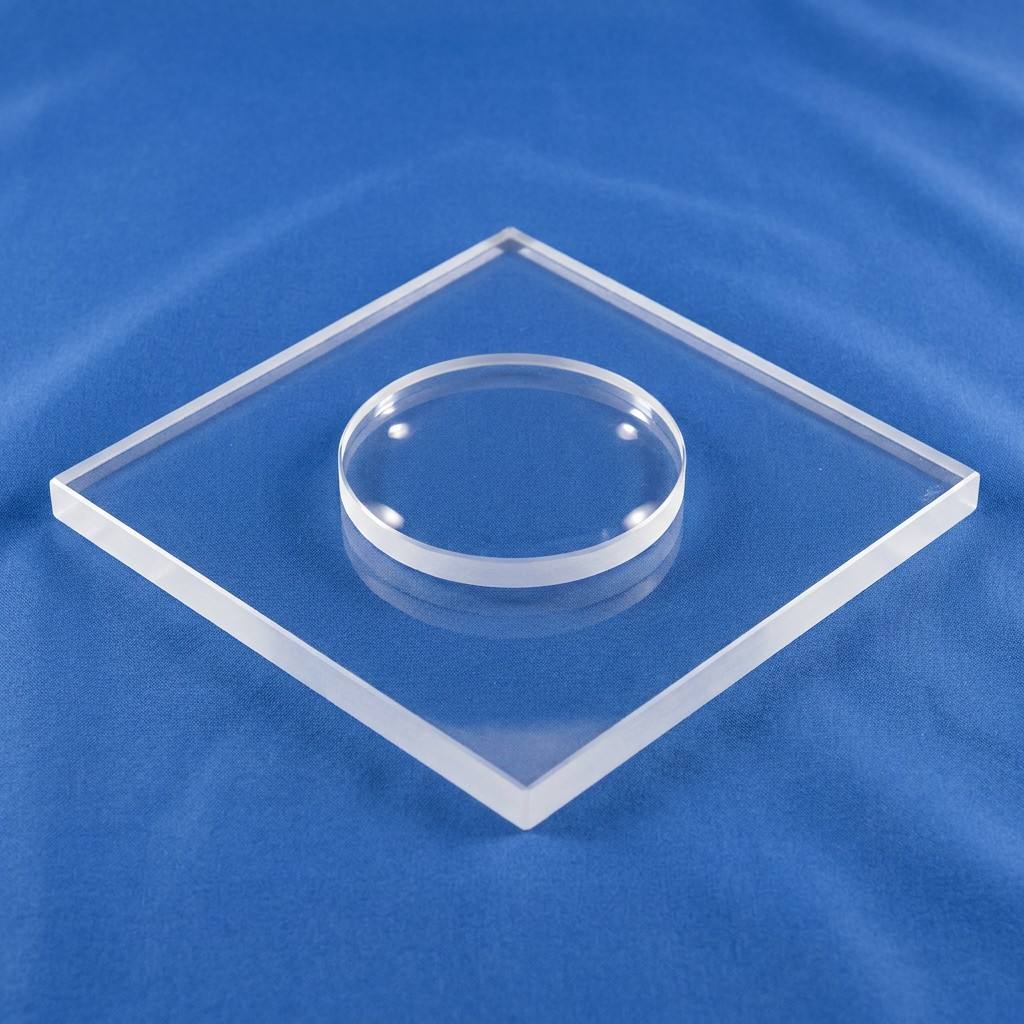
Featured Fused Silica & Quartz Components
Explore our custom fabrication portfolio matching rigorous semiconductor, industrial laser, and high-temperature vacuum specifications.


Technical Whitepaper
Engineering Principles of Quartz Oval Tubes & Asymmetric Geometries
A deep dive into thermal kinetics, optical transmission profiles, and non-circular drawing tolerances for advanced procurement specialists.
In high-performance industrial and scientific hardware design, standard cylindrical fused quartz tubing often presents critical spatial or radiative limitations. A quartz oval tube (also known as an elliptical quartz envelope or dual-radii quartz sleeve) delivers an engineered physical morphology optimized for anisotropic heat flux dissipation, tight envelope integration in optical pump cavities, specialized fluidic channels, and high-efficiency UV sterilization fixtures. By manipulating major and minor axes, mechanical designers achieve maximum surface contact while conserving valuable volumetric chamber capacity within semiconductor wafer reactors and high-density infrared heating modules.
Manufactured from ultra-pure natural quartz crystal sand or synthetic silica precursor feeds (SiO₂ purity ≥ 99.99%), the dimensional drawing of an elliptical tube demands exact thermal uniformity across the periphery of the hot-forming zone. Unlike circular tubes where surface tension naturally stabilizes circular symmetry during continuous drawing, an oval profile introduces differential hoop stress and non-uniform thermal dissipation rates. Our factory utilizes proprietary CNC mandrel continuous vacuum-assisted drawing and secondary precision thermal reshaping furnaces. This sophisticated thermal handling guarantees that wall thickness concentricity, minor axis deviation, and camber are maintained within strict industrial tolerances of ±0.15 mm to ±0.05 mm, depending on client CAD specifications.
| Physical / Chemical Property | Reference Metric / Grade | Procurement & Functional Impact |
|---|---|---|
| Silicon Dioxide (SiO₂) Content | ≥ 99.99% (Optical/Semiconductor Grade) | Prevents lattice contamination in wafer annealing and reduces high-temperature micro-bubble formation. |
| Coefficient of Thermal Expansion (CTE) | 5.5 × 10⁻⁷ cm/cm·°C (20°C to 320°C) | Provides virtually zero thermal shock; handles instantaneous water quenching from 1100°C without fracturing. |
| Continuous Operating Temperature | 1100°C (Short-term peak: 1300°C) | Maintains extreme geometric rigidity inside high-temperature diffusion furnaces and thermal CVD manifolds. |
| Annealing & Strain Points | Anneal: ≈1215°C | Strain: ≈1120°C | Dictates post-weld stress relieving processes when joining customized flanges, flared ports, or joints. |
| UV-VIS-NIR Optical Transmittance | > 90% (Spectrophotometer verified at 254 nm) | Optimizes irradiation intensity in water disinfection jackets, laser gain sleeves, and photochemical reactors. |
| Total Conventional Metallic Impurities | ≤ 20 ppm (Fe, Al, Ca, Mg, Na, K, Li, Cu) | Guarantees low devitrification tendencies and ultra-low dielectric losses in RF plasma generation systems. |
From an optical transmission perspective, the specialized cross-section of an oval quartz tube alters focal properties, enabling concentrated linear energy emission or broad planar irradiation. For high-intensity photochemical reactors, UV curing lamps, and laser flashlamp pumping chambers, the elliptical curvature acts as an integrated optical condenser. This geometry directs higher photon density into the reaction flow medium while minimizing parasitic reflections. Furthermore, in ozone-free variants, targeted titania-cerium ionic doping absorbs noxious 185 nm wavelengths while allowing high 254 nm germicidal flux, protecting sensitive machinery operators without reducing biological disinfection capability.
Industry Foresight
Emerging Trends in Quartz Oval Tube Sourcing
How next-generation semiconductor fabrication, green energy photovoltaics, and advanced photonic systems are reshaping buyer requirements through 2026–2030.
Semiconductor Miniaturization
As wafer processing advances below 3nm nodes, micro-contamination tolerance drops to near-zero. Sourcing teams are replacing legacy circular diffusion tubes with custom planar oval configurations to allow closer wafer carrier positioning and uniform RF plasma distribution, demanding ultra-low hydroxyl (OH⁻) content (<5 ppm) to curb high-temperature deformation.
Photovoltaic N-Type TOPCon & HJT
The rapid industrial transition toward high-efficiency N-type solar cells has created immense demand for extra-large diameter quartz tubing and customized oval furnace liners. These shapes maximize throughput inside Low-Pressure Chemical Vapor Deposition (LPCVD) and Boron tribromide (BBr₃) diffusion systems while lowering energy consumption per gigawatt of output.
Supply Chain Direct-to-Source Shift
Global Tier-1 OEMs are bypassing third-party trading intermediaries to establish direct partnerships with specialized manufacturers situated directly within mineral clusters like Donghai. Direct-to-factory integration ensures verified chain-of-custody raw material purity, full dimensional traceability, and rapid 5-day prototyping for complex bespoke drawings.
Manufacturing Authority
Why Global Tier-1 Buyers Partner With Us
Direct factory manufacturing authority located in China's quartz capital, backed by provincial science projects and ISO-grade production capabilities.
Donghai Quartz Hub Location
Operating a 50-mu (33,000 m²) manufacturing center in Donghai County with RMB 10M+ in fixed assets, directly securing natural quartz feedstock with ≤20 ppm total metallic impurities.
Provincial Science R&D Recognition
Pioneered 320 mm high-purity quartz tubing under the Jiangsu Provincial Science & Technology Project; our 520 mm large-diameter tube has completed National New Product review.
Comprehensive Cold & Flame Machining
Equipped with 5-axis CNC ultrasonic milling, high-precision laser slicing, precision flat grinding, and skilled artisan flame-welding for complex quartz boats, flanges, and oval adapters.
Global Export & Shockproof Crating
Serving Tier-1 customers across Germany, the USA, France, Japan, and the UK with multi-layer pearl cotton cushioning, custom fumigation-free plywood crates, and ≤2-hour engineering turnarounds.
Procurement Knowledge Base
Frequently Asked Questions
Direct, highly-detailed engineering answers to the critical questions specifying teams ask when purchasing quartz oval tubes.
What are the typical dimensional capabilities and tolerances for quartz oval tubes?
We manufacture quartz oval tubes with major axis dimensions ranging from 10 mm up to 350 mm and minor axis profiles from 5 mm to 180 mm. Typical wall thickness spans 1.0 mm to 8.0 mm, engineered strictly to buyer blueprints. Standard dimensional tolerances are held within ±0.15 mm for both axes, with precision-machined options achieving ±0.05 mm via post-draw CNC grinding and chemical fire-polishing.
How does an oval quartz tube handle internal pressure compared to a circular tube?
Due to the differential radii of curvature in elliptical profiles, bending moments develop along the flat spans of the major axis under positive internal pressure, lowering overall burst pressure ratings compared to circular cylinders. Consequently, oval tubes are predominantly recommended for external atmospheric heating, vacuum envelopes, flow jackets, and low-pressure processing. If your system requires moderate internal pressurization, our engineering staff can increase the nominal wall thickness along the flatter sections to optimize hoop-stress resistance.
Can you weld custom quartz flanges, ground joints, or sensor ports onto oval profiles?
Yes. Our master glassblowers specialize in complex bespoke quartzware. We routinely fabricate transition adapters converting oval shapes into circular vacuum flanges (such as CF, ISO-KF, or NW joints), flame-weld thermocouple wells directly into the envelope, and produce flared ends or flat optical window caps. All fabricated components undergo programmable furnace annealing at 1215°C to fully eliminate residual internal stress before dispatch.
What documentation and quality verification do you provide with wholesale orders?
Every production batch includes comprehensive quality dossiers: Inductively Coupled Plasma Mass Spectrometry (ICP-MS) raw material chemical purity reports verifying ≤20 ppm metallic impurity content, spectrophotometer UV-VIS spectral transmittance graphs, full CMM dimensional inspection sheets, and Certificate of Conformance (CoC) documentation. Third-party testing via SGS or TÜV is available upon request.
How do you guarantee zero-breakage arrival for international air and ocean shipments?
Fragile quartz tubes are isolated using high-density polyethylene foam sleeves and wrapped in shock-absorbing bubble wrap. Multiple components are partitioned inside reinforced cardboard cartons and securely packed into heavy-duty, fumigation-free wooden export crates with internal spring dampening. We maintain less than 0.2% transit damage across shipments to North America, Europe, and Asia.