Featured Industrial Quartz & Silica Solutions
Direct OEM manufacturing capabilities across opaque furnace liners, flame-worked apparatus, high-temperature boiler sight glasses, grooved substrates, and semiconductor grade fused silica plates.
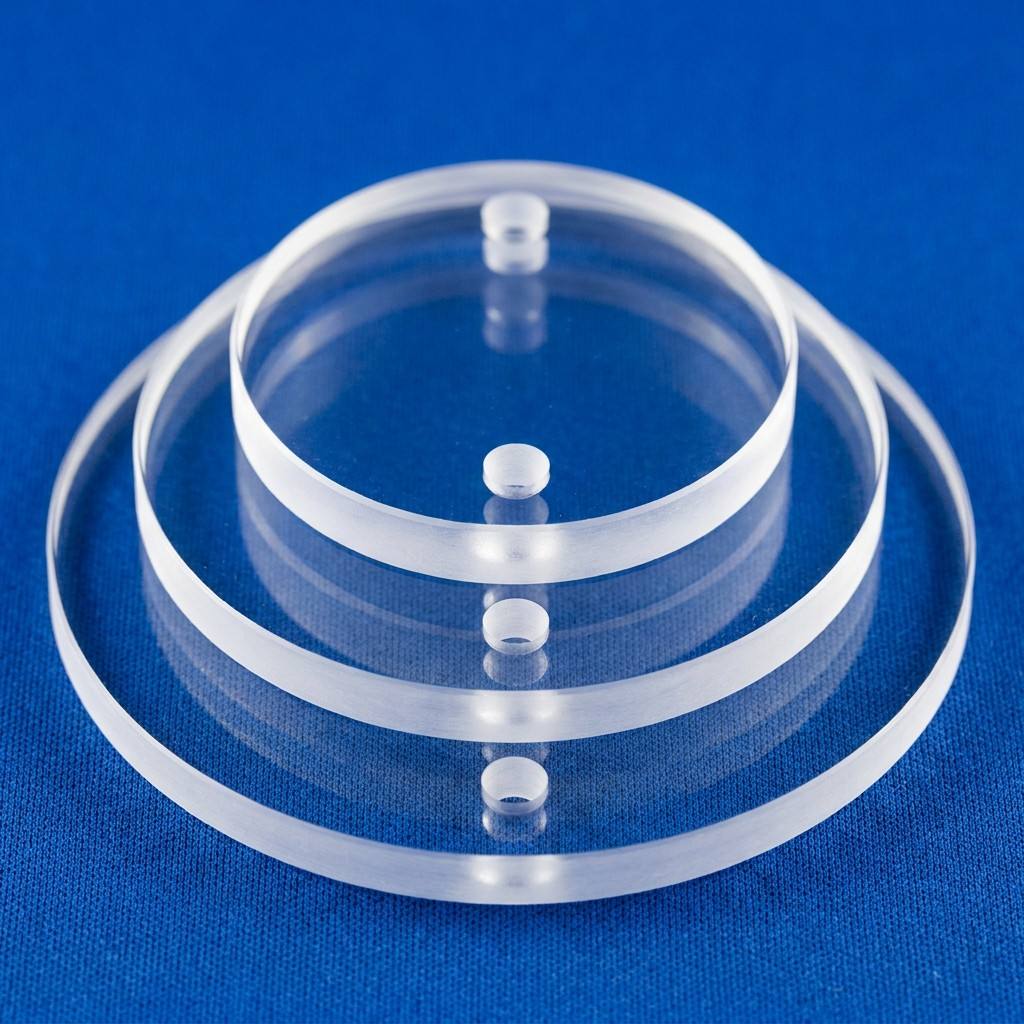
Quartz Plate for Boiler Sight Glass Fused Silica Heat Resistant
High-pressure inspection sight glass manufactured from thermally stabilized fused silica. Continuous resistance up to 1,100°C with high thermal shock resilience.

Slotted Quartz Plate Grooved Fused Silica Sheet Precision Custom Size
Precision CNC micromachined slotted quartz plates designed for wafer carriers, electronic component fixtures, and ultra-clean thermal processing tracks.

Quartz Sight Glass Plate Boiler Fused Silica High Temperature Resistant
Heavy-duty fused quartz sight windows designed for petrochemical view ports, boiler combustion chambers, and extreme thermal gradient environments.
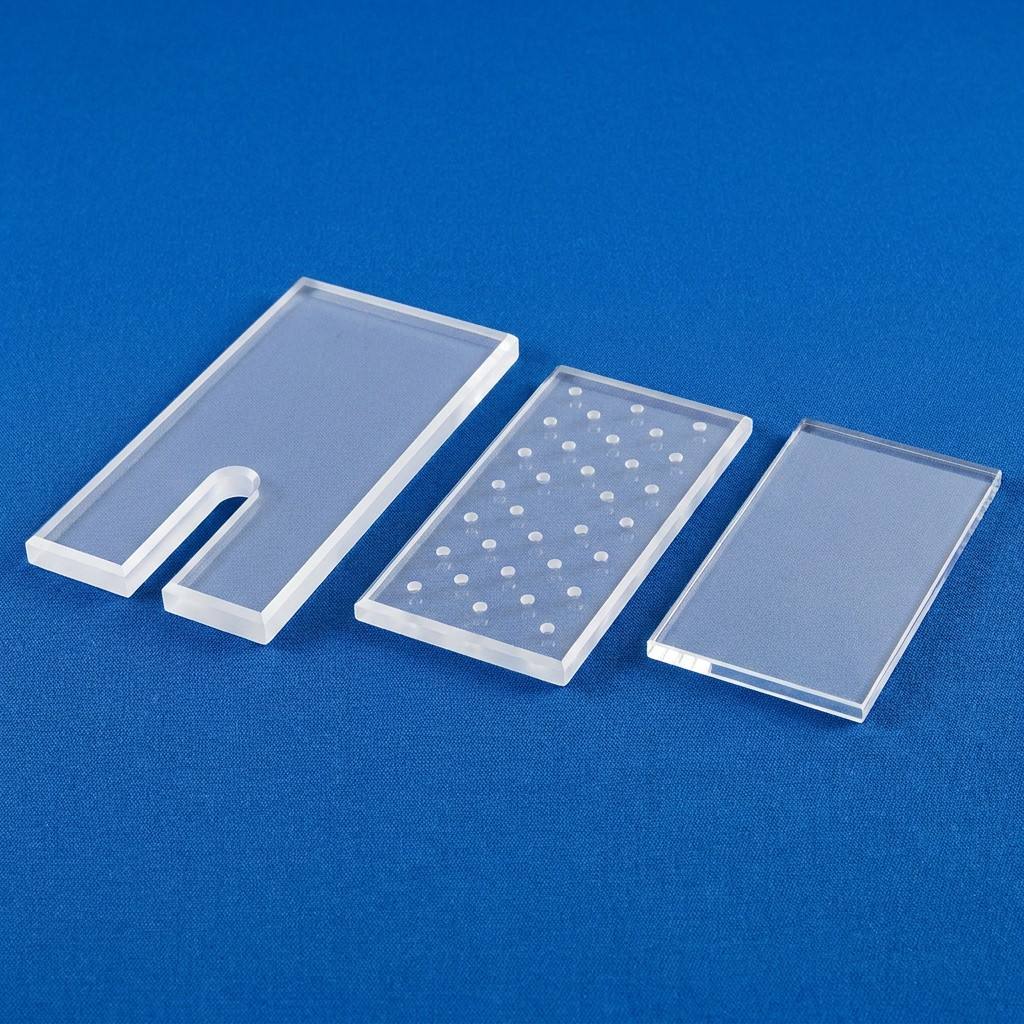
Quartz Oil Level Sight Glass Plate Fused Silica Clear Custom Size
Chemically inert, scratch-resistant liquid level sight glass plates for high-viscosity oil indicators, chemical reactors, and hydraulic reservoirs.
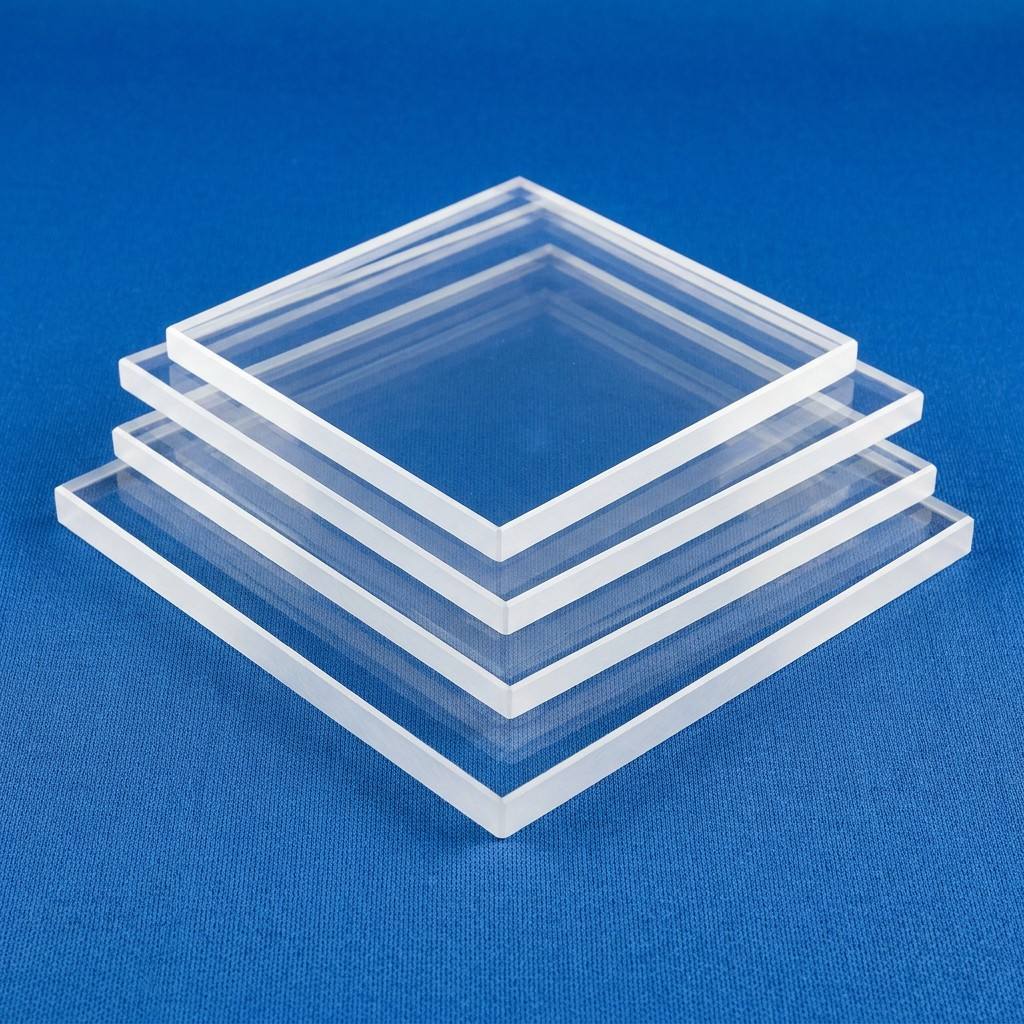
Quartz Plate with Center Hole Fused Silica Clear Polished Custom Size
Diamond-bored center orifice quartz discs for sensor flanges, laser transmission ports, pyrometer optics, and high-vacuum feedthrough assemblies.

Quartz Photomask Substrate Plate Fused Silica UV Grade Ultra Thin
Sub-micron surface roughness optical-grade substrates designed for semiconductor photolithography masks, UV exposure, and advanced micro-optics.
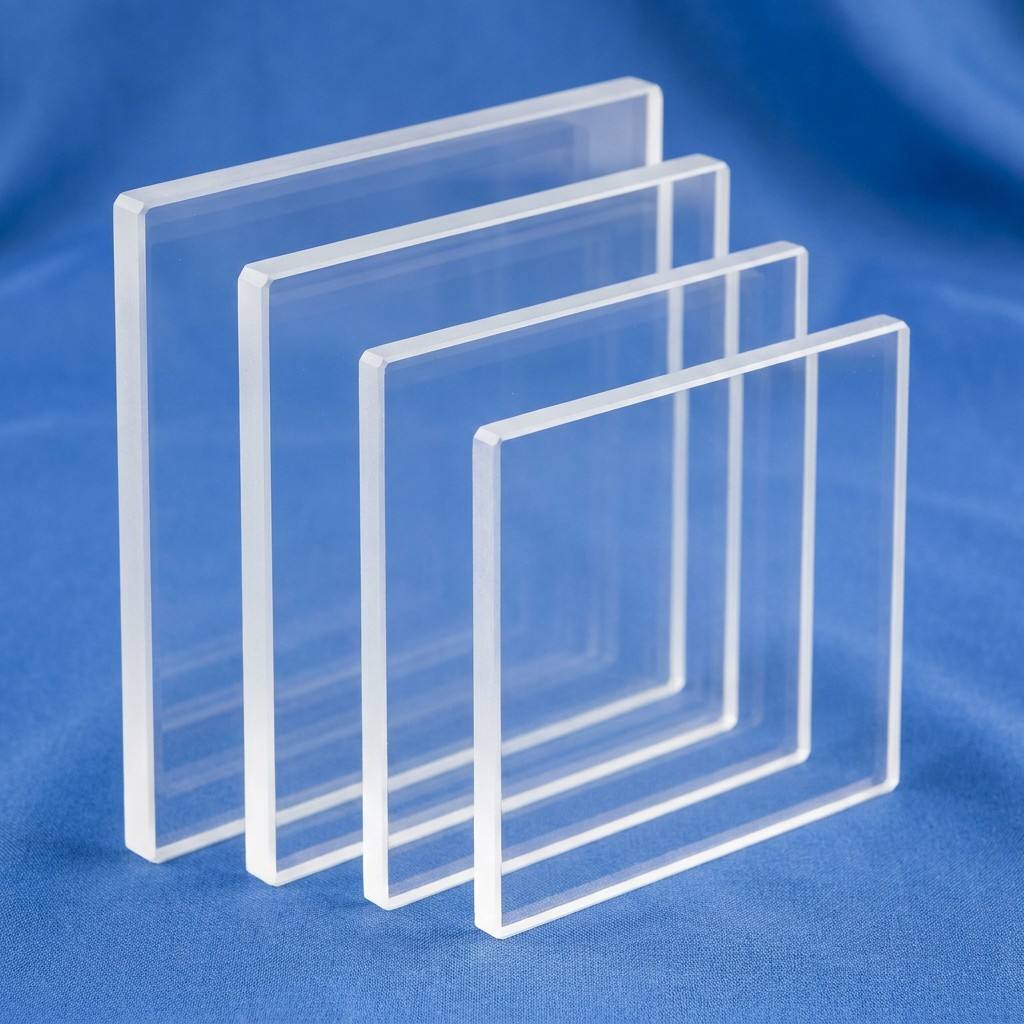
Laser Cut Quartz Glass Plate Fused Silica Precision Custom Size
Intricate geometric profiling executed via advanced CO2 laser cutting, delivering crack-free edges and tight geometric tolerances for complex mechanical seals.

Quartz Plate 100x100mm 200x200mm Fused Silica Clear Custom Cut
Standard and custom metric dimensions (100x100mm, 200x200mm up to 800mm) with fire-polished or ground chamfer edges for laboratory heaters and chambers.
Engineering Principles of Opaque Quartz (Milky Silica) Tubes
In modern high-temperature industrial thermal management, opaque quartz tubes (frequently termed milky quartz, translucent fused silica, or sintered silica tubes) serve an irreplaceable engineering role that transparent quartz cannot replicate. While transparent fused quartz is engineered for broad-spectrum optical transmission, opaque quartz is deliberately produced through continuous electric melting or slip-casting fusion of ultra-pure natural quartz sand (SiO2 ≥ 99.99%) containing a homogeneous dispersion of microscopic enclosed gaseous micro-bubbles.
These millions of micro-bubbles, measuring typically between 5 to 50 micrometers in diameter, function as refractive scattering voids. When thermal radiation (especially in the infrared spectrum between 1.5 μm to 8 μm) impinges upon the tube wall, the extreme refractive index mismatch between the silica matrix (n ≈ 1.46) and the internal gas voids induces multiple Rayleigh and Mie diffuse scattering events. Instead of passing directly through the wall as radiant waste heat, the energy is diffused, redirected, and uniformly absorbed, converting the opaque quartz tube into an exceptional infrared heat shield, a diffuse heater shroud, or an ultra-uniform thermal radiator.
Key Engineering Advantage: Opaque quartz combines near-zero thermal expansion (5.5 × 10⁻⁷ /°C) with low thermal conductivity at elevated operating temperatures (1,100°C continuous, 1,350°C peak). This makes it immune to destructive thermal spalling during sudden furnace cycling, rapid flame impingement, or cold liquid quenching.
As direct OEM factories and specialized exporters located in Donghai County—the globally recognized hub of high-purity natural silica—we engineer custom opaque quartz tubes tailored with precise inner and outer bubble layers, glazed non-porous outer surfaces, and tight wall-thickness concentricity. This prevents gaseous permeation while offering high structural rigidity for semiconductor diffusion muffles, chemical gas transfer lines, pyrometer wells, and electric resistance heating elements.
Superior Diffuse Emissivity
Micro-bubble entrapped structure transforms point infrared radiation into diffuse, balanced thermal output without hot spots or filament shadowing.
Zero Thermal Shock Failure
Retains complete mechanical integrity when cycled instantaneously between 1,150°C and room temperature water quenching without micro-cracking.
Extreme Chemical Inertness
Virtually impenetrable to halogens, hot concentrated acids (HCl, HNO3, H2SO4), and reactive process gases except hydrofluoric and phosphoric acids.
Comparative Engineering Datasheet: Opaque vs. Transparent Quartz
Procurement engineers must balance thermal insulation, optical blocking, and mechanical stability when selecting fused quartz variants. Below is an empirical specification matrix representing our factory-certified production standards:
| Property / Characteristic | OEM Opaque Fused Silica Tube | Clear Fused Quartz Tube | Procurement Significance |
|---|---|---|---|
| Purity (SiO2 Content) | ≥ 99.95% – 99.99% | ≥ 99.99% – 99.998% | Eliminates heavy metal cross-contamination in semiconductor & photovoltaic furnaces. |
| Bulk Density | 2.05 – 2.18 g/cm³ | 2.20 g/cm³ | Lower density in opaque tubes reflects the micro-bubble volume fraction (5–8% porosity). |
| Coefficient of Thermal Expansion (CTE) | 5.4 × 10⁻⁷ / °C | 5.5 × 10⁻⁷ / °C | Minimal thermal expansion enables direct joining and mating with tight mechanical housings. |
| Infrared (IR) Transmission (1–5 μm) | < 15% (Diffuse Scattering) | > 90% (Direct Radiation) | Opaque walls retain radiant heat inside furnace chambers, reducing energy draw by 18–35%. |
| Softening Point | 1,670 °C | 1,683 °C | Determines high-temperature structural sag limit under gravitational load. |
| Continuous Service Temperature | 1,050 °C – 1,150 °C | 1,100 °C – 1,200 °C | Long-term resistance against devitrification (cristobalite crystal growth). |
| Surface Texture / Glaze | Satin, Matte, or Fire-Glazed Non-Porous | Fire-polished Optical (Ra < 0.2 μm) | Outer fire-glazing seals surface pores to prevent process gas absorption. |
| Typical Available Diameters (OD) | 10 mm to 450 mm | 2 mm to 520 mm | Custom sizing according to client drawings with wall thickness from 1.5mm to 18mm. |
Direct Factory Advantages in Donghai, Jiangsu
Sourcing customized opaque quartz components requires an exporter with integrated supply chain control—from the raw mineral quartz deposit to multi-axis diamond cutting and oxy-hydrogen glassblowing. Operating from our 50-mu (≈33,000 m²) facility in Donghai County, VEZLO Quartz represents the vanguard of China’s specialized quartz manufacturing cluster. Supported by over RMB 10 million in fixed production assets and annual R&D investments surpassing RMB 5 million, our fabrication facilities bridge the gap between competitive raw material pricing and rigorous international cleanroom standards.
Raw Material Refinement (≤20 ppm)
We process natural crystal quartz with multi-stage acid leaching and thermal chlorination, producing raw feedstock sand with metallic trace impurities strictly limited to ≤20 ppm.
Provincial & National S&T Projects
Developer of the 320 mm high-purity quartz tube under the Jiangsu Provincial Science & Technology Support Project, and pioneers of the 520 mm large-diameter furnace tube for 300 mm wafer processing.
Full Secondary Fabrication
In-house cold CNC machining (drilling, slotting, face-milling, chamfering) combined with master flame-working for fused quartz flanges, hemispherical caps, flared reduction joints, and gas inlet nipples.
Quality Traceability & Verification
Every batch undergoes laser micrometer diameter mapping, wall-thickness concentricity gauging, bubble uniformity imaging, polariscope stress profiling, and ICP-OES chemical purity assays.
Zero-Breakage Export Crating
Engineered packaging systems using custom-molded pearl cotton, foam dampeners, moisture barrier wraps, and heavy fumigation-free wooden crates certified for global container and air-freight transport.
Rapid Technical Sourcing Turnaround
Dedicated technical sales engineering team delivering comprehensive CAD review, quote calculation, and tolerance feedback within an average of ≤ 2 hours.
Procurement & Technology Trends in Opaque Quartz (2025–2030)
As the global manufacturing sector pivots toward heightened energy efficiency, renewable energy scale-up, and sub-micron semiconductor fabrication nodes, procurement dynamics for opaque quartz tubes are undergoing significant transformations:
1. Integration of Dual-Layer Hybrid Fused Silica Tubes
A major technological frontier is the adoption of composite tubing: an inner wall of ultra-pure, bubble-free clear fused quartz fused seamlessly to an outer sleeve of opaque, micro-bubble scattered quartz. This hybrid architecture provides high purity and chemical erosion resistance on the process side, while the opaque outer skin acts as an integrated thermal insulator and radiant shield. Demand for these tubes in semiconductor LPCVD and photovoltaic diffusion processes is projected to expand at an annual CAGR exceeding 8.4%.
2. Escalating Diameter Demands for Semiconductor & Solar Ingot Furnaces
The commercial expansion of 300 mm (12-inch) silicon wafer fabs and next-generation TOPCon / HJT solar cell manufacturing requires furnace tubes capable of housing wider wafer carriers with uniform thermal envelopes. Sourcing trends highlight a decisive transition away from traditional 150–200 mm OD tubes toward large-diameter outer dimensions between 350 mm and 520 mm. Sourcing managers are increasingly qualifying factories that possess proprietary large-envelope vertical drawing towers and specialized annealing kilns.
3. Near-Net-Shape Casting and Diamond CNC Machining
Legacy fabrication relied heavily on manual torch manipulation, which introduced dimensional variability (±2.0 mm) and localized wall thinning. Today’s industrial buyers enforce precision tolerances (±0.2 mm to ±0.5 mm) on outer diameters, concentricity, and flange planarities. Advanced OEM exporters are investing heavily in multi-axis diamond grinding centers to machine interlocking joints, o-ring seating grooves, and threaded connections directly into opaque silica tube ends.
4. Decarbonization and Energy Recovery in Industrial Heating
With surging industrial energy tariffs in the EU and North America, process equipment designers are systematically replacing high-loss ceramic and metallic protection sheaths with opaque quartz shrouds in radiant heaters, curing tunnels, and drying ovens. Opaque quartz’s unique ability to scatter long-wave infrared back into the heating zone improves net heating efficiency by up to 25%, drastically trimming industrial carbon footprints.
Step-by-Step B2B Procurement Protocol for Opaque Quartz Tubes
To prevent costly production delays, miscommunicated tolerances, or thermal failure in final assembly, engineering procurement officers should standardize their request-for-quotation (RFQ) submissions following this five-tier qualification protocol:
Tier 1: Dimensional Envelope
Explicitly specify Outer Diameter (OD), Inner Diameter (ID), Wall Thickness (WT), total length (L), and maximum acceptable ovality / camber (straightness deflection per meter, typically ≤ 2.0 mm/m).
Tier 2: End-Geometry & Joining
Define whether ends must be raw diamond cut, fire-glazed/sealed to eliminate particle shedding, ground flat & parallel (±0.05 mm), closed-end (domed/hemispherical), or fitted with custom fused silica flanges.
Tier 3: Porosity & Surface Glazing
State whether the application permits standard satin opaque finishes or necessitates an exterior clear fire-glazed skin to prevent airborne moisture and chemical deposition into outer surface micro-bubbles.
Tier 4: Operating Atmosphere
Indicate working thermal cycle parameters (continuous hold vs. rapid ramp rates) and furnace atmospheric composition (e.g., high vacuum, oxidizing, reducing H2/N2, corrosive HCl/Cl2).
Tier 5: Inspection & Certification
Specify third-party compliance requirements: Material Safety Data Sheets (MSDS), RoHS / REACH declarations, dimensional CMM inspection sheets, or ICP-OES trace element impurity certificates.
Frequently Asked Questions (FAQ)
Comprehensive engineering answers to common technical queries raised by global procurement managers, equipment designers, and quality assurance inspectors:
What is the structural difference between clear fused quartz and opaque quartz tubes? +
What outer diameter (OD) and length ranges are available for custom OEM production? +
Can opaque quartz tubes be machined, drilled, or flame-welded to clear quartz components? +
How does an opaque quartz tube perform in continuous high-temperature service? +
What is the standard production lead time and minimum order quantity (MOQ)? +
How do you guarantee safe transport and zero breakage during ocean and air freight? +
Which industries most frequently specify custom opaque quartz tubing? +
How quickly can VEZLO Quartz provide technical review and commercial pricing? +
Request an Engineering Quotation for Custom Opaque Quartz Tubes
Connect directly with our senior quartz engineers in Donghai. Send us your technical drawings, custom dimensional requirements, or material purity specifications for a prompt review and competitive factory pricing.