Precision Quartz & Fused Silica Products
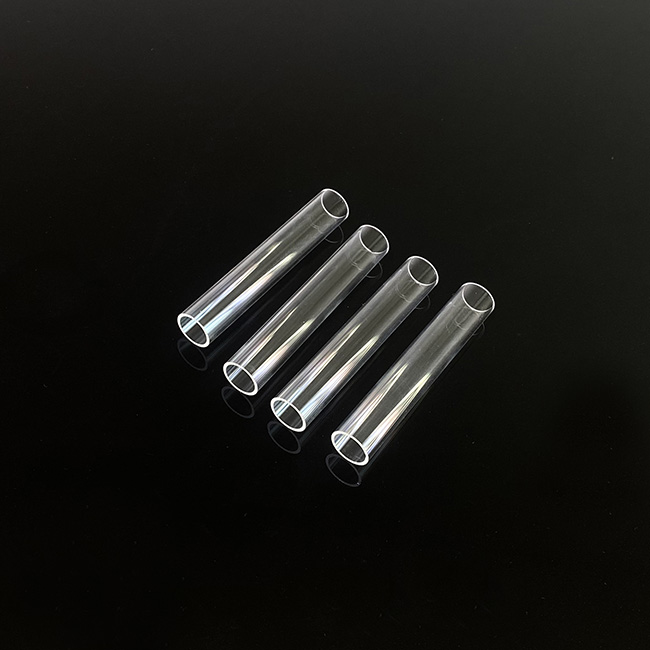
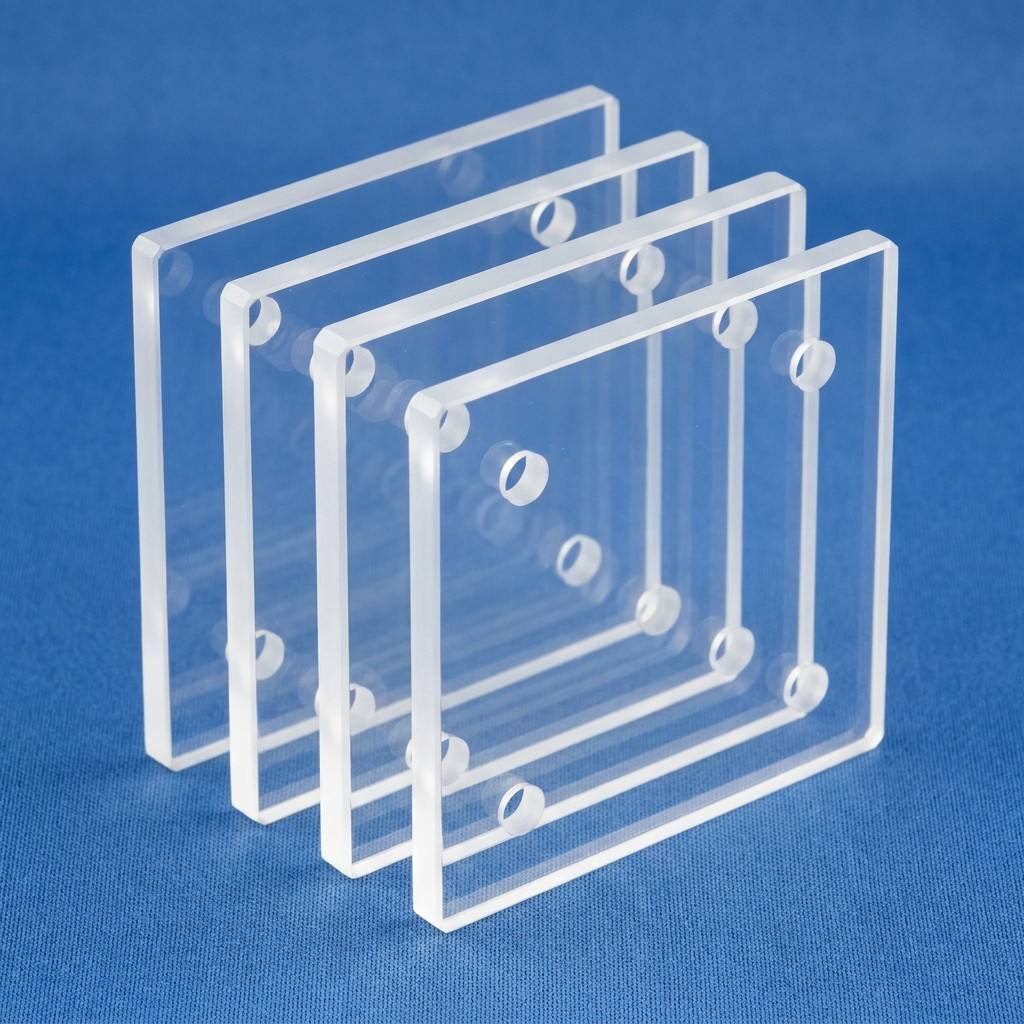
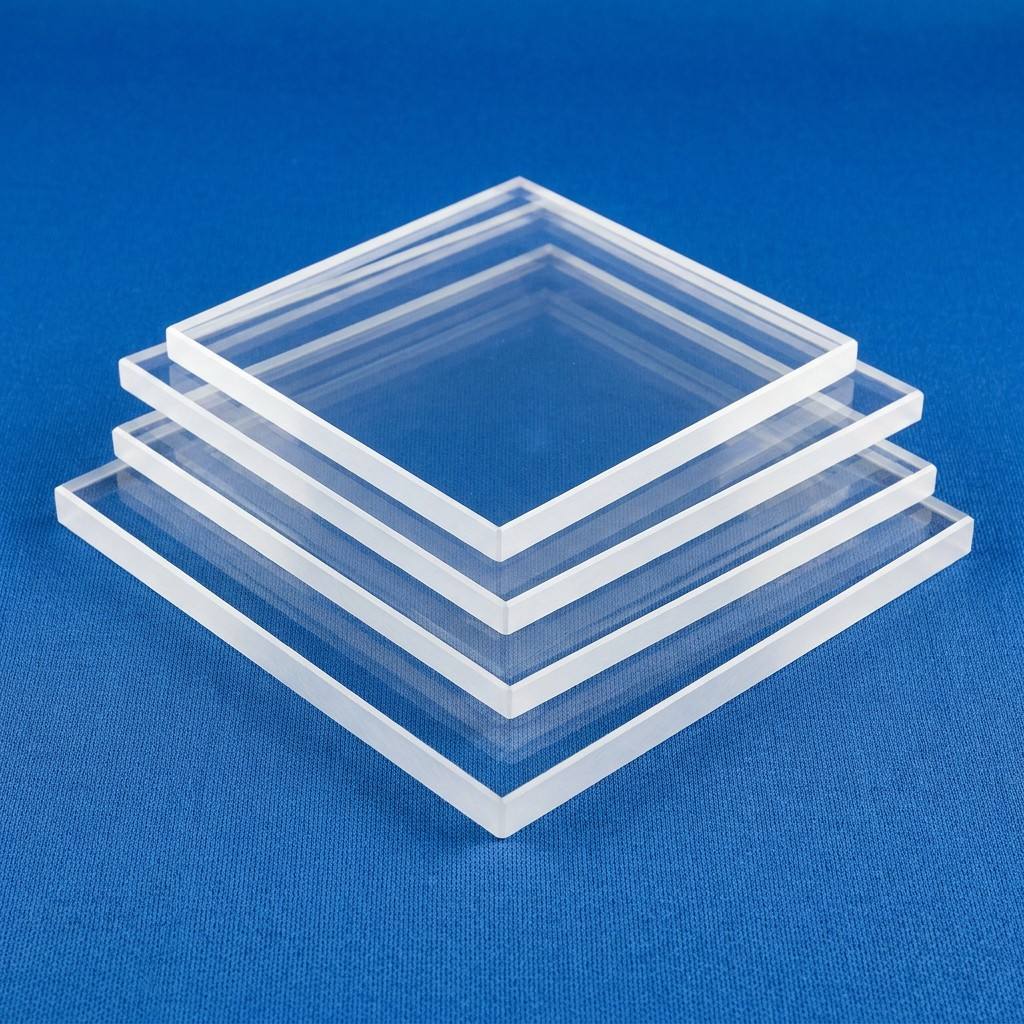
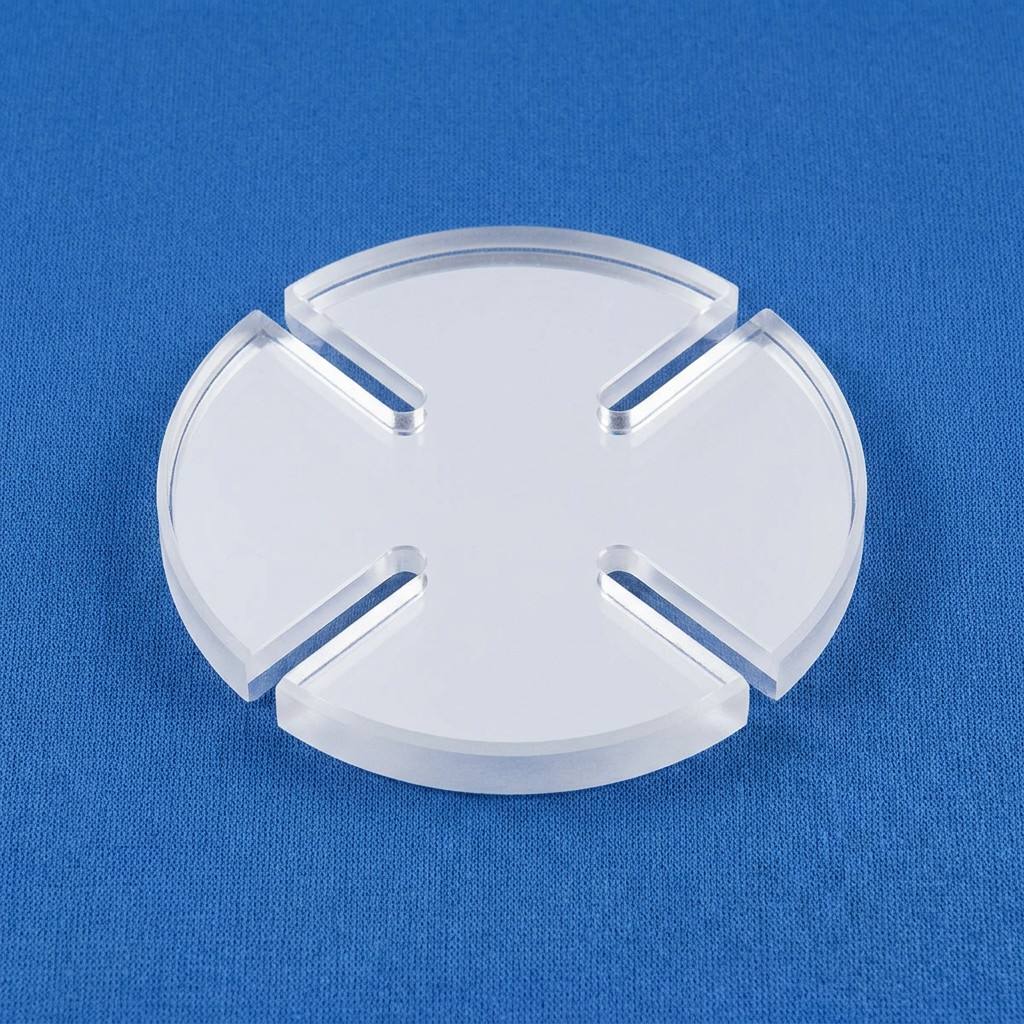
Browse our standard and custom-milled optical plates, tubes, rods, and photomask substrates. Every batch undergoes strict interferometric inspection, laser bubble detection, and edge-chamfer analysis.


Fused Silica Rod Engineering: Material Physics, Synthesis & Tolerance Control
An authoritative analysis of optical transmission, thermodynamic integrity, and OEM/ODM manufacturing standards for senior optics engineers, semiconductor toolmakers, and procurement directors.
Synthesis Classification: Natural vs. Synthetic
Industrial fused silica rods are categorized strictly by feedstock and thermal fusion pathways. Fused Quartz (Type I & II) is manufactured by fusing high-purity natural silica sand (≥99.99% SiO&sub2;) through electric arc or oxy-hydrogen gas furnaces. This yields superior structural rigidity at extreme temperatures (softening point ∼1683°C) with low hydroxyl (OH) content (<5 ppm to 30 ppm), ideal for infrared applications and semiconductor diffusion furnace boats. Conversely, Synthetic Fused Silica (Type III & IV) is synthesized through chemical vapor deposition (CVD) or flame hydrolysis of silicon tetrachloride (SiCl&sub4;). It offers zero metallic impurities, pristine deep-UV transmission down to 185nm, and zero bubble class ratings under DIN ISO 10110 standards.
JGS1 / JGS2 / JGS3 StandardsThermodynamic & Mechanical Integrity
Fused silica rods possess one of the lowest coefficients of thermal expansion (CTE) among industrial solids: 5.5 × 10⁻⁷ /°C across the 20°C to 320°C range. This provides virtually zero risk of thermal fracture during sudden temperature swings exceeding 1000°C, allowing quenching from white heat directly into ice water without structural compromise. With an annealing point of 1215°C and a continuous working operational limit of 1100°C, precision-ground rods act as essential mechanical guides in high-heat vertical furnaces, chemical etching pushers, high-intensity plasma bulb electrodes, and optical waveguiding light pipes where mechanical drift would cause alignment failure.
CTE ΔL/L ≤ 0.54 × 10⁻⁶ K−1Precision Fabrication & End Finishes
As an OEM/ODM factory, our manufacturing lines achieve tight cylindrical concentricity and custom surface finishes. Standard outer diameter (OD) rod tolerances range from standard commercial ±0.05mm down to precision centerless-ground tolerances of ±0.005mm with circularity ≤ 0.002mm. End geometries can be tailored to application requirements: optical flat polish (λ/4 surface figure, 20-10 scratch-dig), laser spherical doming, conical points for plasma arc ignition, fire-polished radiused ends for frictionless insertion, or diamond CNC-threaded ends for direct integration into ultra-high vacuum (UHV) robotic handling end-effectors.
Surface Roughness Ra < 0.2nmComprehensive Material Property Matrix
Compare key quantitative indicators between standard fused quartz and synthetic fused silica to ensure proper material selection during RFQ preparation.
| Property Parameter | Natural Fused Quartz (JGS2/Commercial) | Synthetic Fused Silica (JGS1/Suprasil) | Testing Standard / Engineering Impact |
|---|---|---|---|
| Chemical Composition (SiO&sub2;) | ≥ 99.99 % | ≥ 99.9999 % | Trace metal contamination threshold (≤20 ppm vs ≤0.1 ppm) |
| Density (ρ) | 2.20 g/cm³ | 2.201 g/cm³ | ASTM C693; high structural rigidity with minimal mass |
| Hydroxyl (OH−) Content | < 5 ppm to 30 ppm | < 1 ppm (Dry) / ~1200 ppm (Wet) | Determines UV solarization resistance vs IR absorption bands |
| Transmission Bandwidth | 260 nm – 2500 nm | 185 nm – 2100 nm | UV Cutoff vs deep-UV excimer laser transparency (193nm/248nm) |
| Thermal Expansion (CTE, 20–320°C) | 5.5 × 10⁻⁷ K−1 | 5.2 × 10⁻⁷ K−1 | DIN 51045; zero micro-cracking during rapid thermal cycling |
| Refractive Index (n&subd; @ 589.3 nm) | 1.4585 | 1.4584 | Abbe dispersion V&subd; ≈ 67.8; optical light pipe transmission |
| Dielectric Constant (ε @ 1 MHz) | 3.75 | 3.70 | ASTM D150; RF loss angle tanδ < 0.0001 in microwave windows |
| Softening Point / Strain Point | 1683°C / 1075°C | 1600°C / 1020°C | Defines upper thermal sag threshold in high-vacuum furnace racks |
Future Procurement & Technology Trends in Fused Silica Rods
How technological shifts in semiconductor nodes, laser additive manufacturing, and global supply chains are transforming quartz rod procurement specifications.
Sub-3nm Semiconductor Tooling Demands
As front-end semiconductor fabrication transitions toward advanced Gate-All-Around (GAA) architectures and sub-2nm lithography, wafer processing furnaces demand ultra-clean fused silica rod assemblies. Conventional quartz rods with microscopic alkali metal leachables (Sodium, Potassium, Lithium > 0.1 ppm) risk cross-wafer poisoning during high-temperature ALD and annealing cycles. Next-generation procurement requires synthetic silica rods exhibiting trace metals ≤ 10 ppb, paired with flame-polished micro-surfaces that prevent particle shedding inside ISO Class 1 cleanroom environments.
Trace Impurity < 0.1 ppmHigh-Power Laser Optics & Beam Homogenizers
The growth of 20kW+ industrial fiber lasers, direct-diode additive manufacturing, and deep-UV laser ablation systems has raised the performance bar for optical guiding rods. Cylindrical fused silica light-pipe homogenizers must withstand extreme Laser Induced Damage Thresholds (LIDT > 40 J/cm² at 1064nm, 10ns pulse). Buyers are moving toward high-homogeneity synthetic rods (homogeneity grade H1 to H4, Δn ≤ 1 × 10⁻⁶) with total internal reflection (TIR) barrel surfaces polished to Ra ≤ 0.5nm to eliminate laser speckle and thermal lensing effects.
LIDT > 40 J/cm² @ 1064nmGeographic Cluster Sourcing & ESG Traceability
Supply chain volatility has shifted procurement away from non-integrated trading houses toward vertically integrated manufacturers located in recognized raw-material clusters. Concentrating smelting, drawing, cold grinding, and flame fabrication within a single hub like Donghai, China drastically reduces energy footprints, lowers carbon transport overheads, and provides full batch provenance from crude quartz sand to final machined rod. ESG-compliant multi-year supply contracts now emphasize zero-waste coolant recycling and low-emission oxy-hydrogen furnaces.
Cluster Integrated ManufacturingWhy Leading Optoelectronic & Semiconductor Toolmakers Partner With VEZLO
Operating across a sprawling 50-mu (≈33,000 m²) integrated production complex in Donghai County, Jiangsu Province—internationally recognized as "China's Quartz Capital"—VEZLO Quartz Products Co., Ltd. combines raw mineral synthesis with precision CNC machining. Supported by over RMB 10 million in fixed manufacturing assets and sustained by an annual R&D investment exceeding RMB 5 million, our facility bridges the gap between raw silica processing and sub-micron optical fabrication.
- National & Provincial R&D Provenance: Our 320mm high-purity quartz tube was recognized as a Jiangsu Provincial Science & Technology Support Project; our 520mm heavy-diameter tube successfully passed preliminary reviews for national strategic new products.
- Source-Level Purity Control: Proprietary multi-stage acid leaching and thermal refining processes yield 13 grades of quartz sand with total conventional metallic impurities strictly limited to ≤20 ppm.
- Multi-Axis Cold & Flame Machining: Centerless cylindrical grinders, multi-wire diamond slicing arrays, ultrasonic core drills, and skilled glassblowers supporting complex furnace boats, flanges, and customized quartz rods.
- Export-Optimized Fulfillment: Onsite verified facilities, shock-resistant multi-layer cushioning, vacuum-sealed packaging, and dedicated English-speaking application engineers delivering responses within ≤2 hours.

Frequently Asked Questions for Quartz & Silica Rod Procurement
Key technical and commercial answers to streamline engineering drawing reviews, material selection, and contract finalization.
1. What are the key dimensional limits and tolerances available for custom OEM fused silica rods? +
2. How do I decide between choosing natural fused quartz rods and synthetic fused silica rods? +
3. What quality control protocols are applied to verify rod homogeneity and eliminate inclusions? +
4. What end-finishing and edge-treatment geometries can your factory execute on quartz rods? +
5. How does your factory pack fragile, high-aspect-ratio quartz rods to prevent transit fractures? +
6. What is the typical lead time for custom OEM prototyping versus high-volume batch production? +
Connect Directly With Our Quartz Engineering Foundry
Accelerate your project timeline with direct factory-floor pricing, custom tolerance evaluations, and comprehensive material certification. Share your PDF/CAD drawings or target specifications for an engineering-reviewed quotation within 2 hours.