Featured Precision Quartz Plates, Substrates & Slotted Components
Explore our flagship OEM/ODM manufactured optical quartz components, thermal viewport glass, slotted quartz wafer boats, and semiconductor substrates fabricated under stringent ISO 9001 and Class 1,000 cleanroom protocols.
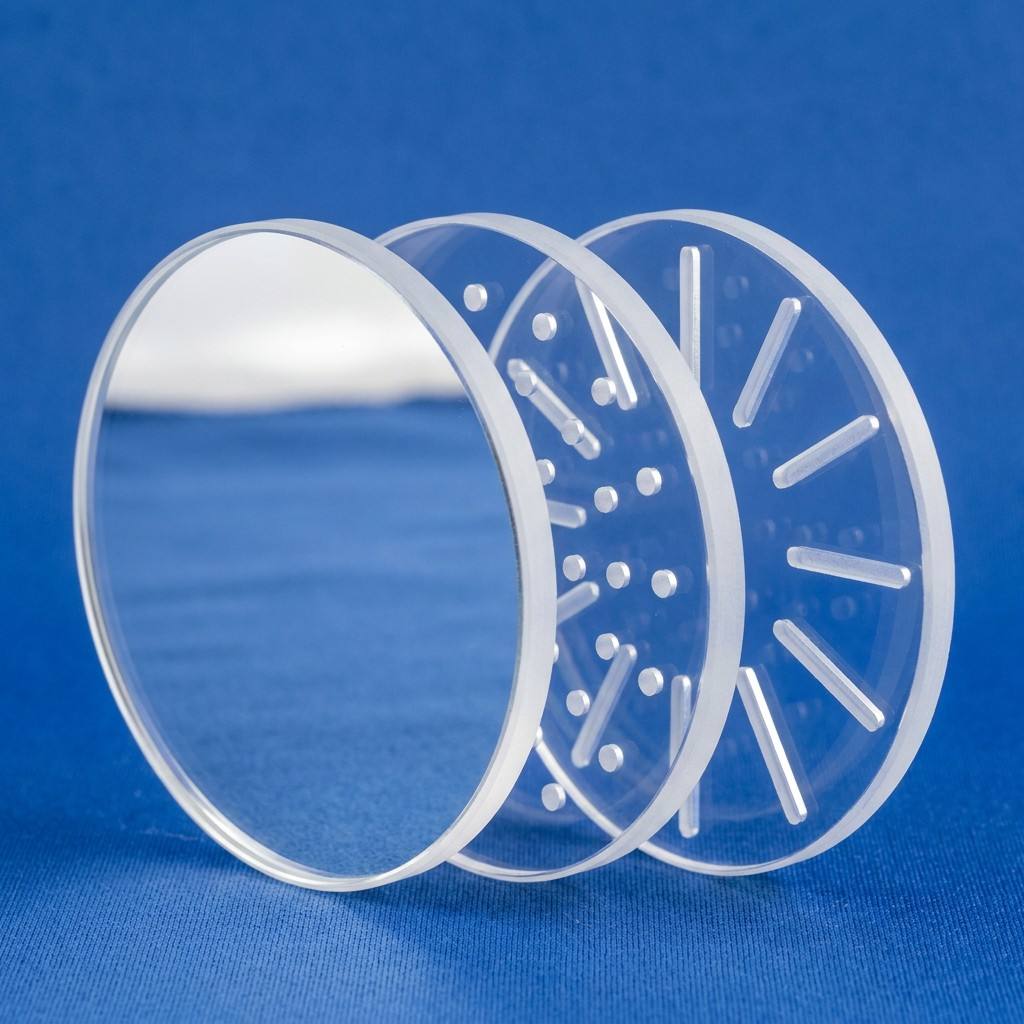


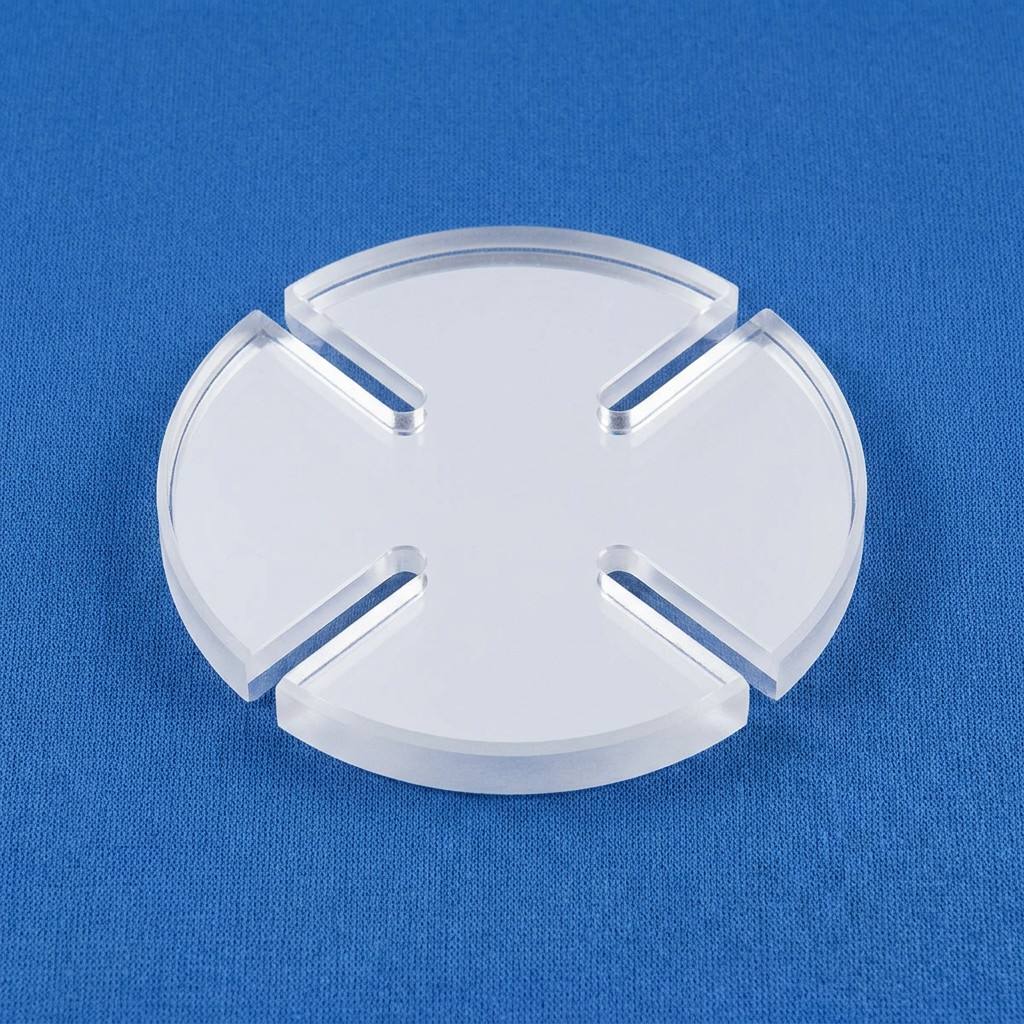


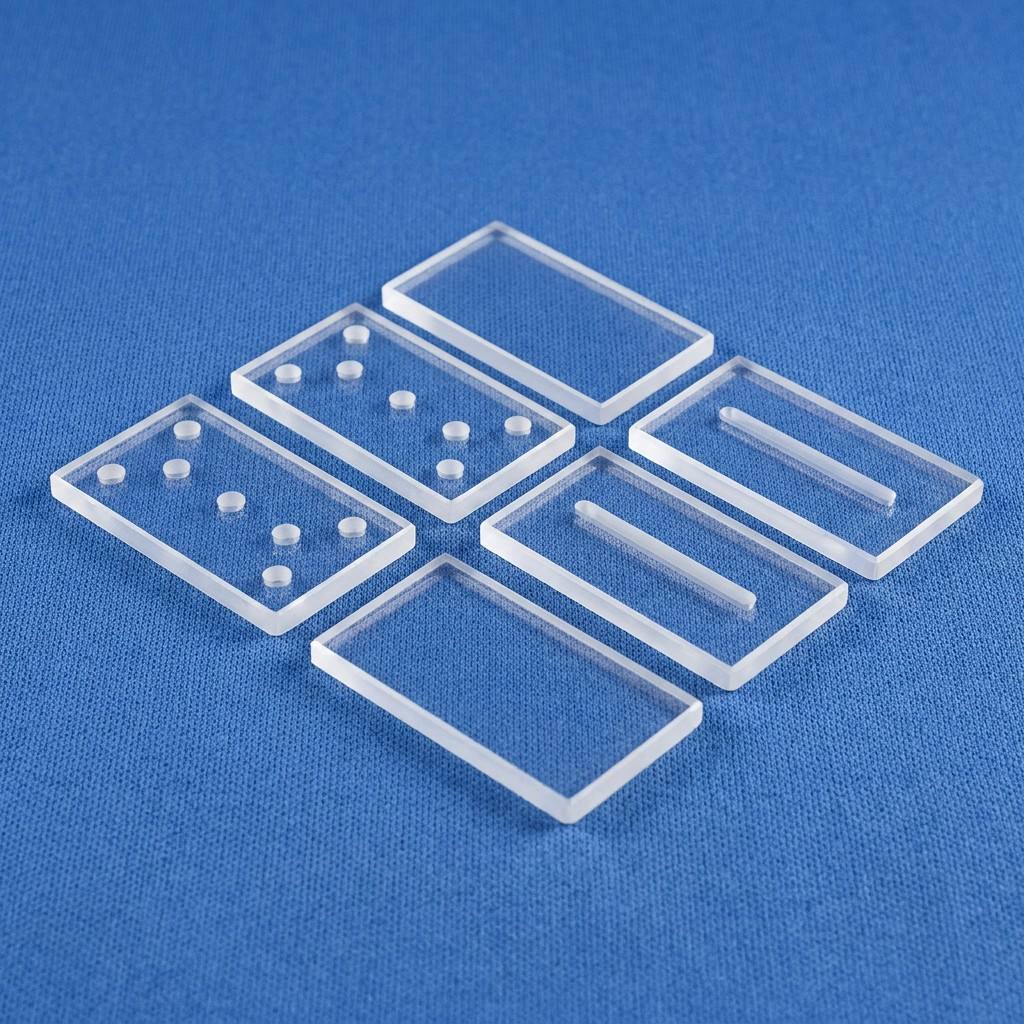
Precision Quartz Slotted Tube Engineering: Micro-Slotting, Purity & Thermal Dynamics
In ultra-clean semiconductor diffusion, oxidation, and Low-Pressure Chemical Vapor Deposition (LPCVD), quartz slotted tubes operate under the most grueling thermodynamic conditions. Discover the metallurgical and machining fundamentals governing wafer longevity and batch yield.
High-Purity Silicon Dioxide Matrix
Fabricated using natural crystalline quartz sourced directly from Donghai’s premium geological reserves, our slotted furnace tubes exhibit total metallic trace impurities ≤20 ppm, with critical elements like Fe, Cu, Ni, and alkaline metals (Na, K, Li) kept strictly below 0.1 ppm. This prevents mobile ionic contamination and auto-doping during 1,150°C drive-in cycles.
Diamond CNC & Laser Micro-Slotting
Wafer slippage, micro-scratching, and edge chipping are catastrophic in automated robotics transfer. We employ multi-axis computer-controlled diamond grinding wheels alongside non-contact picosecond laser micro-machining to execute slot widths from 0.40 mm to 3.20 mm, maintaining pitch cumulative runouts within ±0.02 mm across lengths exceeding 2,000 mm.
Flame Fire-Polishing & Acid Etch
Subsurface micro-cracks generated during mechanical slotting act as nucleation points for cristobalite devitrification. Every slotted carrier undergoes precise oxy-hydrogen localized fire-polishing followed by a controlled ultrasonic HF/HNO₃ chemical etching bath to eliminate structural micro-notches, raising mechanical rupture resistance by over 45%.
| Physical / Chemical Property | Semiconductor Grade Fused Quartz | Standard Commercial Grade | Impact on Wafer Yield & Thermal Run-time |
|---|---|---|---|
| Hydroxyl (OH⁻) Radical Concentration | < 5 ppm to 30 ppm (Low-OH) | 150 – 250 ppm | Low OH mitigates high-temperature sagging and structural viscosity decay at >1,100°C. |
| Slot Width & Profile Geometry | 0.50 mm – 2.80 mm (±0.02 mm) | ±0.10 mm to ±0.25 mm | Ensures frictionless wafer insertion; prevents edge clamping, bow warping, and particle shedding. |
| Coefficient of Thermal Expansion (CTE) | 5.5 × 10⁻⁷ / °C (20°C–320°C) | 5.7 × 10⁻⁷ / °C | Virtually zero thermal expansion prevents thermal shock breakage during rapid 200°C/min furnace insertion. |
| Maximum Short-Term Softening Point | 1,683 °C | 1,630 °C | Allows annealing and structural integrity retention during peak semiconductor drive-in thermal processing. |
| Slot Surface Roughness (Ra) | < 0.2 µm (Flame Polished / Etched) | > 0.8 µm (As-Cut Rough Ground) | Minimizes mechanical friction particles that cause sub-micron gate oxide pinholes. |
Strategic Sourcing Trends for Quartz Slotted Tubes (2025–2030)
Global semiconductor fabs, photovoltaic cell producers, and advanced optic labs face shifting supply chains. As thermal budgets shrink and wafer diameters scale, procurement strategies must evolve.
300mm to 450mm Large-Bore Systems
Horizontal furnaces are migrating toward large-diameter outer process tubes (up to 520 mm OD) to accommodate dense multi-boat slotted configurations, maximizing single-run throughput while demanding zero radial sag across 2.5-meter furnace spans.
TOPCon & Perovskite Tandem Slotting
The rapid industrial transition to TOPCon and HJT solar architectures requires slotted tubes capable of withstanding corrosive POCl₃ and BBr₃ liquid dopant atmospheres without micro-pitting or premature devitrification hazing.
Sub-80µm Wafer Stabilization
Power electronics (SiC, GaN) and 3D NAND integration demand specialized V-notch and parabolic slot geometries that seat ultra-thinned, mechanically fragile substrates without robotic transfer chatter or mechanical stress concentrations.
Comprehensive ESG Sand Traceability
Tier-1 semiconductor fabs now mandate transparent mineral provenance. Sourcing from integrated manufacturers with proprietary high-purity quartz sand refining (≤20 ppm total metallics) ensures stable supply lines immune to raw sand quotas.
Vertically Integrated Quartz Engineering: From Raw Mineral to Precision Slotted Tube
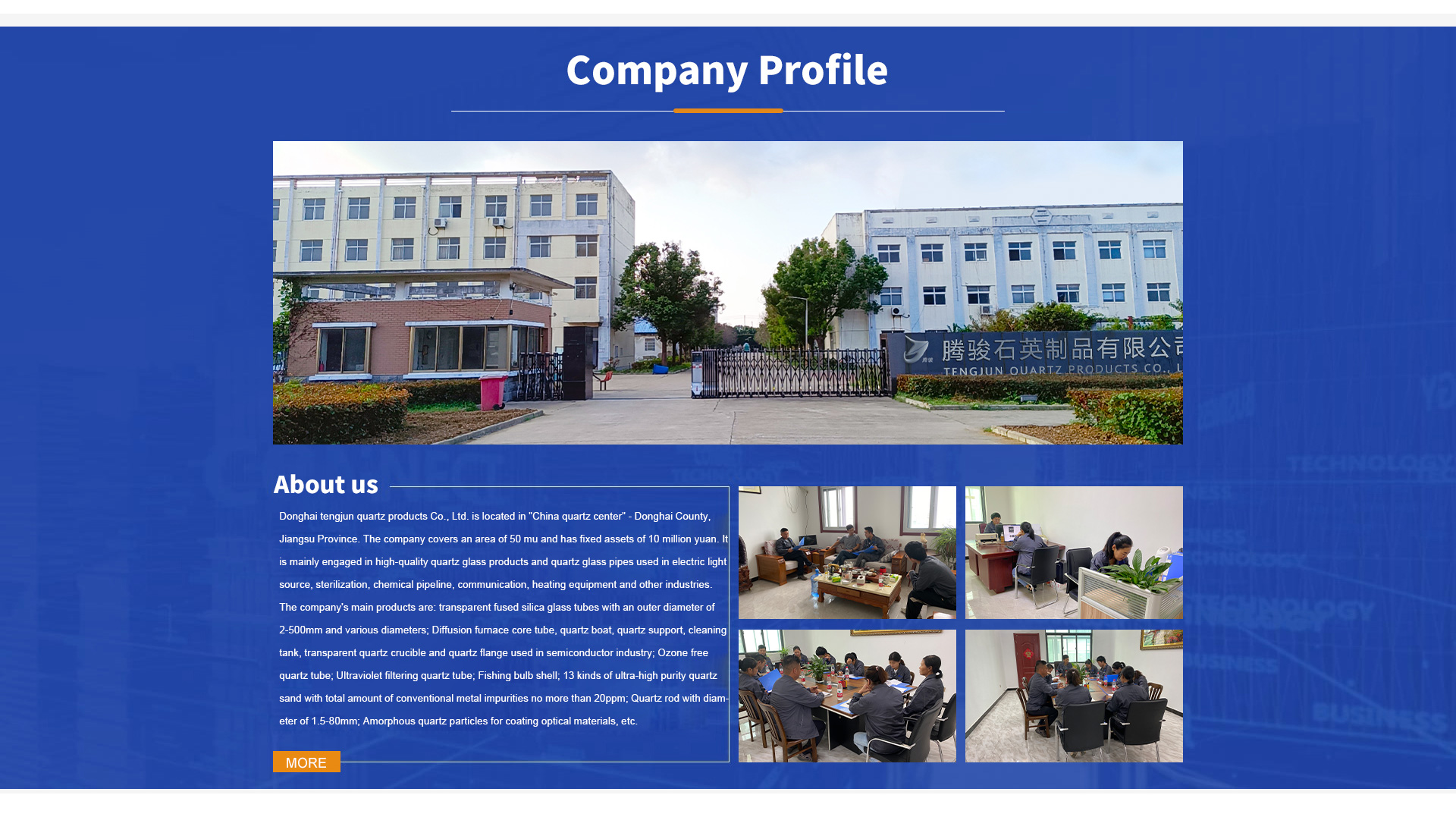
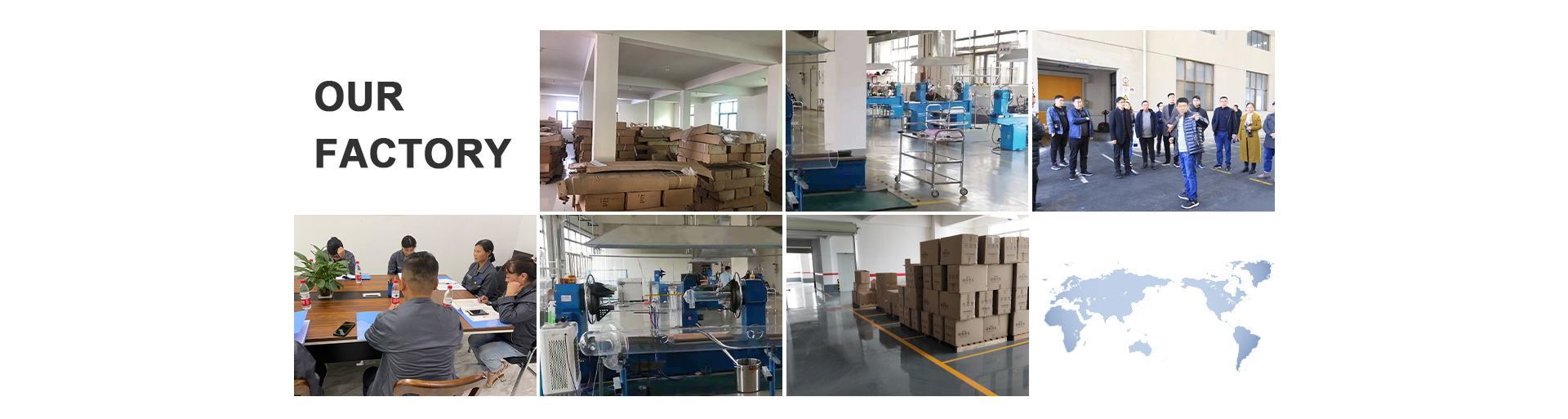
Operating from an expansive 50-mu (≈33,000 m²) production facility in Donghai County, Jiangsu Province—globally renowned as China's premier Quartz Capital—we synthesize regional resource abundance with world-class CNC precision. Backed by RMB 10 million in fixed assets and multi-million RMB continuous R&D investments, our enterprise has spearheaded provincial-level science and technology projects.
- 520mm Large-Diameter R&D: Successfully passed national new product reviews for next-generation furnace cores.
- Rapid Engineering Turnaround: In-house CAD/CAM drawing validation with technical response within 2 hours.
- Provincial Science Program: 320mm high-purity tube recognized for Large-Scale Integrated Circuit applications.
- Global Export Protection: Multi-layer shock-damped packaging suitable for air/sea transit with zero micro-fractures.


How to Specify Custom Quartz Slotted Tubes for Semiconductor Furnaces
When submitting engineering drawings (STEP, DWG, PDF) to our manufacturing team, validating the following parameters ensures rapid quotation, toolpath generation, and precise cleanroom delivery.
1. Slot Pitch & Cumulative Runout
Define clear pitch measurements between slot centers (e.g., 2.38 mm, 4.76 mm). Specify if cumulative pitch tolerance must stay within ±0.05 mm over 100 slots to prevent pitch drift during automated end-effector wafer loading.
2. Angle of Slot & Bottom Profile
Indicate whether slots are perpendicular (90°) or tilted (e.g., 2°–5° backward tilt for wafer retention). Choose between round bottom (U-shape), flat bottom, or compound bevel to reduce localized mechanical point loading.
3. Thermal Budget & Atmosphere
Specify operating atmospheres (O₂, N₂, Cl₂, NH₃, or vacuum) and thermal ramps. Low-OH quartz (<10 ppm) is recommended for temperatures exceeding 1,100°C to minimize sag, ovality distortion, and crystallization onset.
Frequently Asked Questions: Quartz Slotted Tubes & Fabrications
Detailed technical clarifications addressing thermal expansion, chemical corrosion, devitrification kinetics, and precision tolerances encountered by cleanroom managers and technical buyers.
What manufacturing tolerances can be maintained on quartz slotted tubes and plates?
Our standard CNC multi-axis diamond grinding equipment holds slot widths within ±0.02 mm (0.0008") and slot depths within ±0.05 mm. For overall tube outer diameter (OD) and wall thickness, our precision continuous drawing towers maintain ±0.15 mm for tubes up to 200 mm OD, and ±0.5 mm for large-bore furnace process tubes reaching 500 mm to 520 mm OD. Tighter tolerances can be achieved via secondary cylindrical grinding and polishing upon request.
How do you prevent micro-cracking and devitrification at the edges of CNC-cut slots?
Mechanical diamond grinding naturally produces sub-surface lattice micro-fractures in quartz glass. If unaddressed, these stress risers cause cristobalite devitrification (phase transformation from amorphous SiO₂ to crystalline cristobalite accompanied by a 5% volume contraction at 220°C–270°C). We eliminate this risk through a rigorous dual-treatment: first, localized oxy-hydrogen flame-polishing melts surface micro-notches, followed by controlled hydrofluoric/nitric acid (HF/HNO₃) chemical pickling to chemically relax residual stress and dissolve fractured edge grains.
What is the practical difference between synthetic fused silica and natural fused quartz in slotted tubes?
Natural fused quartz is produced by electric-arc or gas-fusion melting of high-purity natural silica sand (such as Donghai raw mineral), yielding total metallic impurities ≤20 ppm. It provides exceptional structural viscosity at elevated temperatures (>1,100°C) with minimal high-temperature sag, making it ideal for furnace tubes, wafer boats, and slotted carriers. Synthetic fused silica, manufactured via chemical vapor deposition (SiCl₄ flame hydrolysis), achieves parts-per-billion metallic purity and superior Deep UV optical transmission (193 nm), but possesses higher OH⁻ radical content (up to 1,000 ppm) unless specialized low-OH dehydrating steps are performed, making it less resistant to high-temperature sag.
Can you produce custom slotted quartz tubes directly from customer STEP or CAD drawings?
Yes. OEM and ODM customization is our primary manufacturing focus. We accept CAD models in .STEP, .IGES, .DWG, and .DXF formats, as well as dimensioned 2D engineering PDFs. Our engineering department reviews tooling paths, slot geometries, flame-working requirements, and thermal expansion budgets, returning a comprehensive design-for-manufacturing (DFM) assessment and formal quote within 2 hours on standard business cycles.
What are the maximum continuous operating temperatures and thermal shock limits for your quartz tubes?
Our clear fused quartz products feature a continuous long-term service temperature of 1,100°C to 1,150°C and can withstand short-term process excursions up to 1,300°C. Thanks to an ultra-low linear thermal expansion coefficient of 5.5 × 10⁻⁷ /°C, our quartz components exhibit peerless thermal shock endurance: a slotted tube heated to 1,100°C can be plunged into 20°C cold water without catastrophic mechanical failure, provided no crystalline cristobalite has formed on the surface.
How are fragile large-diameter slotted quartz tubes protected during international export?
Export packaging complies with international air and sea transport standards. Individual slotted tubes are first ultrasonically cleaned, degreased, and sealed in cleanroom antistatic polyethylene sleeves. They are then surrounded by customized, form-fitted closed-cell EPE (pearl cotton) foam cushioning inside high-rigidity internal boxes, which are subsequently floated within heavy-duty fumigation-free plywood crates equipped with shock-watch indicator labels and impact-absorbing pallets.
Request an OEM/ODM Quartz Slotted Tube Feasibility Review
Connect with our senior quartz fabrication engineers in Donghai. Send your bore diameters, slot pitch schedules, wall thicknesses, and operational thermal profiles to receive an engineering-checked response within 2 hours.