Featured Industrial & Optical Quartz Plates
Precision-manufactured from high-purity natural crystal quartz and synthetic fused silica (JGS1, JGS2, JGS3 grades). Fully customizable by dimension, beveling, hole array drilling, and optical surface finish.

Quartz Sight Glass Plate Boiler Fused Silica High Temperature Resistant
- Operating Range: Continuous 1,100°C
- Pressure Rating: Up to 5.0 MPa
- Optical Clarity: Bubble Class 0–1

Quartz Plate 100x100mm 200x200mm Fused Silica Clear Custom Cut
- Standard Sizes: 100x100 / 200x200mm
- Surface Flatness: λ/2 to λ/4 per 100mm
- Dimensional Tol: ±0.05 mm
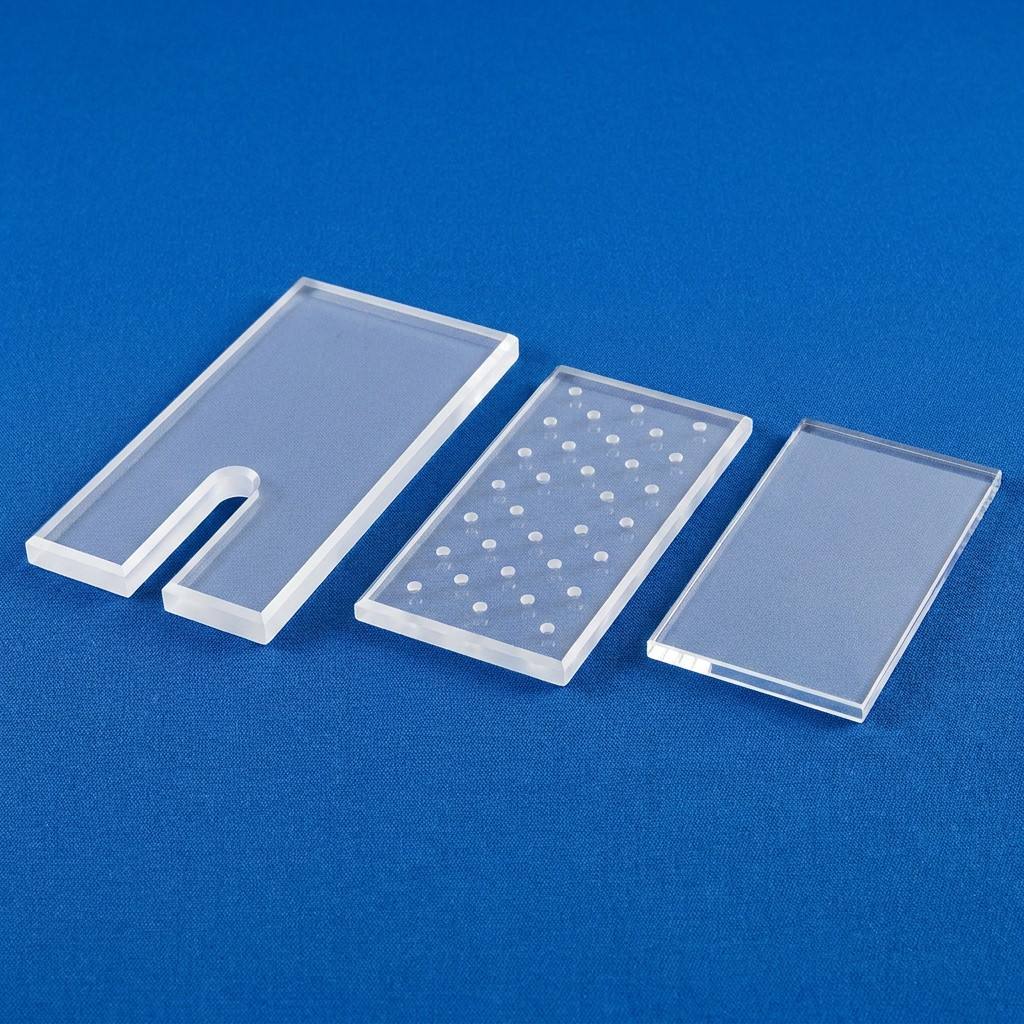
Quartz Oil Level Sight Glass Plate Fused Silica Clear Custom Size
- Chemical Inertness: Acid & Solvent Proof
- Edge Profiling: Ground & Fire Polished
- Thermal Shock: 1,100°C into cold water
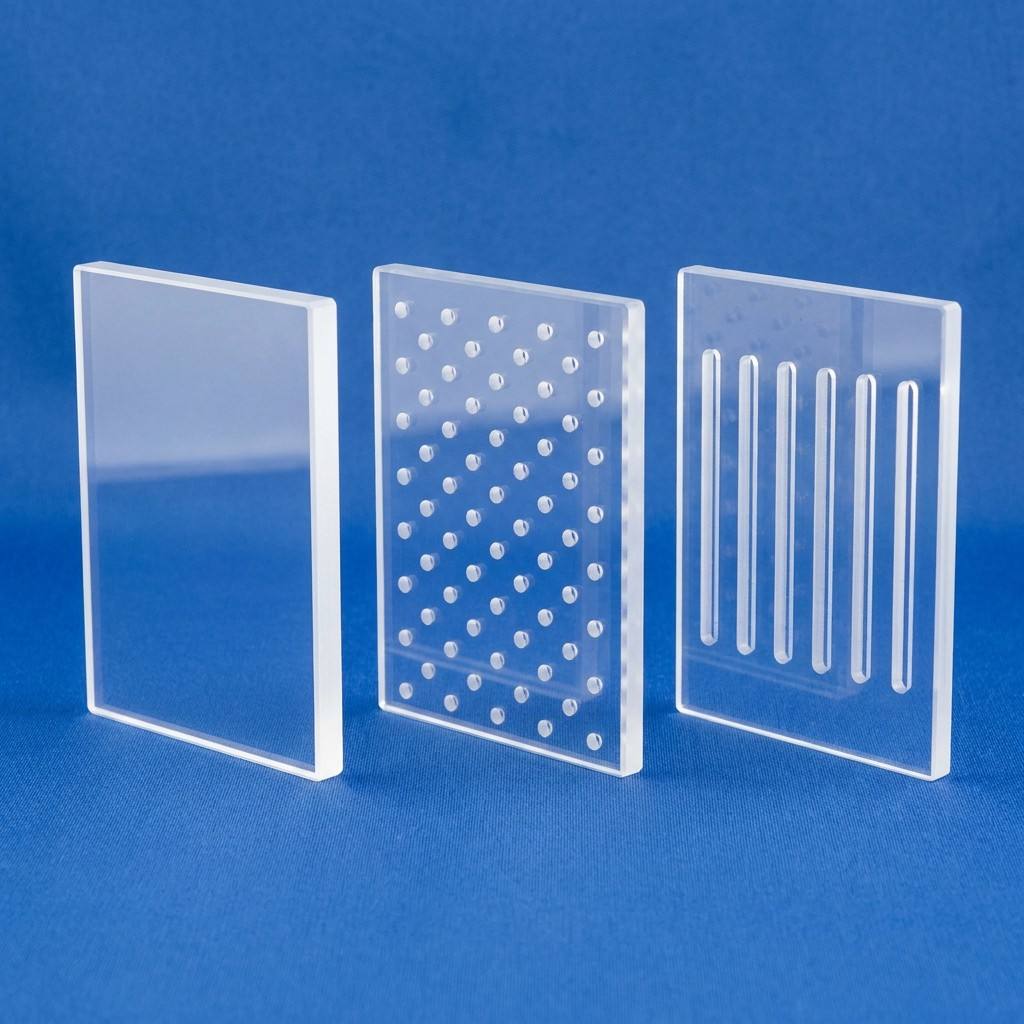
Drilled Quartz Plate Multi Hole Fused Silica CNC Machined Custom
- Micro Hole Drill: Ø ≥ 0.3 mm
- Hole Pitch Pitch: ±0.02 mm CMM Verified
- Substrate Grade: JGS1 / JGS2 Fused Silica
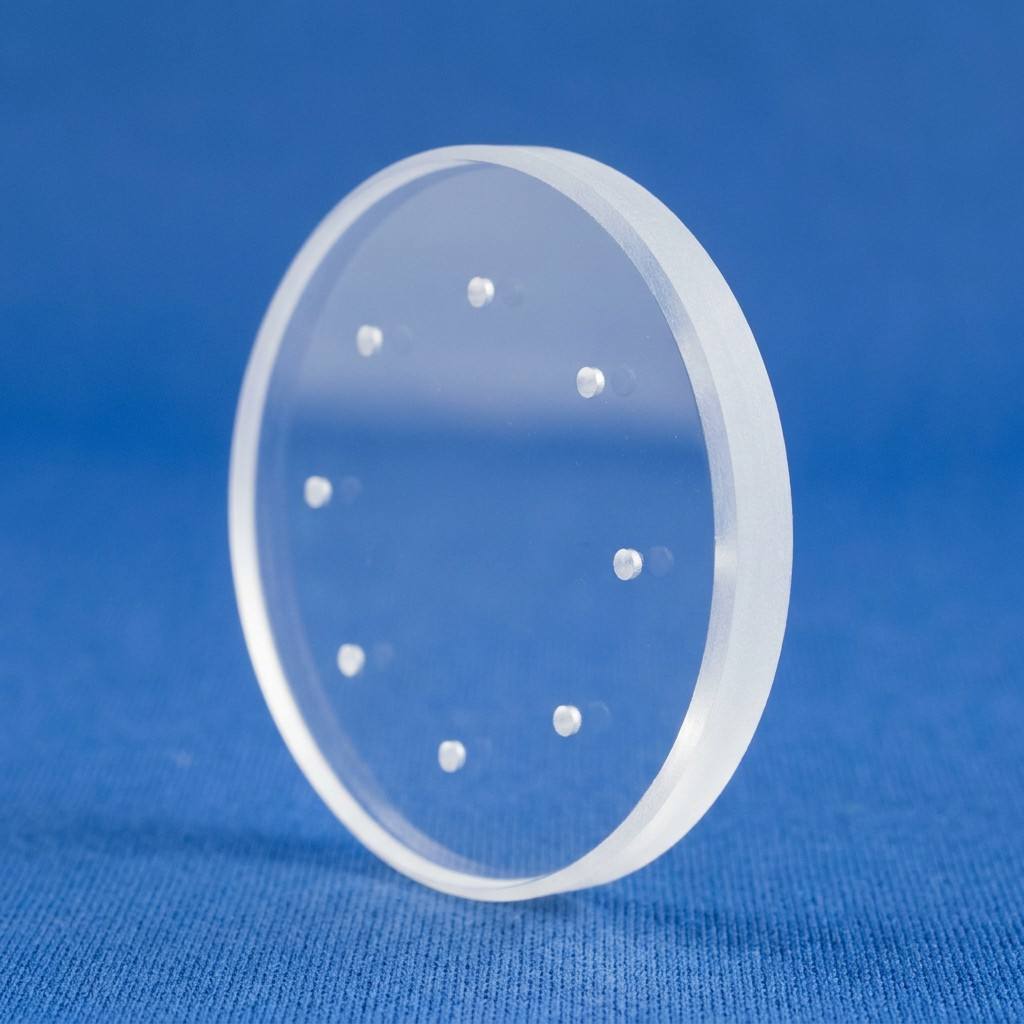
CNC Machined Quartz Plate Fused Silica Complex Shape Custom Size
- 5-Axis Machining: Step slots, pockets, notches
- Corner Radius: Internal R ≥ 0.5 mm
- Etch Resistance: Semiconductor PVD/CVD
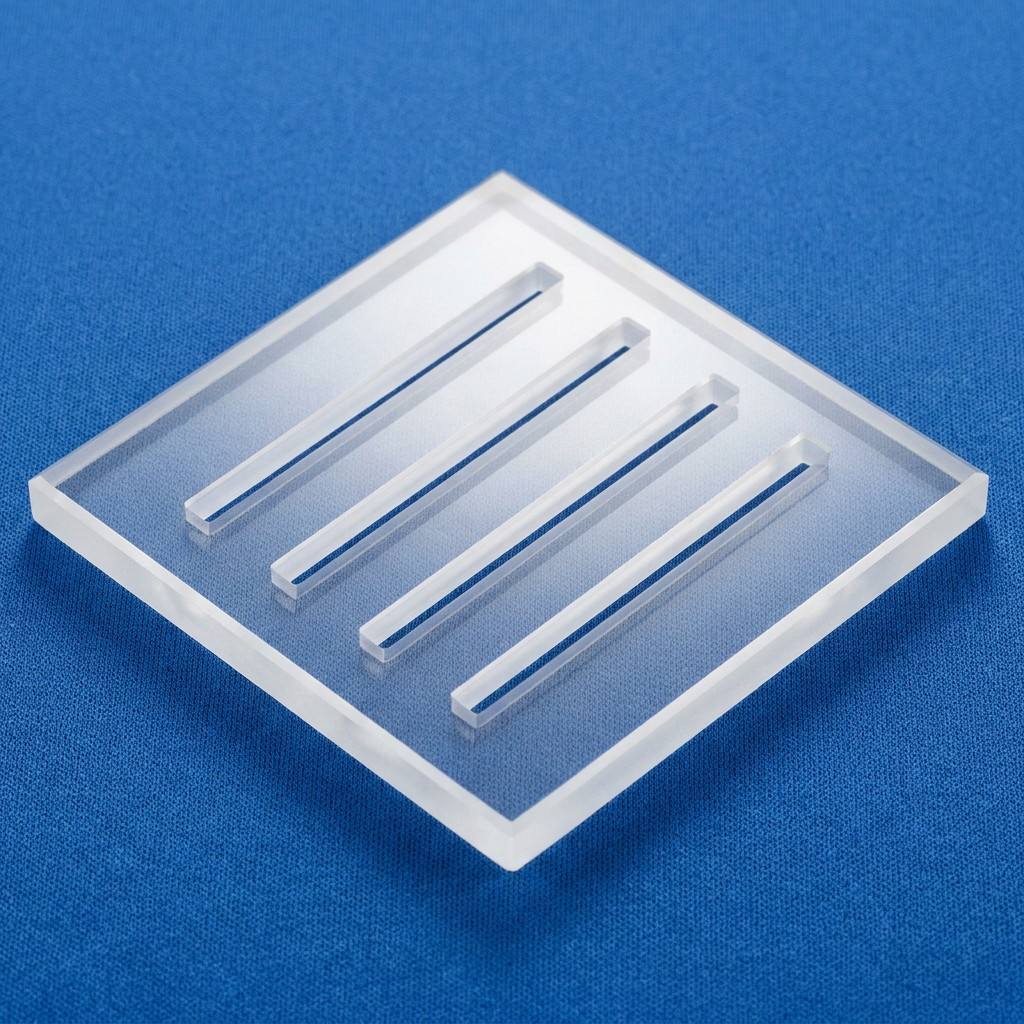
Quartz Observation Window Plate Fused Silica High Pressure Clear
- Parallelism: < 30 arc seconds
- Transmission Band: 190 nm – 2,500 nm
- Design Safety: Proof tested 4x burst load
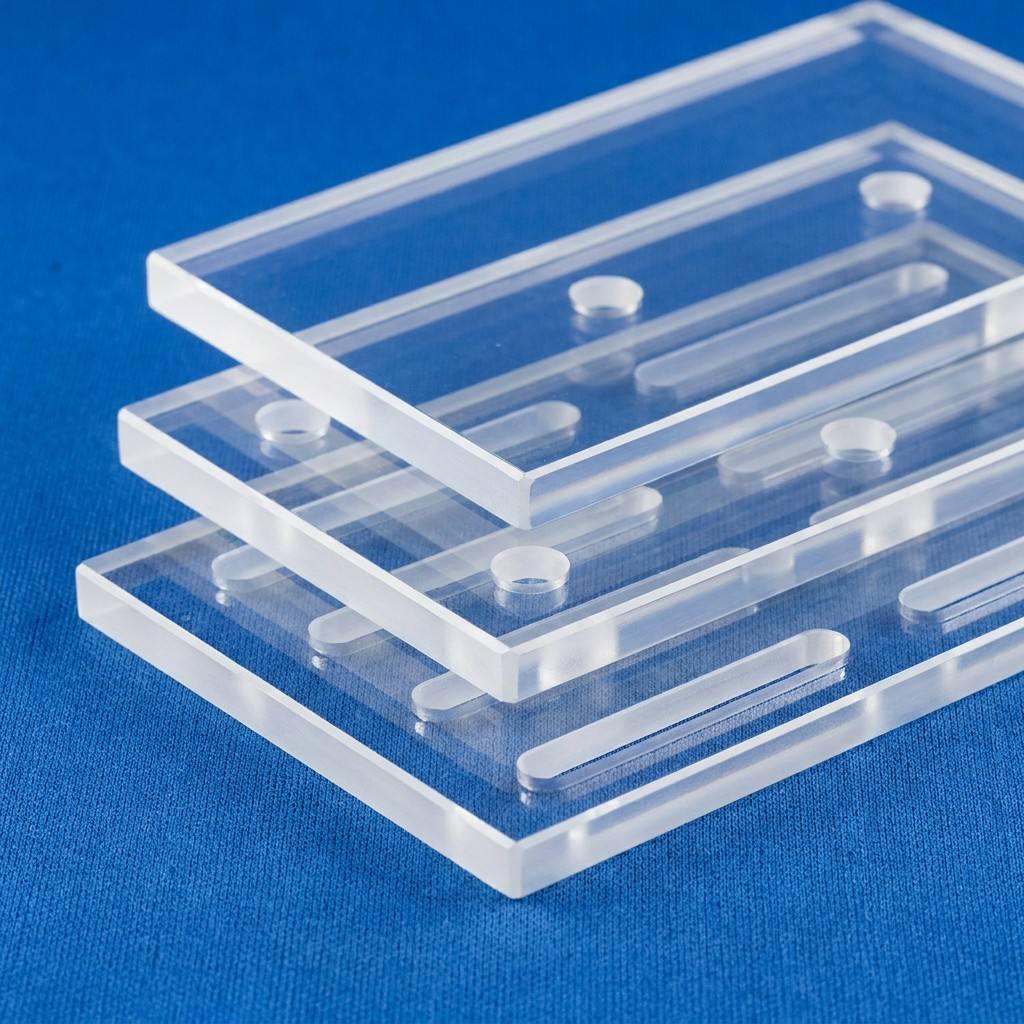
Quartz Disc with Groove Fused Silica Plate Clear Polished Custom Size
- Seal Integration: O-ring vacuum groove
- Surface Scratch-Dig: 60/40 or 40/20 MIL-PRF
- Diameter Envelope: Ø 10 mm to 650 mm
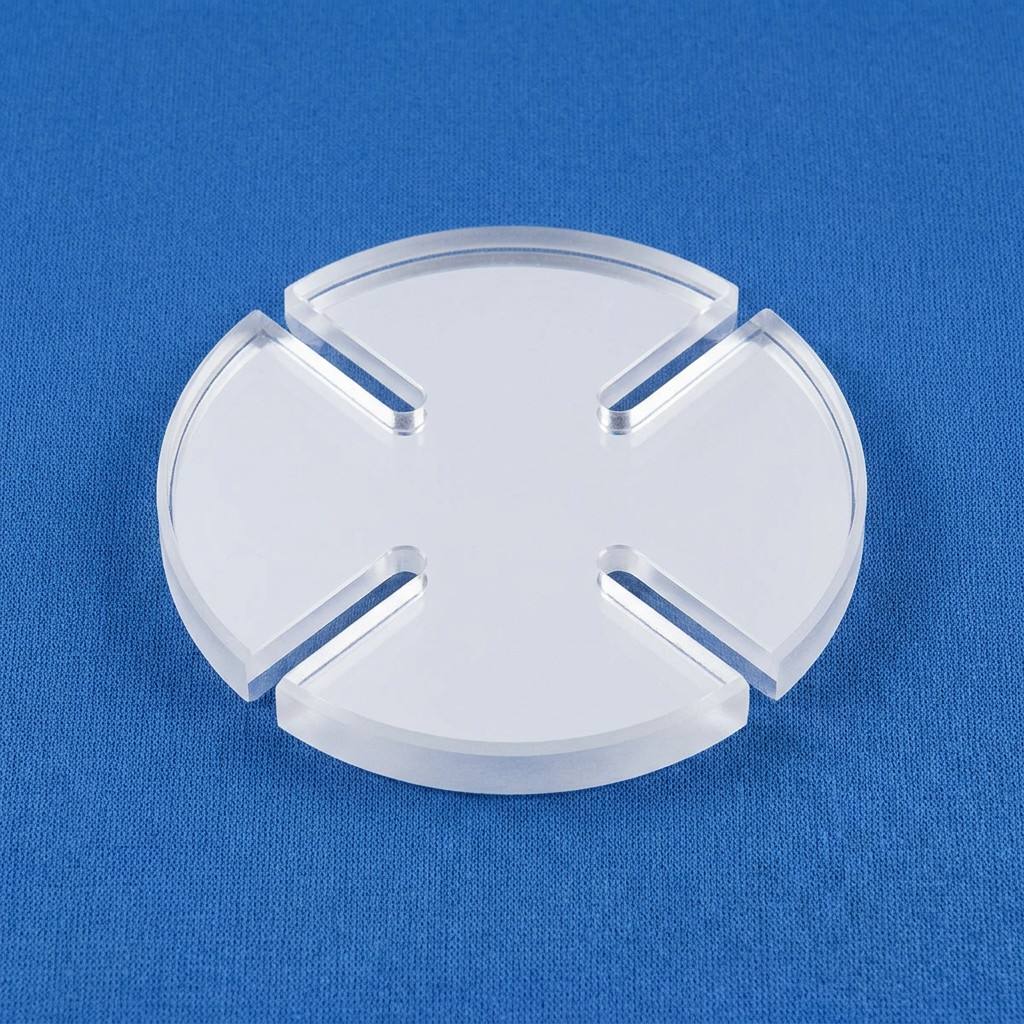
Quartz Glass Plate 0.5mm 1mm 2mm Thickness Fused Silica Clear Custom Size
- Precision Gauges: 0.2 mm, 0.5 mm, 1.0 mm, 2.0 mm
- TTV (Total Var.): < 0.005 mm
- Application: Biosensor & UV lithography
Fused Quartz vs. Fused Silica Plate Engineering Metrology
Procurement engineers in semiconductor fabs, photolithography optomechanics, and industrial process heating frequently face the critical choice between natural melted quartz (fused quartz) and synthetic precursor silica (fused silica).
Natural Fused Quartz Substrates (JGS2 / JGS3)
Manufactured by high-temperature electric arc melting or oxyhydrogen fusion of naturally occurring high-purity crystalline quartz sand (≥99.99% SiO₂). Originating directly from the quartz rich reserves of Donghai County, China, natural fused quartz is characterized by exceptionally high thermal resistance (continuous service at 1,100°C, softening temperature exceeding 1,680°C), minimal coefficient of thermal expansion (5.5 × 10⁻⁷ /°C), and unmatched structural rigidity.
Natural quartz plate variants are the primary choice for furnace viewports, semiconductor wafer carrier diffusion fixtures, etching process windows, and high-temperature boiler sight glasses where thermal shock resilience and economic scalability are the driving procurement criteria.
Synthetic Fused Silica Optical Windows (JGS1)
Synthesized through chemical vapor deposition (CVD) or flame hydrolysis utilizing high-purity silicon tetrachloride (SiCl₄) gas. Synthetic fused silica eliminates almost all metallic impurities (Fe, Al, Ti, Na ≤ 0.1 ppm each) and achieves exceptional internal transmission in the deep ultraviolet (DUV) spectrum down to 185 nm.
Synthetic plates feature zero internal bubbles, zero inclusions, negligible birefringence (stress optical coefficient ≤ 3.5 nm/cm), and laser damage thresholds (LDT) exceeding 15 J/cm² at 1064 nm. These characteristics make them non-negotiable for excimer laser projection optics, high-energy UV curing systems, and optical flat calibration reference plates.
With precise hydroxyl (OH⁻) content regulation—ranging from low-OH (<5 ppm) for infrared applications to high-OH (>1,000 ppm) for radiation-resistant deep UV systems—our fabrication facilities optimize the transmission envelope to buyer-specified wavelengths.
| Property / Specification Parameter | JGS1 (Synthetic Fused Silica) | JGS2 (Optical Fused Quartz) | JGS3 (Infrared Fused Quartz) | Test Standard / Metrology Method |
|---|---|---|---|---|
| Primary Spectral Bandwidth | 185 nm – 2,500 nm (DUV / UV) | 220 nm – 2,500 nm (Standard Opt) | 260 nm – 3,500 nm (NIR / IR) | UV-Vis-NIR Spectrophotometer |
| SiO₂ Purity / Metallic Trace | ≥ 99.999% (<1 ppm metals) | ≥ 99.99% (≤20 ppm metals) | ≥ 99.99% (≤25 ppm metals) | ICP-MS Inductively Coupled Plasma |
| OH⁻ (Hydroxyl) Radical Content | High: 800 – 1,200 ppm | Medium: 150 – 300 ppm | Low: < 5 ppm (Water-Free) | FTIR Spectrometry Absorption |
| Thermal Expansion (0–300°C) | 5.5 × 10⁻⁷ /°C | 5.5 × 10⁻⁷ /°C | 5.4 × 10⁻⁷ /°C | Dilatometry (ASTM E228) |
| Continuous Service Temp | 1,050 °C | 1,100 °C | 1,150 °C | Thermal Stability Testing |
| Strain / Annealing Point | 1,070°C / 1,180°C | 1,120°C / 1,215°C | 1,140°C / 1,225°C | Beam Bending Viscosimetry |
| Refractive Index (nd @ 589.3nm) | 1.4585 | 1.4584 | 1.4586 | Abbe Refractometer Prism Metrology |
| Surface Quality Capability | 20/10 Scratch-Dig; λ/10 Wave | 40/20 Scratch-Dig; λ/4 Wave | 60/40 Scratch-Dig; Commercial Lapped | MIL-PRF-13830B / ISO 10110 |
Sub-Micron CNC Cold Machining & Surface Lapping
Quartz plates require specialized non-contact ultrasonic abrasive processing, diamond grinding, and high-purity chemical polishing to prevent micro-cracks and residual thermal stresses.
Double-Sided Optical Lapping & Polishing
Equipped with 9B and 16B multi-spindle planetary polishing machines using cerium oxide and diamond slurries. We routinely achieve optical surface flatness down to λ/10 (λ = 632.8 nm) per 100 mm diameter and parallelism ≤ 10 arcseconds, critical for laser windows, interferometry plates, and optical calibration standards.
Ultrasonic CNC Micro-Drilling
Standard mechanical drilling causes micro-fracturing along hole edges that fails under cyclic furnace heating. Our 5-axis ultrasonic CNC milling centers generate round, square, stepped, and counter-bored hole arrays down to 0.3 mm diameter with edge chipping strictly controlled to < 0.05 mm, ideal for showerheads, carrier plates, and sensor ports.
Laser Etching, Beveling & Thermal Annealing
Following CNC waterjet profiling and CNC grinding, every machined quartz plate undergoes a multi-stage thermal annealing cycle in computer-controlled electric resistance furnaces at 1,150°C. This process relieves 100% of internal mechanical machining stress, guaranteeing zero spontaneous cracking under severe operational conditions.
Direct-Factory Advantage: Rooted in China's Quartz Capital
VEZLO Quartz operates a specialized 50-mu (≈33,000 m²) production base in Donghai County, Jiangsu Province—globally acknowledged as the premier raw silicon and natural quartz crystal processing cluster in Asia. Supported by RMB 10 million in fixed assets, we maintain end-to-end quality jurisdiction from raw high-purity quartz sand refinement (≤20 ppm trace metals) to CNC finished components.
- State-Backed Technology: Developer of provincial Science & Technology project 320 mm/520 mm semiconductor-grade quartz components.
- Independent Metrology: Comprehensive factory inspection with CMM coordinate measuring, UV-Vis spectrophotometry, and polarized stress meters.
- Global Export Logistics: Multilayer vacuum packaging, shock-dampening pearl foam, and export-compliant fumigation-free wooden cases.
- Factory Footprint
- 33,000 m² (50 Mu)
- Sand Refinement
- 13 Purity Grades
- Trace Metals
- ≤ 20 ppm Total
- Export Compliance
- ISO 9001 / RoHS
- Average Inbound Reply
- ≤ 2 Hours
- Client Reorder Ratio
- Over 50% Verified
Global Procurement Trends: Fused Quartz Plates (2025–2030)
Procurement leaders across North America, Europe, and the Asia-Pacific region are navigating supply-chain restructuring, stricter dimensional tolerances, and higher material purity standards.
Strict Inspection Protocols: DIN ISO 10110 & MIL-PRF Standards
To ensure flawless performance under vacuum, high mechanical pressure, and optical projection, our inspection laboratory validates every production batch against internationally accepted metrological standards.
Visual Defect Taxonomy: Inclusions, Bubbles & Airlines
Natural quartz plate manufacturing involves high-temperature fusion where microscopic gas pockets or refractory trace particles can become trapped. Under DIN ISO 10110-3, we inspect and categorize every plate into strict tolerance classes:
- Class 0 (Zero Bubbles): Reserved for precision laser optics and photolithography mask substrates. Zero permissible bubbles or inclusions >0.05 mm across the clear aperture.
- Class 1 & 2 (Optical Industrial): Maximum permissible cross-sectional bubble area ≤ 0.1 mm² per 100 cm³. Typical for high-pressure sight glasses and UV curing windows.
- Class 3 & 4 (Commercial Furnace Grade): Dispersed airlines and micro-bubbles permitted, with zero impact on mechanical strength or thermal shock integrity.
Every shipment is accompanied by a formal factory inspection certificate verifying optical transmission, bubble-inclusion density, and dimensional CMM results.
Optical Transmittance & Surface Scratch-Dig Metrology
Surface quality is controlled under MIL-PRF-13830B guidelines using designated optical bright-field shadowgraph stations. We deliver:
- Commercial Lapped & Ground (80/50): Standard for mechanical spacers, furnace baffles, and boiler fluid indicators.
- Precision Optical Polish (60/40): Default for laboratory windows, sensor covers, and infrared viewports.
- High-Precision Laser Grade (40/20 & 20/10): Super-polished with surface roughness Ra ≤ 0.5 nm, eliminating scatter loss for high-power laser optics and interferometer flats.
Transmission profiles are verified using Shimadzu UV-3600 Plus spectrophotometers across 190 nm to 3,200 nm, guaranteeing internal transmittance τ ≥ 90% at specified working bands.
Frequently Asked Questions for Quartz Plate Sourcing
Direct answers to the most common technical, logistical, and commercial inquiries submitted by procurement teams, mechanical design engineers, and laboratory purchasing managers.
What are the key differences between JGS1, JGS2, and JGS3 quartz plates? +
JGS2 is fused quartz made from natural crystal quartz, offering good UV-visible transmission (220–2,500 nm) with superior thermal stability at a lower price point. Suitable for sight glasses, high-temperature viewports, and semiconductor furnace parts.
JGS3 is infrared optical fused quartz manufactured under vacuum or low-water conditions, with hydroxyl content <5 ppm. It eliminates the 2.73 μm absorption band, making it optimal for thermal imaging, FTIR spectroscopy, and infrared pyrometry windows.
How does fused quartz plate withstand extreme thermal shock compared to borosilicate glass? +
A 10 mm thick transparent fused quartz plate heated to 1,100°C can be quenched directly into 20°C cold water without fracturing or crazing, whereas borosilicate glass shatters when exposed to thermal drops exceeding 150°C.
What machining tolerances can you hold on custom-shaped or drilled quartz plates? +
- Outer Dimensions (Length & Width): Standard ±0.05 mm; high-precision ±0.02 mm.
- Thickness Tolerance: Standard ±0.05 mm; precision lapped ±0.005 mm.
- Hole Diameter & Center Pitch: ±0.02 mm with minimum hole diameter of 0.3 mm.
- Parallelism & Flatness: Parallelism < 10 arcseconds; flatness λ/4 to λ/10 per 100 mm.
- Edge Finishing: Chamfered (C0.2–C1.0 mm), ground matte, or fire-polished according to application requirements.
Can quartz plates withstand hydrofluoric acid or concentrated alkaline solutions? +
Similarly, strongly basic alkaline solutions (such as concentrated NaOH or KOH) attack quartz surfaces at temperatures above 60°C. For all neutral, organic, and standard acidic fluid systems, quartz remains completely inert with zero ion-leaching contamination.
How do you protect fragile quartz plates against breakage during international air and ocean shipping? +
- Surface Protection: Optical face surfaces are sealed with residue-free protective static film or cleanroom acid-free lens tissue.
- Individual Encapsulation: Plates are housed in custom-cut, high-density EPE (pearl cotton) suspension inserts or sealed vacuum cassettes.
- Intermediate Shock Casing: Internal boxes are packed into heavy-duty corrugated cartons lined with dampening foam.
- Master Shipping Crate: Multiple cartons are secured within fully enclosed, fumigation-free plywood crates reinforced with exterior steel banding and integrated impact-indicator warning labels.
What documentation and technical data should be provided when requesting a customized quotation? +
- 2D/3D Drawing: PDF, DXF, DWG, or STEP format specifying critical dimensions, bevels, and tolerances.
- Material Grade: Synthetic Fused Silica (JGS1), Optical Fused Quartz (JGS2), or Infrared Grade (JGS3).
- Surface & Edge Quality: Commercial polish (80/50), precision polish (60/40 or 40/20), or fine ground.
- Operating Conditions: Peak temperature, chemical exposure, internal pressure, and optical wavelength band.
- Order Quantity: Prototype sampling quantity and estimated annual production volume for tier pricing.
Consult with Our Quartz Machining Engineers
Submit your CAD drawings or technical specifications today. Our engineering desk in Donghai reviews design feasibility, selects optimal material grades, and returns comprehensive quotation packages within 2 hours.