Core Fused Silica & Quartz Components for Andorra la Vella
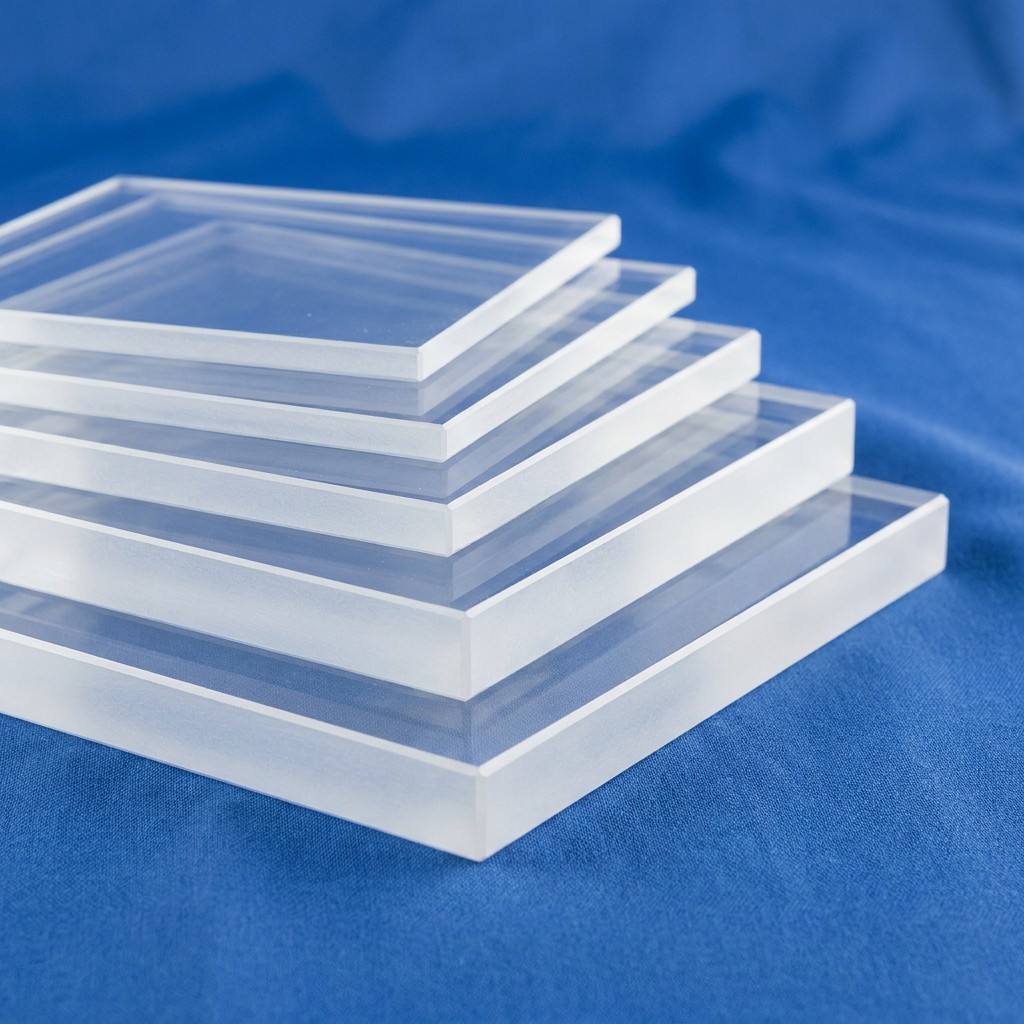
Custom-cut optical plates, thermal viewing windows, and semiconductor substrates manufactured strictly under ISO 9001 and CE directives, delivered directly to the Pyrenean regional industrial zone.



Comprehensive Fused Silica Sand Sourcing for Andorra la Vella
Sourcing industrial minerals and synthesized refractory aggregates requires navigating stringent material tolerances, chemical composition standards, and geographic supply chain dynamics. For industrial engineers, material specifiers, and procurement teams located within Andorra la Vella and the broader parishes of the Principality of Andorra, obtaining CE certified fused silica sand (often referenced scientifically as fused quartz or fused silica grains) requires an acute understanding of how material chemistry translates into thermodynamic performance.
Fused silica sand is synthesized through the thermal fusion of crystalline quartz grains under electro-thermal arc melting at temperatures surpassing 2,000 °C, subsequent amorphous solidification, and precision crushing and screening. The resulting aggregate possesses an amorphous (non-crystalline) structure dominated by rigid three-dimensional silicon-oxygen tetrahedral networks. In contrast to standard quartz sands or crystalline silica, high-purity fused silica exhibits a near-zero coefficient of thermal expansion (CTE) of approximately 5.5 × 10⁻⁷ /°C within the thermal window of 20 °C to 1,000 °C. This physical property renders it nearly indestructible against catastrophic thermal shock—a factor that underpins its widespread deployment in investment casting shell systems, technical refractories, specialized technical ceramic compounding, and dielectric encapsulation materials.
Localized Industrial Applications in the Principality of Andorra
While Andorra is widely recognized for its alpine geography, commerce, and tourism, Andorra la Vella serves as the technical and administrative heartbeat for a discreet, highly specialized industrial ecosystem. The primary localized demand vectors for CE certified fused silica sand and its derived quartz components focus on specialized niches:
Advanced District Biomass & Boiler Systems
High-altitude heating plants in Andorra la Vella rely on fused silica sand in fluidized beds and inspection ports to resist extreme slag corrosion and sudden alpine temperature gradients.
High-End Precision Tooling & Casting
Specialized metallurgy and prototyping workshops utilize fused silica flours (200 mesh, 325 mesh) as ceramic slurries to achieve smooth, dimensionally flawless surfaces on alloy parts.
Environmental Monitoring & Analytical Tech
Optical-grade fused silica sand serves as the base for spectrophotometric observation windows, UV filtration substrates, and meteorological sensors deployed along the Pyrenean peaks.
Material Grade Characterization: Fused Silica vs. Standard Quartz
For specifiers in Andorra la Vella, distinguishing between natural high-purity quartz and electro-fused silica is critical to project longevity. Natural quartz maintains an anisotropic crystalline hexagonal structure, meaning that it undergoes an α-β phase transition at 573 °C accompanied by significant volumetric expansion. This volumetric disruption causes internal cracking in refractory linings and precision molds. Conversely, CE certified electro-fused silica sand remains amorphous, preventing volumetric phase fractures and maintaining structural and chemical neutrality even when exposed to severe acid attack (with hydrofluoric acid and concentrated boiling phosphoric acid being the sole notable exceptions).
| Physical / Chemical Property | Fused Silica Sand (Technical Grade) | Fused Quartz Optical Plates | Standard Industrial Silica Sand |
|---|---|---|---|
| Chemical Formula / Phase | Amorphous SiO₂ (>99.9%) | Vitreous SiO₂ (>99.99%) | Crystalline α-Quartz (<98.5%) |
| Linear CTE (20 °C – 1,000 °C) | 0.54 × 10⁻⁶ K⁻¹ | 0.55 × 10⁻⁶ K⁻¹ | 14.0 × 10⁻⁶ K⁻¹ (Variable) |
| Specific Gravity / Bulk Density | 2.20 g/cm³ / 1.20–1.45 g/cm³ | 2.20 g/cm³ | 2.65 g/cm³ / 1.60 g/cm³ |
| Maximum Working Temperature | 1,150 °C (Continuous) | 1,200 °C (Continuous) | <600 °C (Phase Shift Risk) |
| Dielectric Constant (1 MHz) | 3.75 | 3.70 – 3.80 | 4.50 – 5.00 |
| Thermal Conductivity (at 20 °C) | 1.38 W/(m·K) | 1.40 W/(m·K) | 6.50 W/(m·K) |
Future Market Trends in the Pyrenean Corridor
The Pyrenean industrial sector is progressively pivoting toward decarbonization, high-efficiency building insulation formulations, and localized closed-loop technical casting. In Andorra la Vella, high thermal inertia systems require raw materials that reduce carbon footprints through operational longevity. Because components engineered from CE-certified high-purity fused silica sand exhibit lifecycle durations 3 to 5 times longer than typical crystalline alternatives, life-cycle costs are reduced substantially. Additionally, the proliferation of specialized optoelectronic and sensor assembly labs in the region is driving sustained demand for fused silica substrate materials that integrate minimal parasitic capacitive coupling with extreme optical clarity.
Direct-From-Source Manufacturing Excellence
Operating from a 50-mu (≈33,000 m²) production facility in Donghai County—globally known as the quartz capital—VEZLO Quartz Products Co., Ltd. leverages deep raw mineral reserves and comprehensive vertical processing capabilities. Backed by RMB 10 million in fixed assets, our facility integrates electric arc fusion, automated grain size sorting, acid leaching, and flame-working workshops.
- CE & ISO Conformity: Manufactured and certified to fulfill European harmonized directives for technical materials and pressure assemblies.
- Provincial R&D Recognition: Successfully led the Jiangsu Provincial Science & Technology Support Project for ultra-high-purity large-diameter quartz systems.
- Strict Trace Impurity Control: Proprietary multi-stage physical and chemical beneficiation guarantees total metal impurities ≤20 ppm.
- Prompt Technical Response: Engineering consultation and custom dimensional quoting delivered within an average turnaround time of ≤2 hours.
- Dedicated European Logistics: Multilayer anti-shock crate packing engineered specifically to navigate transit over European highway networks to Andorra la Vella without breakage.

Frequently Asked Questions for Buyers in Andorra la Vella
Direct technical and logistical answers regarding the import, application, and specification of CE certified fused silica sand and quartz products.
What specific CE certifications apply to fused silica sand and quartz products entering Andorra?
How does the high altitude of Andorra la Vella (over 1,000 meters) impact fused silica glass performance?
What grain sizes (mesh fractions) of fused silica sand are available for custom shipment?
What are the freight and customs procedures for shipping industrial fused silica into Andorra?
Can VEZLO Quartz manufacture custom finished quartz components to engineering drawings?
Request Certified Fused Silica Sand & Precision Components
Consult with our quartz materials engineers today. Get detailed chemical analysis reports, physical property verification, and competitive volume delivery quotes directly to Andorra la Vella.
Inquire Now