Engineered Fused Quartz & Silica Solutions
Procurement-ready components tailored for San Jose cleanroom equipment manufacturers, dry etch chambers, optical test benches, and chemical processing skids.
Silicon Valley's High-Temperature Processing Ecosystem: The San Jose Mandate
The San Jose metropolitan region—anchoring the broader Santa Clara Valley high-technology manufacturing belt—represents the world's most concentrated consumer of ultra-high-purity fused silica and synthetic quartzware. From front-end semiconductor fabrication plants in North San Jose to advanced wafer equipment original equipment manufacturers (OEMs) in Sunnyvale, Santa Clara, and Fremont, precision quartz components serve as non-negotiable process enablers. In thermal oxidation, chemical vapor deposition (LPCVD/PECVD), rapid thermal processing (RTP), and plasma etching chambers, process repeatability hinges directly on the structural purity and dimensional accuracy of quartz apparatuses.
As integrated circuit geometries shrink toward sub-3nm nodes, semiconductor fabrication tools demand raw materials with virtually non-existent alkali and transition-metal contamination. Sodium (Na), potassium (K), iron (Fe), and copper (Cu) ions act as lethal mobile impurities capable of destroying gate oxide integrity and degrading carrier lifetimes. Chinese manufacturing clusters in Donghai County—globally celebrated as China's quartz capital—have transitioned from basic raw material processors into advanced engineering hubs. By combining indigenous high-purity natural silica sand reserves (demonstrating total conventional metal impurity levels below 20 ppm) with multi-axis CNC cold diamond machining and cleanroom fusion, factory-direct exporters provide San Jose procurement teams with direct tier-1 alternatives to inflated domestic machine shops.
Wafer Oxidation & Diffusion
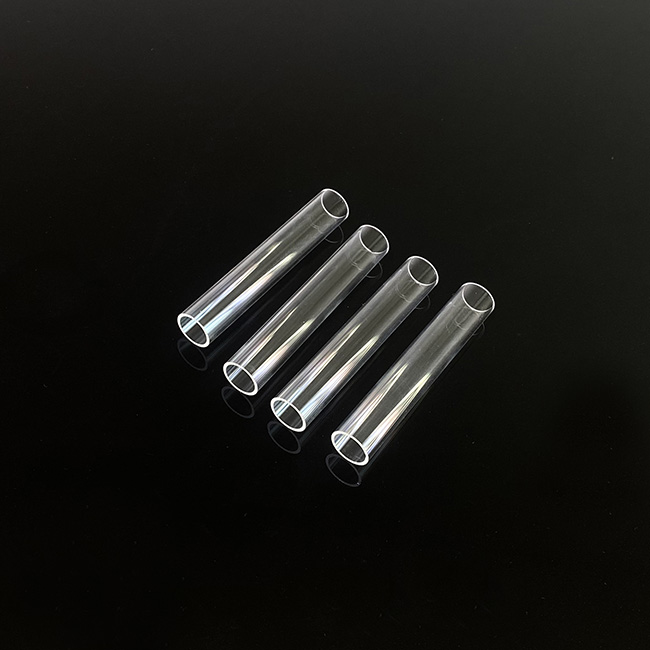
Horizontal and vertical furnace process tubes up to 520 mm diameter, wafer boats, pedestals, and liner tubes designed for thermal cycles exceeding 1,150 °C without devitrification or sagging.
Dry Etch & Plasma Containment
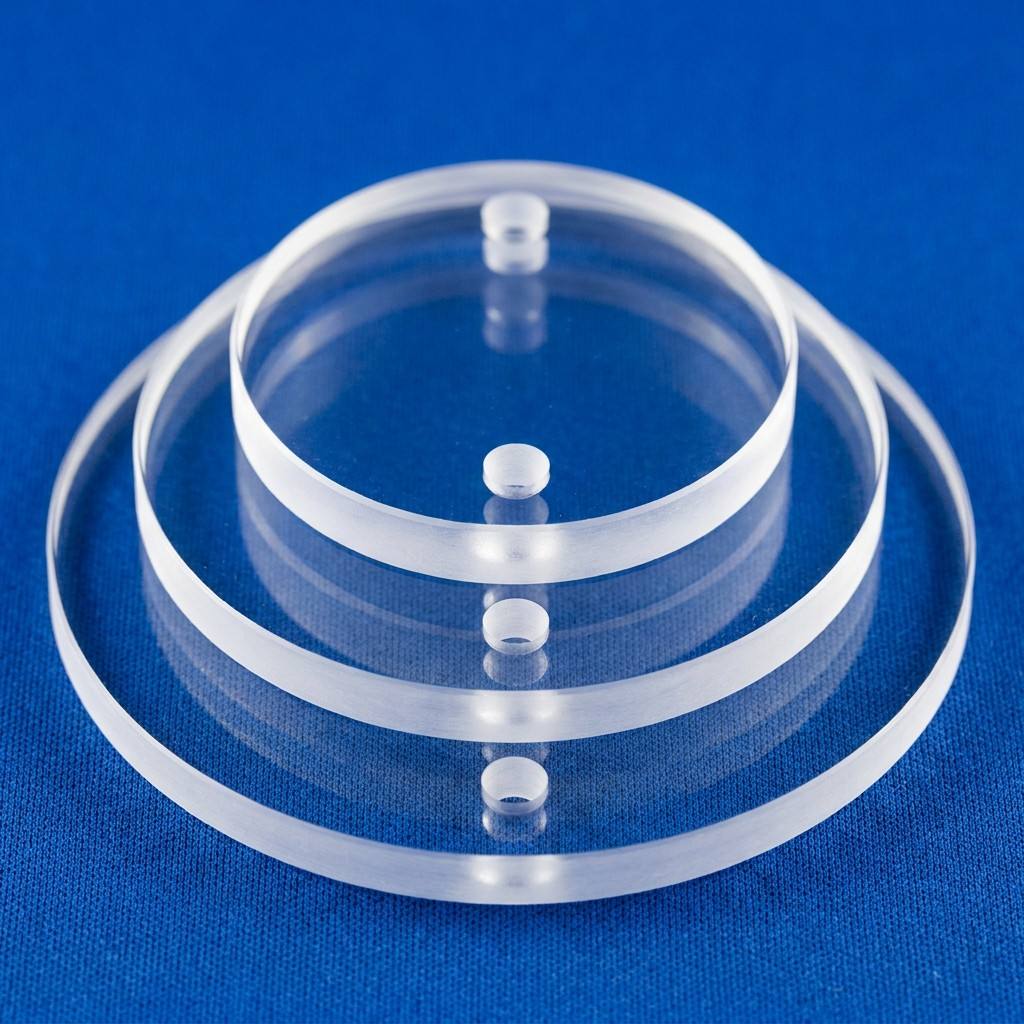
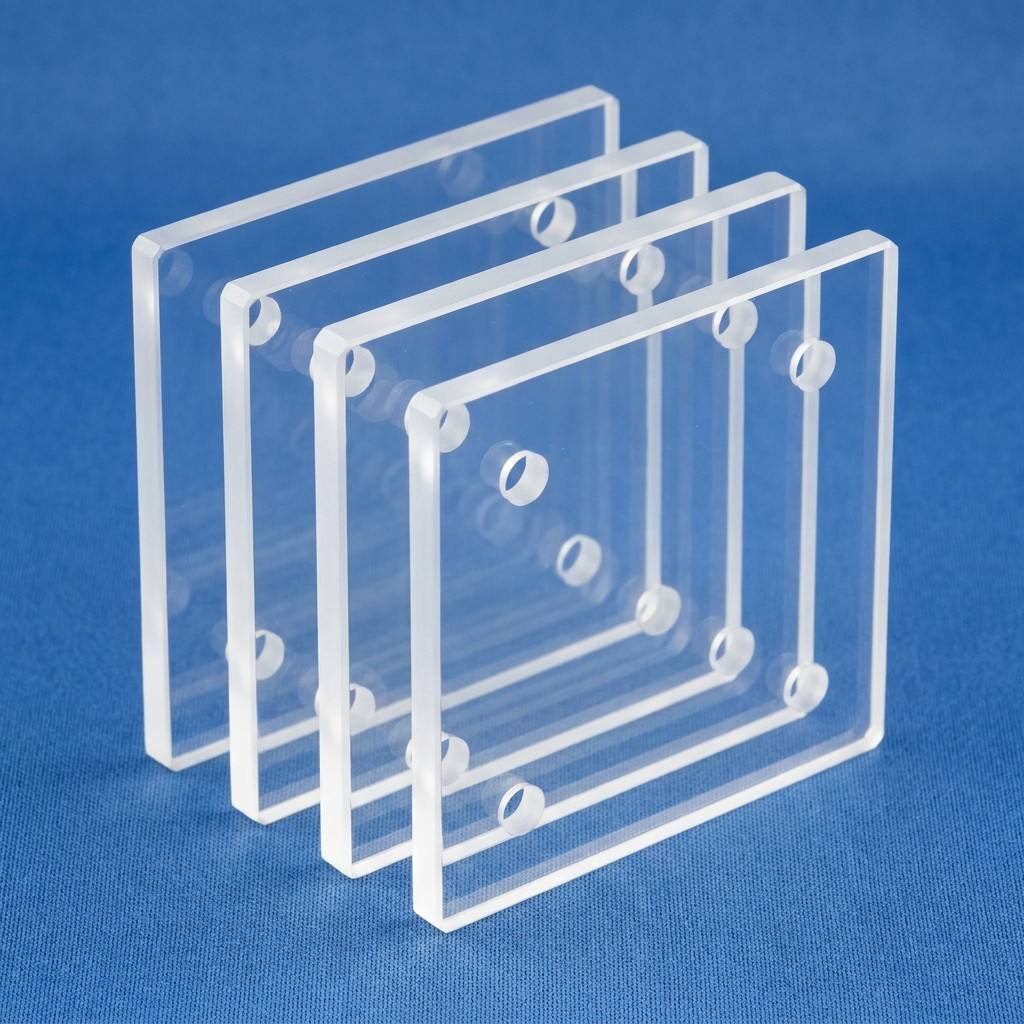
Gas distribution showerheads, dielectric focus rings, and plasma chamber viewports capable of resisting highly reactive halogen gases (fluorine and chlorine radicals) under intense RF power.
Photonics & Excimer Lasers
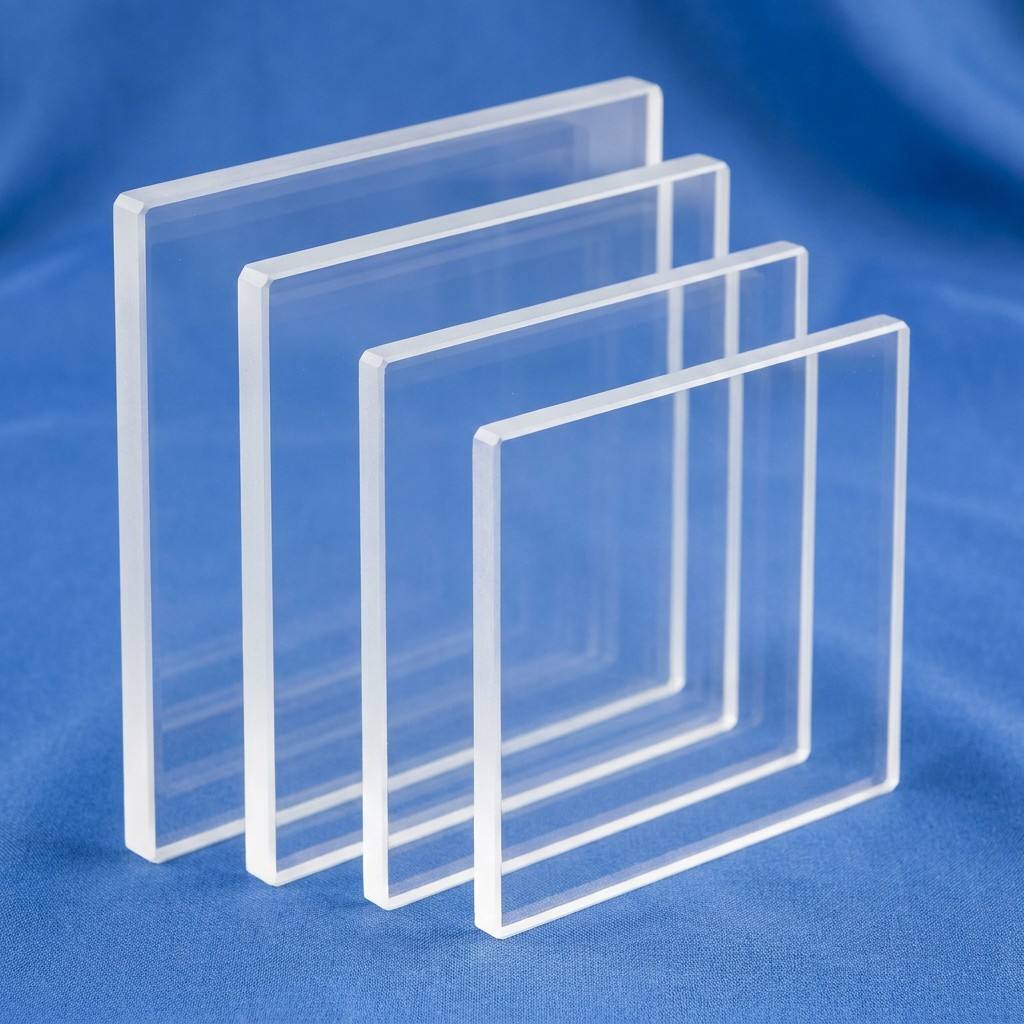
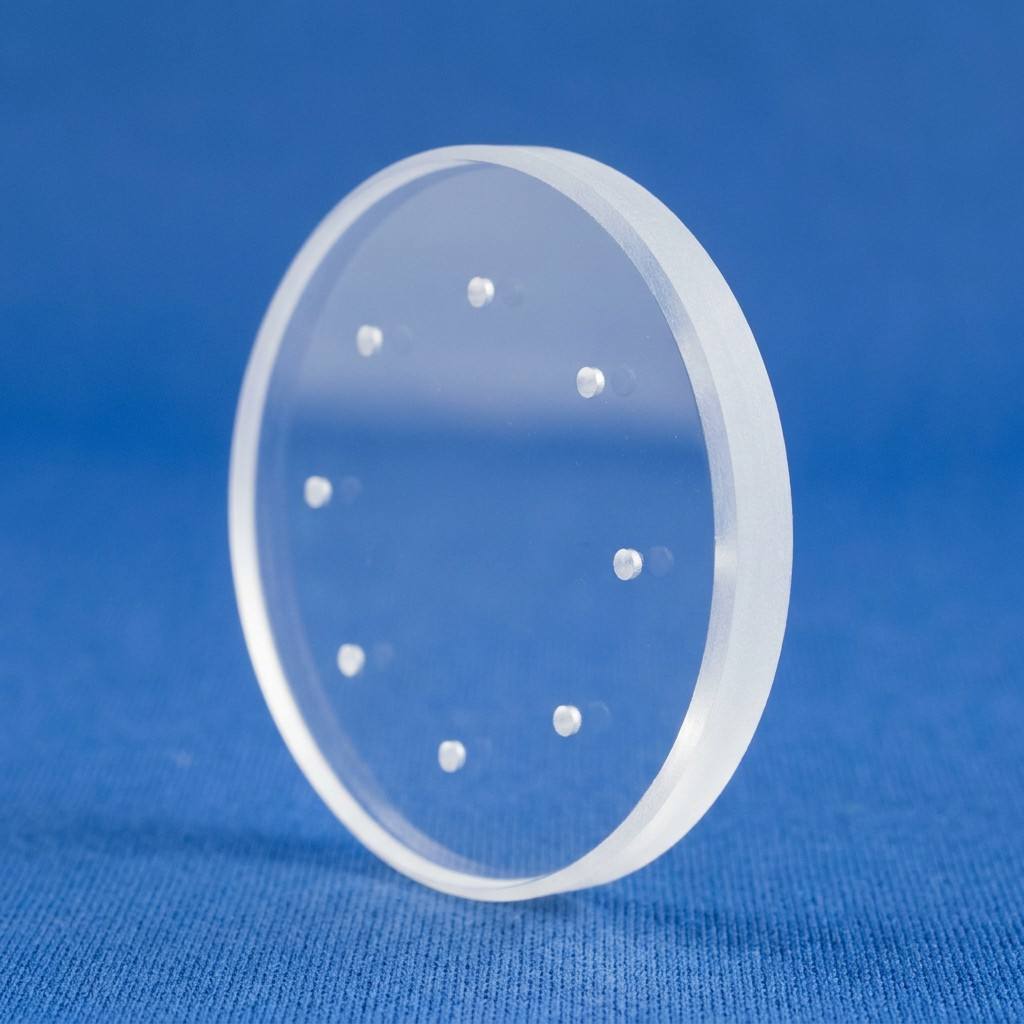
Extreme UV-grade fused silica windows, laser debris shields, and beam collimator plates serving laser annealing, lithography inspection, and micromachining startups along Highway 237.
Bio-MEMS & Analytical Diagnostics
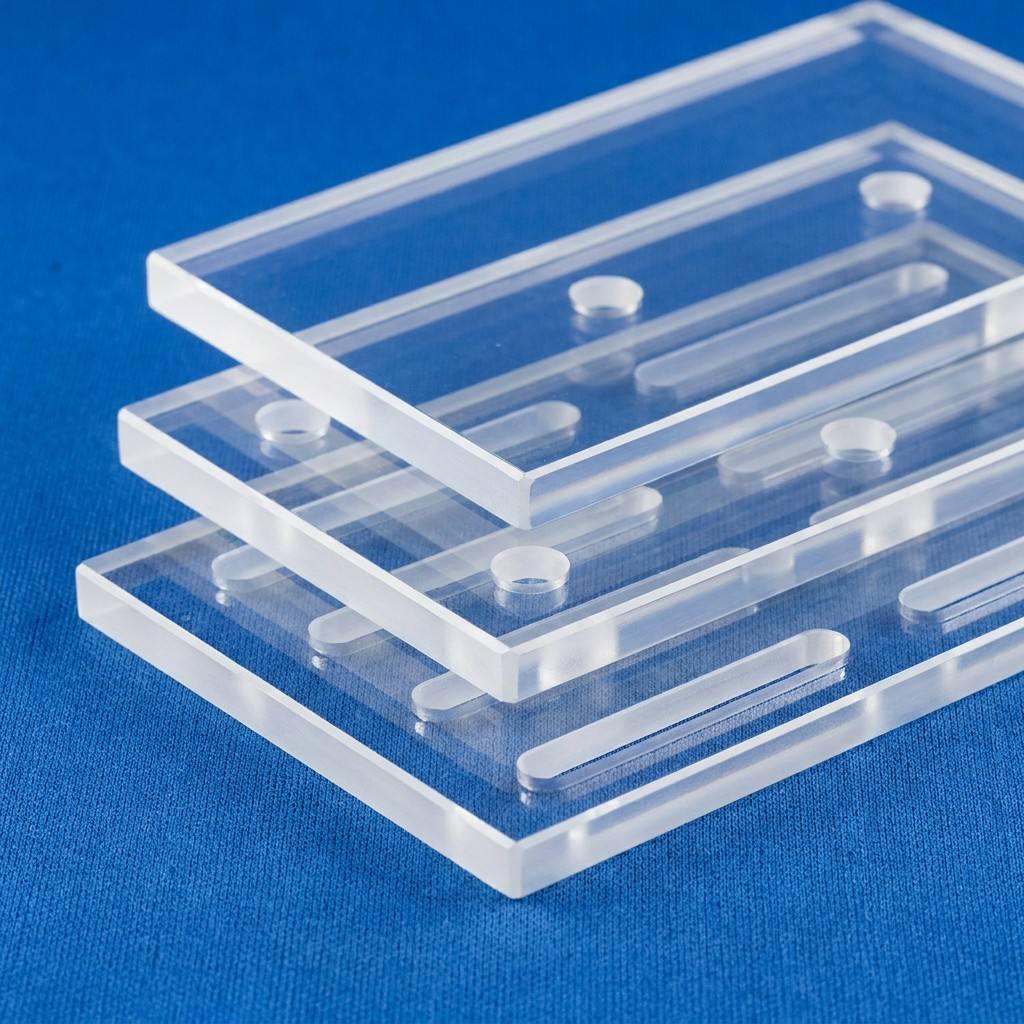
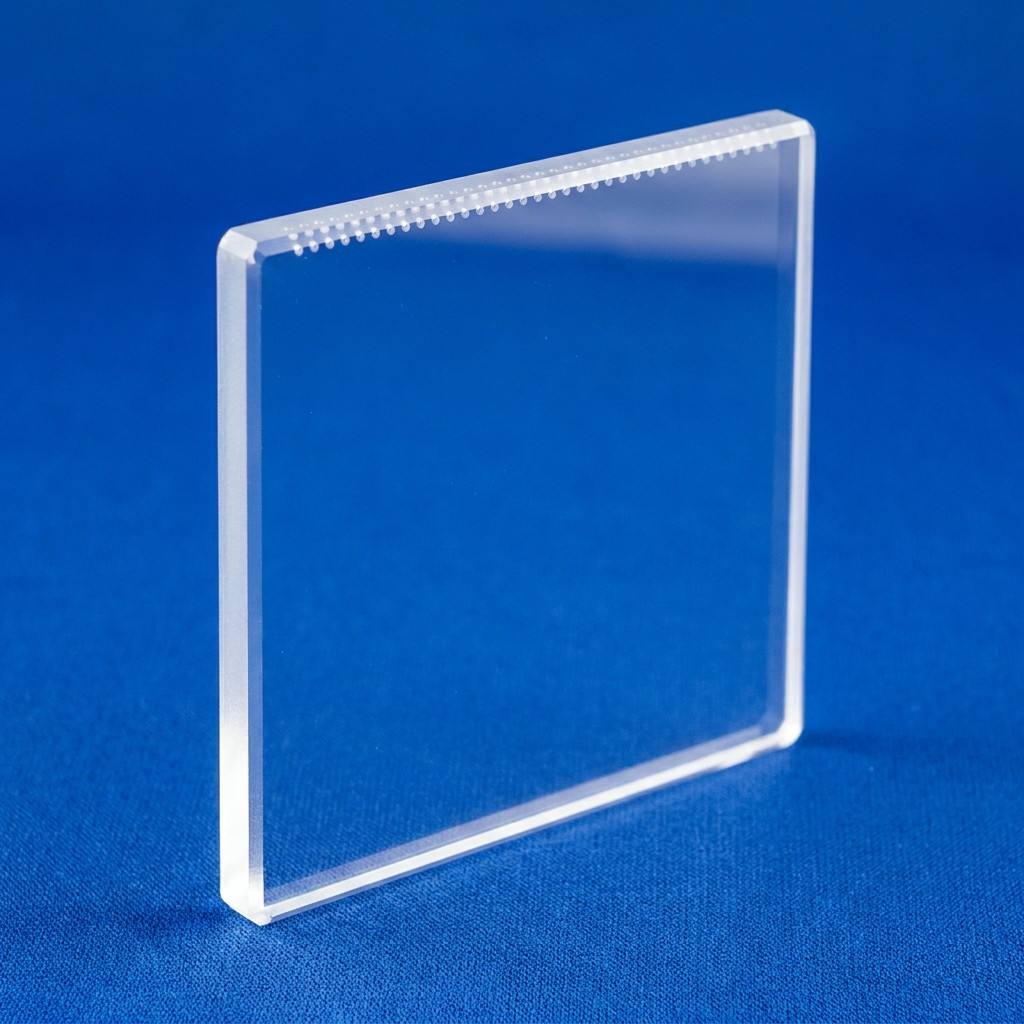
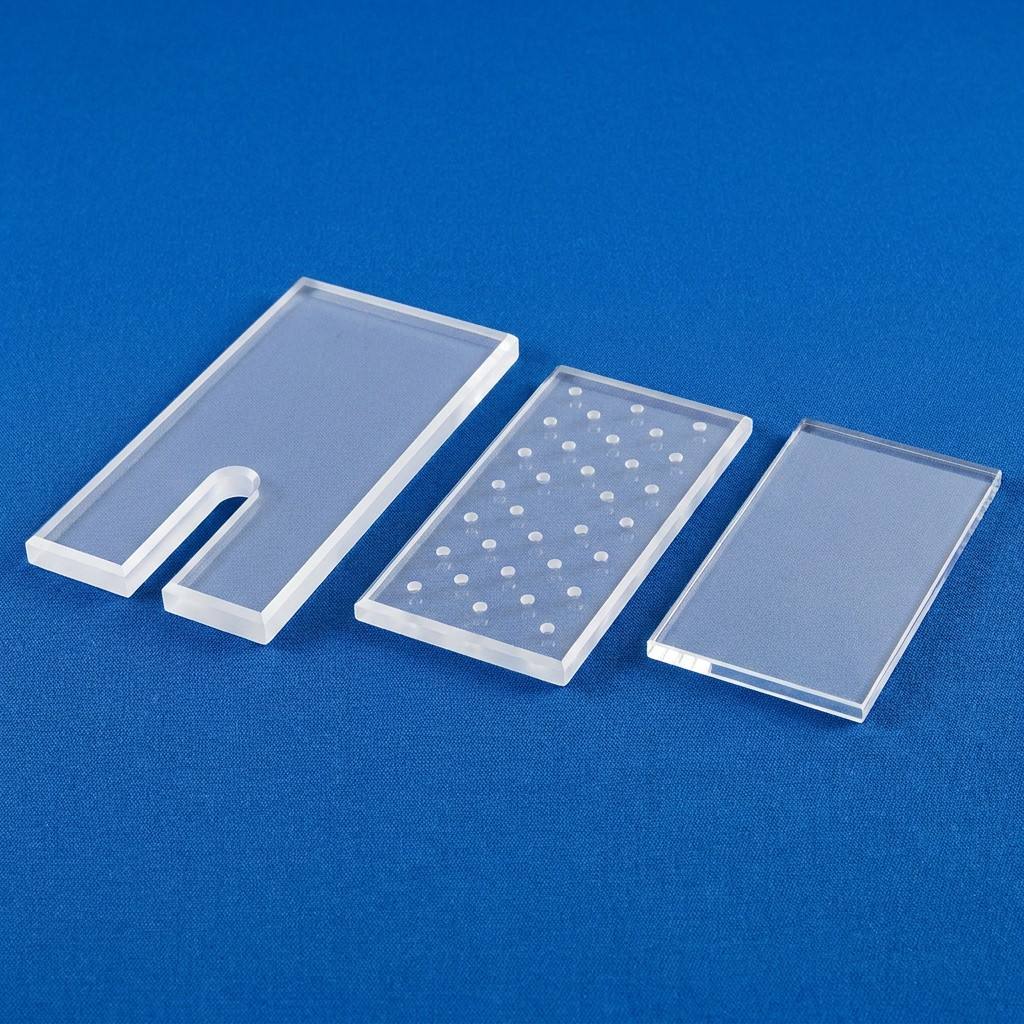
Grooved microfluidic substrates, low-fluorescence observation flow cells, and chemical analysis plates engineered for South Bay medical device innovators and DNA synthesis hardware.
Material Science Benchmark: Transparent Fused Quartz vs. Borosilicate & Synthetic Silica
Material selection for San Jose hardware engineers requires navigating trade-offs between thermal coefficient of expansion, hydroxyl (OH-) radical concentration, deep UV transmission, and mechanical yield strength. Standard borosilicate glasses fail rapidly above 450 °C and introduce unacceptable boron and sodium outgassing into semiconductor vacuums. Below is an empirical comparison matrix benchmarked under standard SEMI operating environments:
| Performance Parameter | Natural Fused Quartz (Donghai HPQ) | Synthetic Fused Silica | Borosilicate Glass (Pyrex/Float) |
|---|---|---|---|
| Purity Level (SiO&sub2; Concentration) | ≥ 99.99% (≤ 20 ppm metals) | ≥ 99.9999% (≤ 0.5 ppm metals) | ~ 80 - 81% (High B&sub2;O&sub3;, Na&sub2;O) |
| Coefficient of Thermal Expansion (CTE) | 5.5 × 10⁻⁷ / °C (20–320 °C) | 5.2 × 10⁻⁷ / °C (20–320 °C) | 32.5 × 10⁻⁷ / °C |
| Continuous Maximum Operating Temp | 1,100 °C (Short peak: 1,250 °C) | 1,150 °C (Short peak: 1,300 °C) | ~ 450 – 500 °C maximum |
| Softening Point & Annealing Point | 1,683 °C / 1,215 °C | 1,600 °C / 1,140 °C | 820 °C / 560 °C |
| Thermal Shock Resistance (ΔT) | > 1,000 °C (Quench into water) | > 1,000 °C (Quench into water) | ~ 150 – 180 °C max gradient |
| Spectral Transmission Threshold | 220 nm – 3,500 nm (Near UV to IR) | 185 nm – 2,500 nm (Deep UV DUV) | 350 nm – 2,000 nm (Cuts UV completely) |
| Relative Sourcing Cost (Cost of Ownership) | Optimized Benchmark (1.0x Base) | Premium (3.2x – 5.5x Higher) | Low (0.35x, unsuitable for high-temp) |
Silicon Valley Procurement Trends: Supply Chain Resilience & Direct Factory Integration
Procurement directors and vendor management specialists across Silicon Valley face severe margin pressure and extended lead times when sourcing through domestic third-party brokers. Historically, Bay Area firms relied on local machine shops that imported raw Chinese quartz ingots, cut them domestically, and marked up the final assembly by 300% to 500% with lead times stretching from 14 to 22 weeks. Today's high-velocity hardware iterative cycles—driven by artificial intelligence hardware accelerators, vertical power transistors (SiC/GaN), and advanced packaging—cannot afford multi-month turnarounds.
The emerging procurement paradigm embraces direct factory integration with established Chinese manufacturers who possess in-house cold processing capabilities. By transmitting CAD files (.STEP, .DWG, .DXF) straight to production facilities equipped with multi-axis CNC milling centers, diamond-wire wire-saw slicers, and chemical fire-polishing stations, San Jose teams achieve prototype delivery within 10 to 14 business days via expedited air freight into San Francisco International Airport (SFO) or Mineta San Jose International Airport (SJC). Furthermore, stringent packaging protocols—such as individualized anti-static cleanroom double-bagging, custom polyurethane shock-suspension boxing, and non-fumigation export wooden crating—eliminate transit breakage risk, delivering cleanroom-ready products directly to fab dock doors.
VEZLO Quartz: Donghai's Manufacturing Powerhouse
Built upon a 50-mu industrial complex backed by RMB 10 million in fixed assets, delivering proven engineering excellence to global innovators.
Government-Recognized R&D Base
Our 320 mm high-purity quartz tube development was completed under the Jiangsu Provincial Science & Technology Support Project. Our 520 mm large-bore furnace tube has successfully cleared National New Product preliminary reviews, advancing the frontier for 300mm/12-inch wafer processing tools.
Vertical Purity Control Chain
Located in Tuofeng Township, Donghai County, we operate from raw crystal mineral beneficiation to ultra-pure quartz sand processing (≤ 20 ppm total metallic contaminants). This eliminates bubbles, internal air lines, and trace alkali contamination at the atomic level.
Export-Ready Global Logistical Rigor
With an annual export turnover reaching US$2.5 Million and a verified 50% repeat order rate from international buyers, we provide transparent Trade Assurance coverage, rapid RFQ turnaround under 2 hours, and comprehensive CMM coordinate inspection reports with every delivery.
Silicon Valley Engineering & Sourcing FAQ
Direct answers to technical, regulatory, and logistics queries raised by Bay Area hardware teams.
What geometric tolerances can your CNC facilities hold for custom quartz discs and viewports?
For CNC-machined quartz plates, discs, and complex grooved wafer supports, standard dimensional tolerances are held within ±0.05 mm (±0.002 inches). For critical optical flat windows or laser protection plates, surface flatness can be lapped and double-sided polished down to λ/4 or λ/10 per inch, with surface quality conforming to 40/20 or 20/10 scratch-dig under MIL-PRF-13830B specifications. Chamfers, O-ring seal grooves, and bevels are ground with ultra-fine diamond tooling to prevent micro-cracking.
How do you ensure zero sodium/potassium contamination for tubes going into semiconductor diffusion?
We source ultra-high purity natural silica sand refined down to ≤ 20 ppm total trace elements. Specifically, alkali metals that cause devitrification and threshold voltage shifts are strictly governed: Lithium (Li) ≤ 1.0 ppm, Sodium (Na) ≤ 1.0 ppm, and Potassium (K) ≤ 1.5 ppm. Furthermore, our tubes undergo high-temperature vacuum dehydroxylation and cleanroom chemical pickling (HF/HNO&sub3; acid wash followed by 18 MΩ·cm deionized water cascade rinse) prior to hermetic sealing.
What are typical shipping transit times from your factory to the San Jose / Silicon Valley area?
For urgent engineering R&D builds and prototypes, we utilize priority door-to-door air freight (DHL, FedEx Express, UPS) with transit times averaging 3 to 5 business days direct to San Jose (SJC) or San Francisco (SFO). For production batches of large-diameter diffusion furnace tubes (OD > 300 mm) or heavy crucibles, consolidated ocean freight arrives at the Port of Oakland within 14 to 18 sailing days, followed by direct bonded pallet delivery to your facility.
Can you manufacture ozone-free quartz tubes for Bay Area cleanroom UV disinfection systems?
Yes. By precisely doping high-purity fused silica with trace elements such as titanium dioxide (TiO&sub2;), our ozone-free quartz tubes effectively attenuate and absorb the vacuum-UV 185 nm wavelength responsible for generating ambient toxic ozone from atmospheric oxygen, while maintaining high transmission (> 85%) at the 253.7 nm germicidal resonance line. This makes them ideal for enclosed cleanroom air scrubbers, UV curing tunnels, and high-purity water deionization loops.
How do your packaging protocols protect fragile, large-diameter quartz tubes against ocean and air vibration?
Every quartz unit is individually wrapped in clean-room grade PE protective film, encapsulated in custom-molded high-density expanded polyethylene (EPE) foam cushions, and housed within heavy-duty corrugated inner sleeves. Outer packaging uses bespoke fumigation-free multi-ply wooden crates reinforced with internal shock-absorbing honeycomb partitions, external steel corner brackets, and directional "TiltWatch" / "DropWatch" shock indicator labels.
What documentation accompanies each export shipment for quality verification?
Every industrial delivery is provided with a comprehensive quality assurance packet, including a Certificate of Analysis (COA) specifying trace metallic impurity levels via ICP-MS testing, a dimensional inspection sheet verified via CMM/optical comparator, transmission spectral graphs (upon request for optical grades), and full raw material traceability certification back to the specific melting batch.
Connect with Our Engineering Team for Your Next Fab Build
Send your dimensional drawings (.STEP, .PDF, .DWG), specify your thermal and chemical operating limits, and receive a complete technical feasibility assessment with volume pricing within 2 hours.