Precision-Engineered Fused Quartz & Silica Plates
Direct supply from high-purity melting crucibles to ultra-precise CNC milling, surface grinding, and laser-grade optical polishing for UK advanced manufacturers.

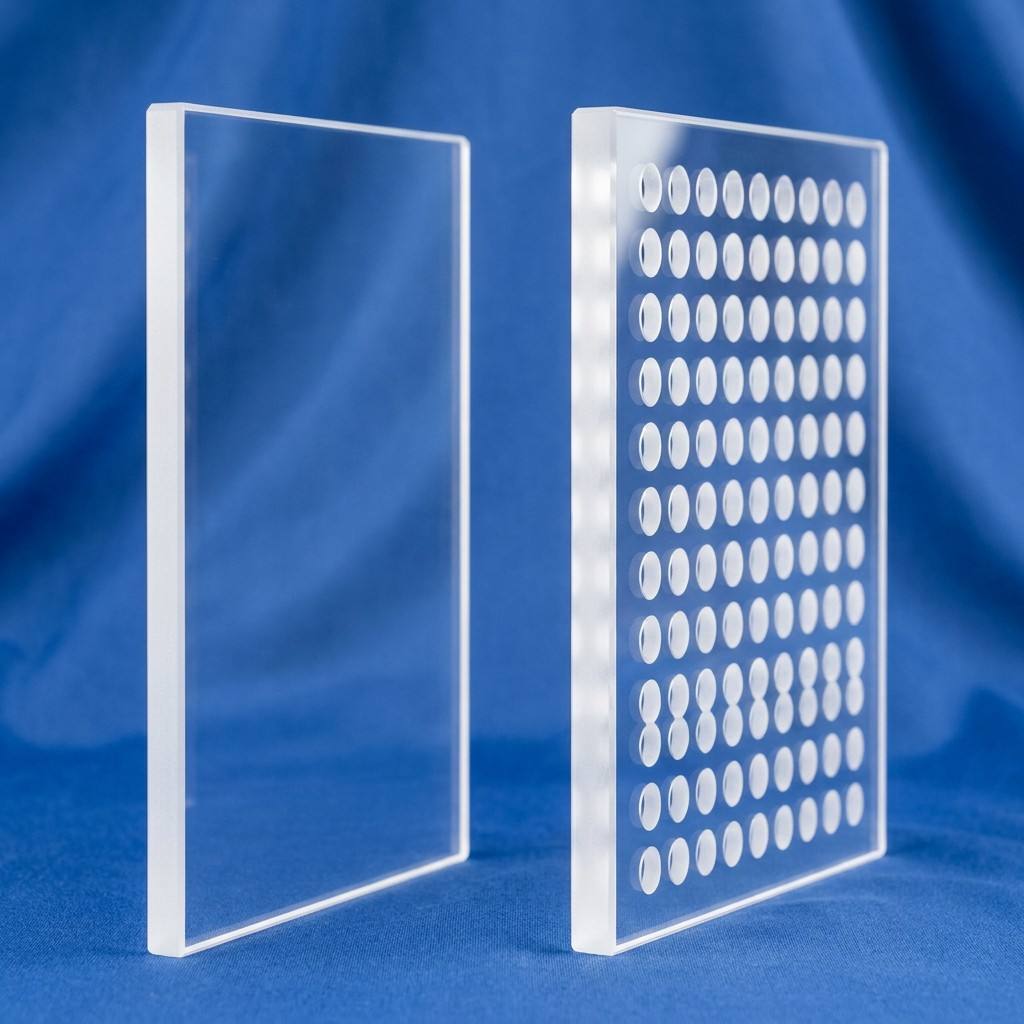
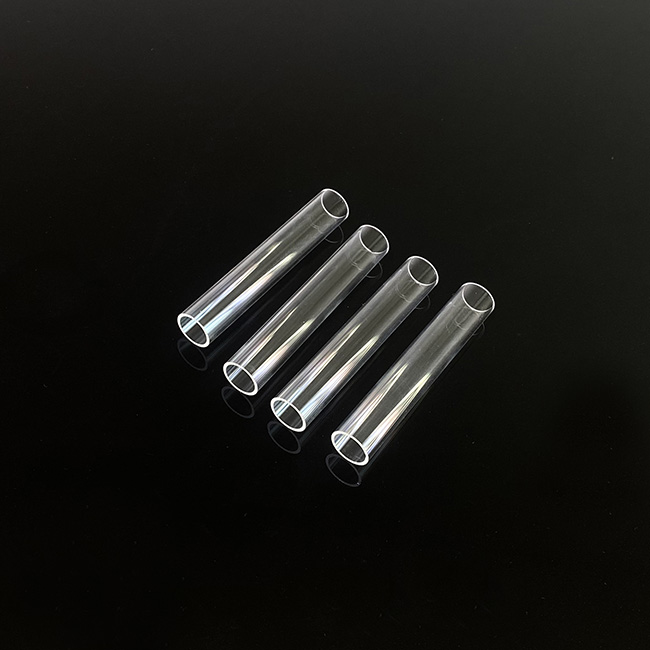
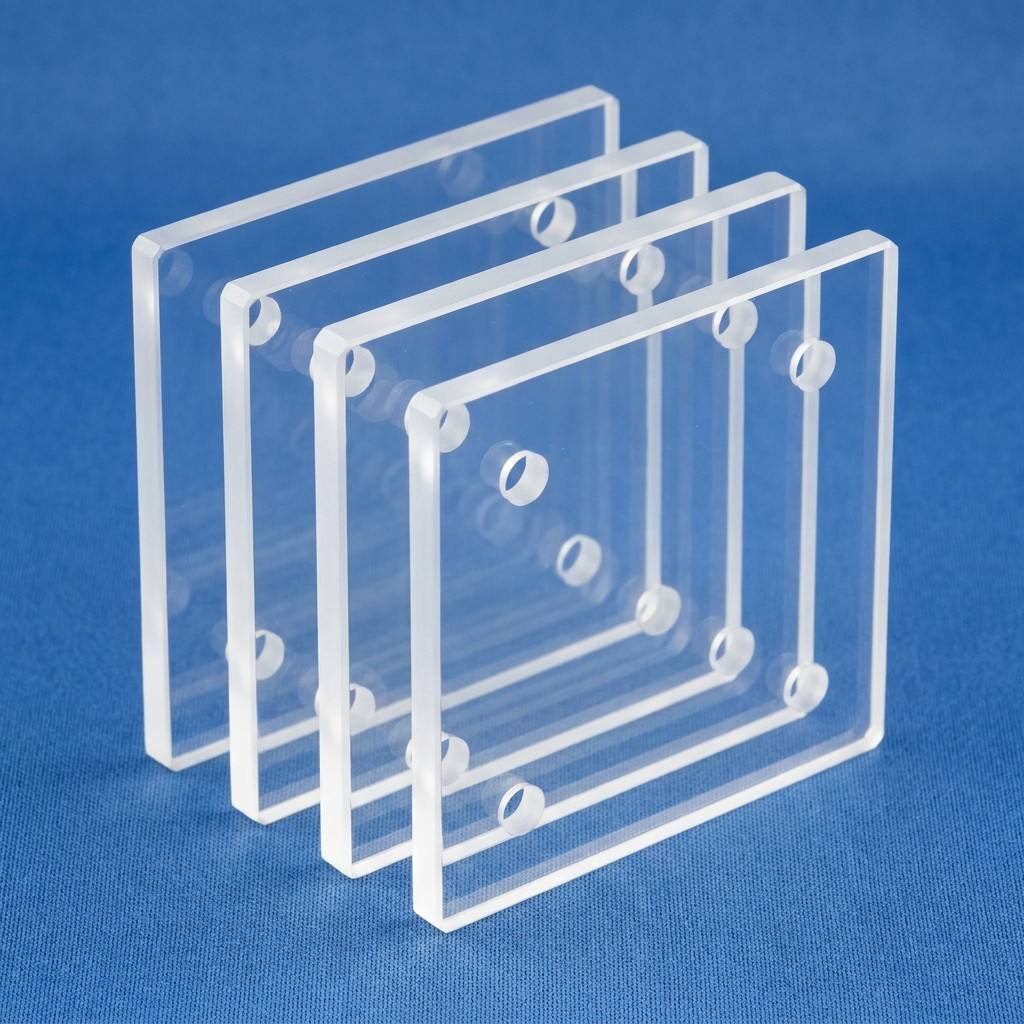
1. Fused Quartz vs. Synthetic Fused Silica: The Sheffield Engineering Perspective
In Sheffield—a city internationally renowned for high-integrity metallurgy, precision tooling, and the pioneering innovations of the Advanced Manufacturing Research Centre (AMRC)—material selection under extreme thermodynamic stress cannot be left to approximation. Sourcing the proper fused quartz plate requires a strict understanding of the distinction between naturally melted fused quartz and synthetic fused silica (FS).
Electric-Arc Fused Quartz (Natural Sand Origin): Derived from ultra-high purity natural crystalline quartz sand (sourced directly from verified refining reserves with trace metallic elements below 20 ppm), fused quartz offers unparalleled structural rigidity and thermal resistance at elevated temperatures. With a continuous working threshold of 1,100°C and an annealing point near 1,215°C, natural quartz plates provide an economical yet robust medium for boiler sight glasses, high-temperature furnace observation ports, and thermal baffle shields across Sheffield's forging and alloy heat-treatment facilities.
Chemical Vapor Deposition Fused Silica (Synthetic Origin): Synthesized via the gas-phase hydrolysis of high-purity silicon tetrachloride (SiCl₄), synthetic fused silica features near-zero trace impurities and exceptional homogeneity. The complete absence of micro-bubble inclusions makes synthetic grades (such as JGS1) the preferred substrate for deep-ultraviolet (DUV) transmission down to 185 nm, high-energy laser protective windows in additive manufacturing platforms (SLM/DMLS), and precision interferometry reference flats.
Both materials share an exceptionally low coefficient of thermal expansion (5.5 × 10⁻⁷ /°C from 20°C to 320°C). This gives the plates virtually complete immunity to thermal shock, allowing a red-hot quartz disc heated to 1,100°C to be instantaneously submerged in icy water without mechanical fracture.
2. Localized Industrial Applications in Sheffield & South Yorkshire
Sheffield's manufacturing ecosystem has evolved from traditional crucible steelmaking into a world-leading hub for aerospace engineering, high-value manufacturing catenary projects, nuclear materials research, and medical robotics. Fused quartz plates serve as critical components across several specialized regional domains:
Aerospace Alloy Thermal Analysis
Deployed within high-vacuum induction melting (VIM) furnaces and directional solidification chambers around Rotherham and the Don Valley. Fused silica viewport plates resist metal vapor deposition while providing crystal-clear optical access for pyrometric infrared monitoring of single-crystal superalloys.
High-Power Industrial Laser Cladding
Widely utilized in additive manufacturing suites across the Advanced Manufacturing Park (AMP). High-purity UV-grade quartz protective windows safeguard expensive multi-kilowatt fiber laser cutting heads from spatter, radiant heat, and molten metal back-reflection.
Clean Hydrogen & Nuclear R&D
Serving high-pressure test rigs at the University of Sheffield and associated cleantech ventures. Quartz sight plates endure supercritical steam and chemically aggressive reducing atmospheres without leaching ions or suffering chemical devitrification.
Whether handling the harsh mechanical environment of heavy forging equipment or providing low-birefringence optical access for synchrotron radiation beamline experiments, precision-machined quartz plates ensure process integrity where standard borosilicate or soda-lime glass fails.
3. Technical Specification Matrix: Fused Quartz Optical & Physical Benchmarks
Procurement engineers require verifiable physical constants when designing vacuum flanges, optical mountings, and pressure-vessel sight assemblies. Below is the standard engineering baseline for our factory-direct fused quartz and synthetic fused silica plates:
| Physical / Optical Parameter | JGS1 (Synthetic Silica) | JGS2 (Optical Quartz) | JGS3 (Infrared Quartz) |
|---|---|---|---|
| Primary Transmission Spectrum | 185 nm – 2,500 nm (DUV / Vis) | 220 nm – 2,500 nm (Standard Vis) | 260 nm – 3,500 nm (Infrared Clear) |
| Hydroxyl (OH⁻) Concentration | ≤ 1,200 ppm | ≤ 150 – 200 ppm | ≤ 5 ppm (Water-Free) |
| Density at 20°C | 2.201 g/cm³ | 2.203 g/cm³ | 2.200 g/cm³ |
| Coefficient of Thermal Expansion (CTE) | 5.5 × 10⁻⁷ /°C | 5.5 × 10⁻⁷ /°C | 5.4 × 10⁻⁷ /°C |
| Softening Point (η = 10⁷.⁶ dPa·s) | 1,683 °C | 1,680 °C | 1,710 °C |
| Annealing Point (η = 10¹³ dPa·s) | 1,215 °C | 1,210 °C | 1,220 °C |
| Compressive Strength | 1,150 MPa | 1,100 MPa | 1,120 MPa |
| Dielectric Strength (at 20°C, 1 MHz) | 25–40 kV/mm | 25–35 kV/mm | 30–40 kV/mm |
| Total Metallic Impurity Baseline | < 5 ppm | ≤ 20 ppm | ≤ 15 ppm |
*Note: Tolerances on machined plate thicknesses range from ±0.05 mm standard down to ±0.01 mm for precision-lapped optical substrates. Polishing quality according to ISO 10110 / MIL-PRF-13830B (standard 60/40, laser-grade 20/10 scratch-dig).
4. Factory Machining Capabilities: From Raw Ingot to Complex 5-Axis Geometries
VEZLO Quartz operates an integrated manufacturing base that bridges raw crystal beneficiation with micro-machining cold work. Our production capacity removes the logistical bottlenecks frequently encountered by Sheffield and UK fabricators who require near-net-shape custom components:
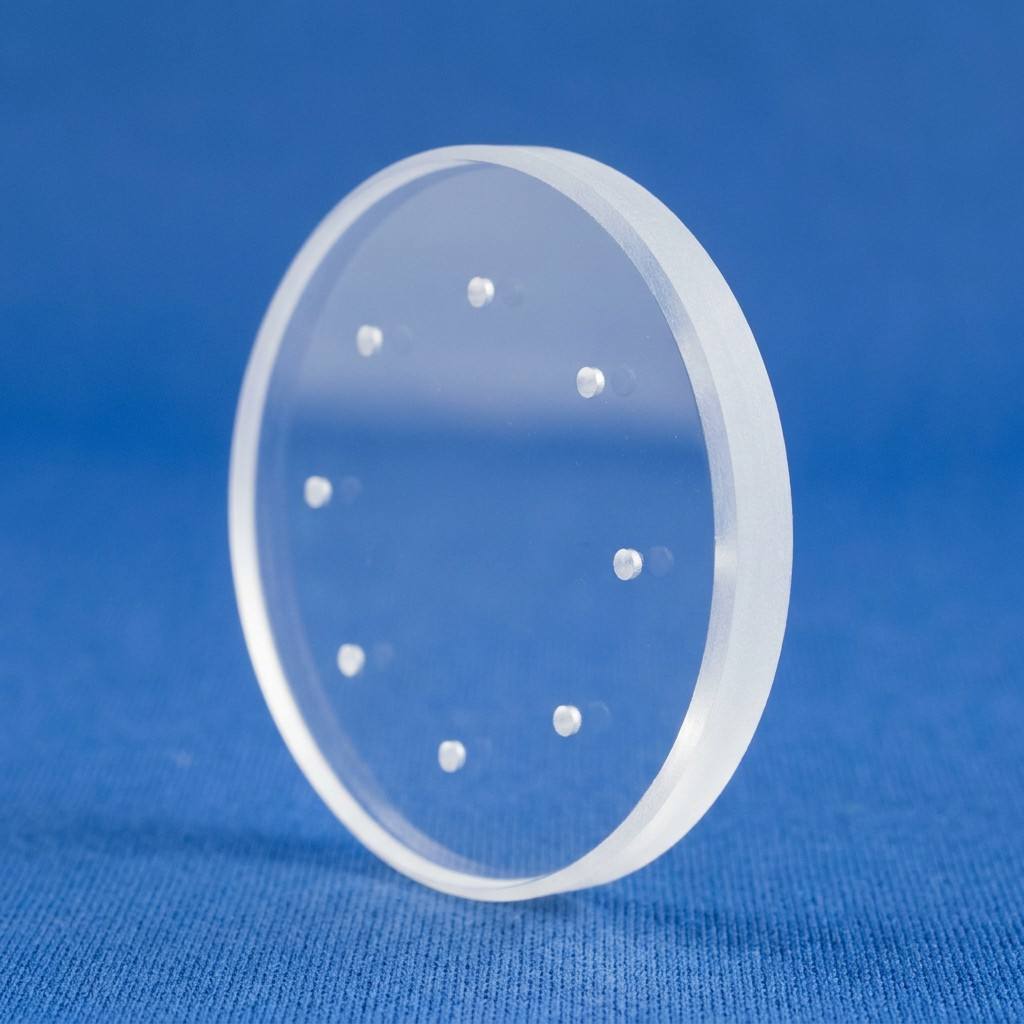
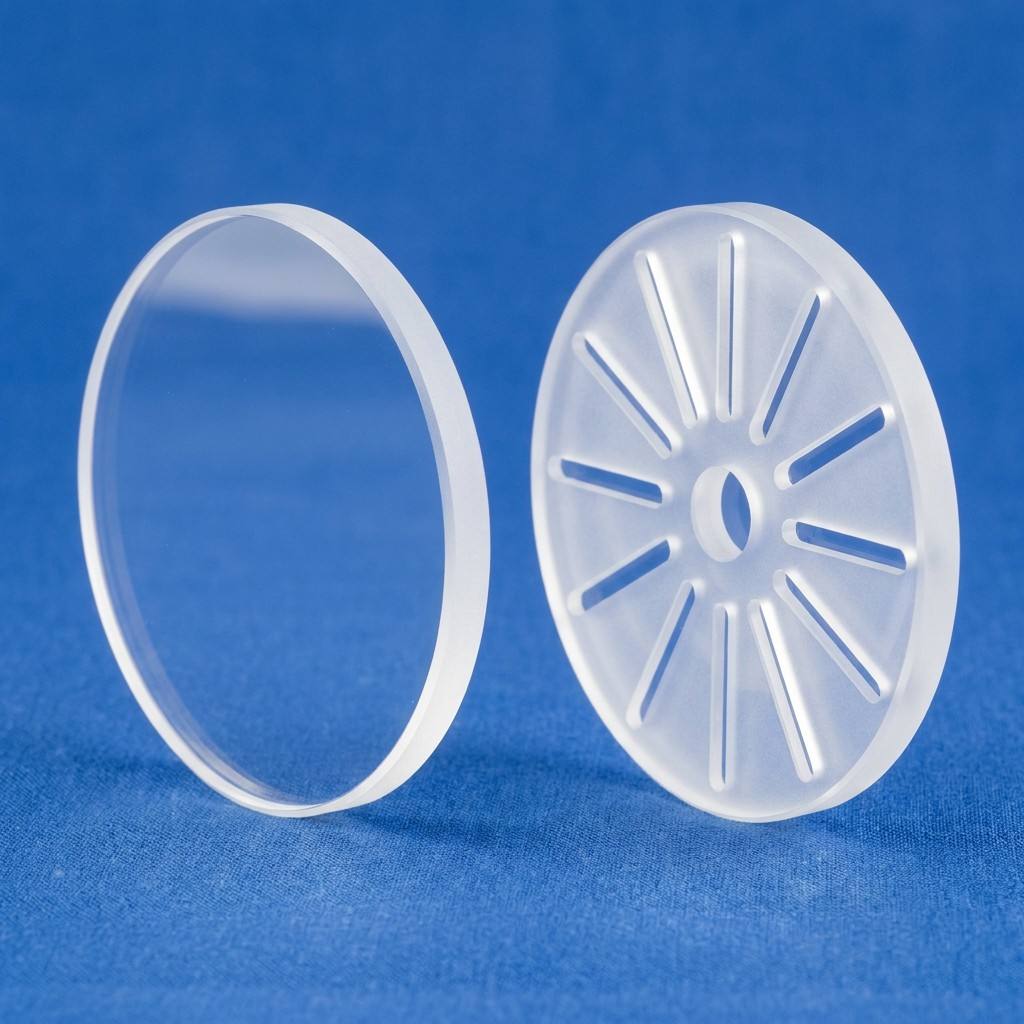
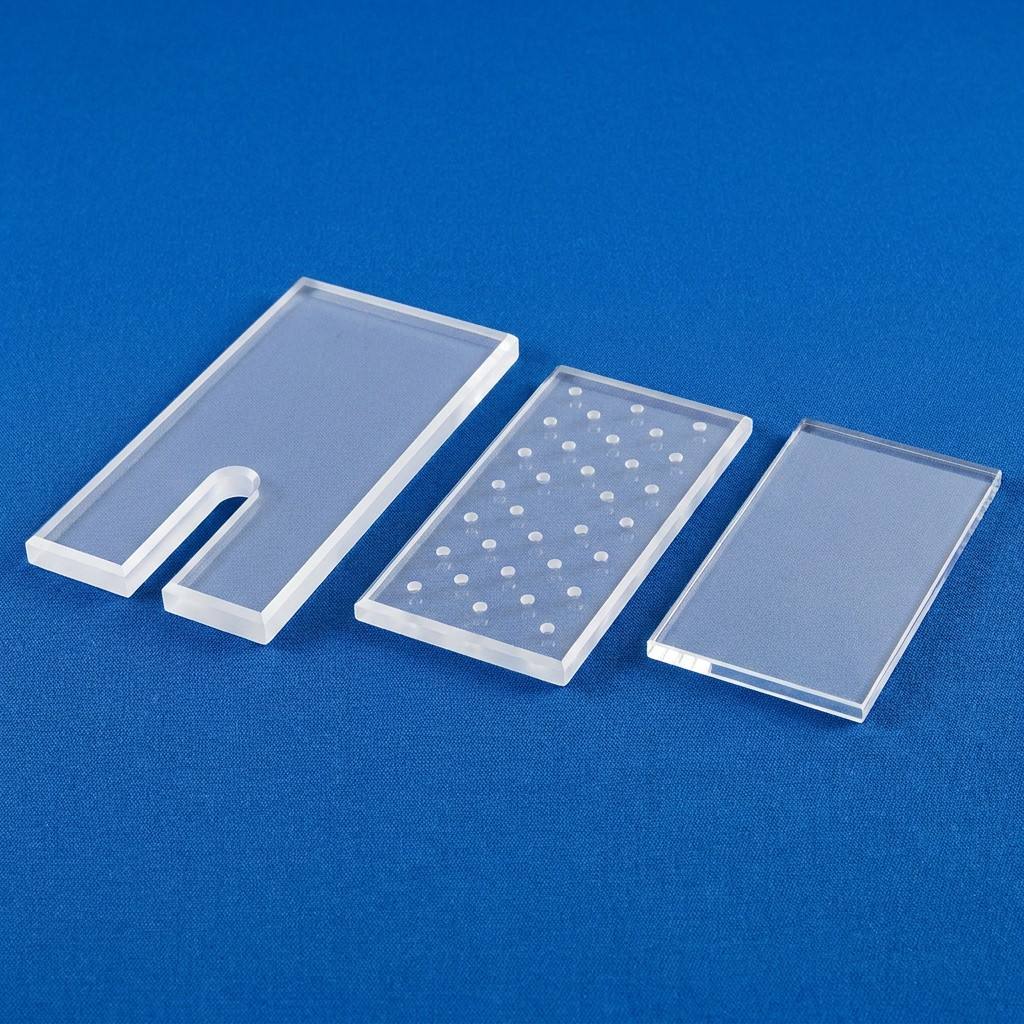
- Ultrasonic CNC Milling: Non-contact ultrasonic rotary vibration drilling and milling minimizes subsurface micro-fissures, allowing the machining of intricate stepped viewport steps, mounting slots, counterbore holes, and precision bevels without edge micro-chipping.
- Double-Sided Planetary Lapping: For high-pressure sight ports and laser interferometry windows, plates are lapped on multi-axis planetary machines to achieve surface parallelism within 30 arc-seconds and flatness down to λ/4 or λ/10 per 25 mm aperture.
- Chemical Acid Polishing & Flame Glazing: Post-machining hydrofluoric (HF) acid etching dissolves micro-cracks generated during diamond grinding, followed by selective hydrogen-oxygen flame polishing to eliminate stress concentrations and raise the rupture modulus under differential pressure.
- Large-Format Plate Slicing: Internal wire saws and circular inner-diameter diamond cutters handle boule slicing up to 500 mm in diameter, supporting large-scale observation viewports for nuclear containment vessels and marine deep-sea pressure housings.
5. Procurement Trends in Sheffield: Mitigating Supply Chain Lead Times
In recent years, procurement directors across South Yorkshire have actively diversified their supply chains away from high-markup distribution middlemen toward direct OEM factory partnerships. The transition is driven by three decisive market forces:
1. Elimination of Extended Lead Times for Non-Standard Formats: UK engineering firms frequently wait 10 to 16 weeks for custom-milled optical plates when sourcing from localized resellers who hold only standard circular disc stock. VEZLO Quartz provides rapid drawing-to-prototype turnaround, completing complex CNC milling directly at our manufacturing center and delivering via express air within 7 to 10 working days.
2. Stringent Traceability and Spectrophotometric Verification: Advanced manufacturing projects under ISO 9001 and AS9100 aerospace standards require full material certificates of conformity (CoC). Every batch of our fused quartz plates is mapped via UV-Vis-NIR spectrophotometry to confirm transmission compliance and verify the total absence of devitrification seeds.
3. Direct-from-Source Raw Material Security: With fixed assets totaling RMB 10 million and located within Donghai County—the globally recognized "Quartz Capital"—our facility controls high-purity quartz reserves containing metallic impurities ≤20 ppm. This integrated upstream positioning shields UK buyers from the global market volatility of quartz crystal feedstock.
Enterprise Advantages: Integrated Quartz Manufacturing
Direct factory engineering with institutional credentials and rapid logistics servicing the United Kingdom.
Donghai Raw Cluster
Operating a 50-mu production base in China's quartz capital, securing ultra-pure quartz sand with total metals ≤20 ppm.
State S&T Innovation
Jiangsu Provincial S&T Support project partner; large-diameter 520 mm semiconductor tube recognized in national reviews.
Verified Reliability
Third-party audited on-site production facility with Trade Assurance security and a 50% repeat order procurement rate.
≤ 2-Hour Response
Technical consultation and formal CAD drawing reviews delivered by bilingual engineers in under two hours.
Frequently Asked Questions: Sourcing Fused Quartz Plates in Sheffield
Direct engineering answers addressing pressure ratings, thermal shock, laser thresholds, and UK customs freight logistics.
How do I calculate the required thickness for a circular quartz sight glass under pressure?
What is the difference between JGS1, JGS2, and JGS3 optical quartz grades?
Can fused quartz plates withstand direct flame contact or thermal cycling in heat-treatment furnaces?
What laser-induced damage threshold (LDT) can be expected for laser protective quartz windows?
How are delicate and brittle quartz plates packed to guarantee zero-breakage arrival in the UK?
What engineering CAD file formats do you accept for custom CNC quotation and fabrication?
Request an Engineering Review & Quotation for Sheffield Delivery
Whether you require a standard boiler sight glass, precision CNC-milled stepped viewports, or laser-grade optical quartz plates, our factory engineers deliver detailed feasibility analyses and competitive quotes within 2 hours.