


Comprehensive Engineering White Paper: Sourcing Fused Silica for Constanța's Industrial Corridor
Constanța occupies a pivotal commercial and industrial axis along Romania’s Black Sea coast. Anchored by the deep-water Port of Constanța—one of the largest sea transshipment centers in Southeastern Europe—the region operates at the intersection of heavy maritime logistics, offshore oil and gas developments, petrochemistry (including nearby operations at Midia and the broader Dobrogea energy infrastructure), and modernizing civil water infrastructure. For procurement specialists, mechanical engineers, and plant reliability directors operating within Constanța, selecting glass and ceramic components capable of surviving severe operational envelopes is not merely a matter of routine supply chain management; it is a critical safeguard against catastrophic mechanical breakdown, pressurized blowout, and chemical erosion.
Under conditions of combined thermal shock, corrosive saltwater atmospheres, high hydrostatic or pneumatic pressure, and strict electromagnetic purity, conventional borosilicate glass and soda-lime glass consistently demonstrate structural deficiencies. Fused silica—an amorphous form of pure silicon dioxide (SiO₂)—represents the gold standard material for solving these multidisciplinary mechanical challenges. This white paper serves as an authoritative specification guide to assist engineers and procurement divisions across Constanța in identifying raw material grades, manufacturing methods, and localized application frameworks.
Material Science Differentiation: Natural Fused Quartz vs. Synthetic Fused Silica
Within engineering terminology, "fused quartz" and "fused silica" are frequently used interchangeably; however, their atomic-level origin and physical microstructures govern their performance limits in specialized applications:
| Evaluation Parameter | Natural Fused Quartz (Thermal Grade) | Synthetic Fused Silica (Chemical Grade) | Engineering Selection Impact |
|---|---|---|---|
| Raw Material Synthesis | Beneficiated natural quartz sand (≤ 20 ppm metallic impurities) | Chemical vapor deposition of silicon precursors (e.g., SiCl₄) | Synthetic delivers absolute chemical homogeneity without inclusions. |
| Deep-UV Transmittance | Cut-off begins around 220–240 nm | High transmission maintained down to 180–190 nm (DUV) | Synthetic required for excimer lasers and 185 nm ozone generation. |
| Hydroxyl (OH⁻) Content | Typically low (< 5 to 30 ppm) | Standard grades contain up to 800–1,200 ppm (unless modified) | Low-OH fused quartz provides superior infrared transmission up to 3.5 μm. |
| Thermal Shock Resistance | Outstanding: withstands water quench from 1,100 °C | Outstanding: virtually identical thermal expansion coefficient | Both materials exhibit a near-zero CTE of 5.5 × 10⁻⁷ /°C. |
| Production Economics | Cost-effective for large diameters, plates, and process piping | Higher material cost; selected primarily for optical metrology | Natural fused quartz dominates marine sight windows and reactor sleeves. |
Design Insight for Constanța Engineers: For maritime boiler viewports, refinery flare monitor tubes, and municipal wastewater UV disinfection installations in Dobrogea, natural high-purity fused quartz delivers equivalent mechanical and thermal performance to synthetic grades while lowering overall component lifecycle procurement costs by 35% to 50%.
Localized Application Scenarios across the Constanța Metropolitan Area
Due to the geographic and industrial composition of Constanța County, specialized fused silica parts find critical utility across four foundational industry verticals:
1. Marine Engineering & Port Logistics
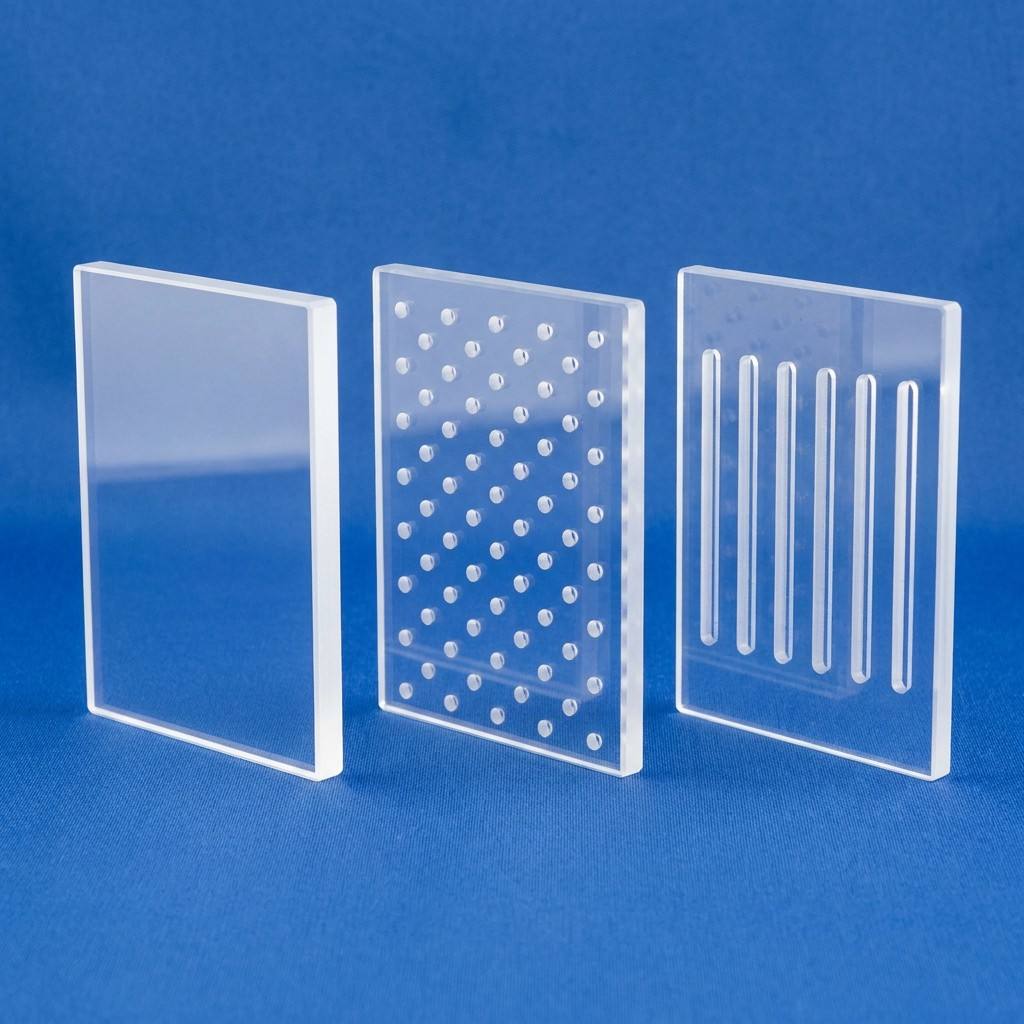
Commercial ships traversing the Port of Constanța and the Danube-Black Sea Canal rely heavily on ultra-durable sight glasses for high-pressure marine boilers, engine fuel scrubbers, and ballast water management systems (BWMS). Fused silica withstands the harsh thermal gradients of marine steam systems without clouding or surface leaching induced by alkaline bilge washings.
2. Petrochemical & Offshore Energy
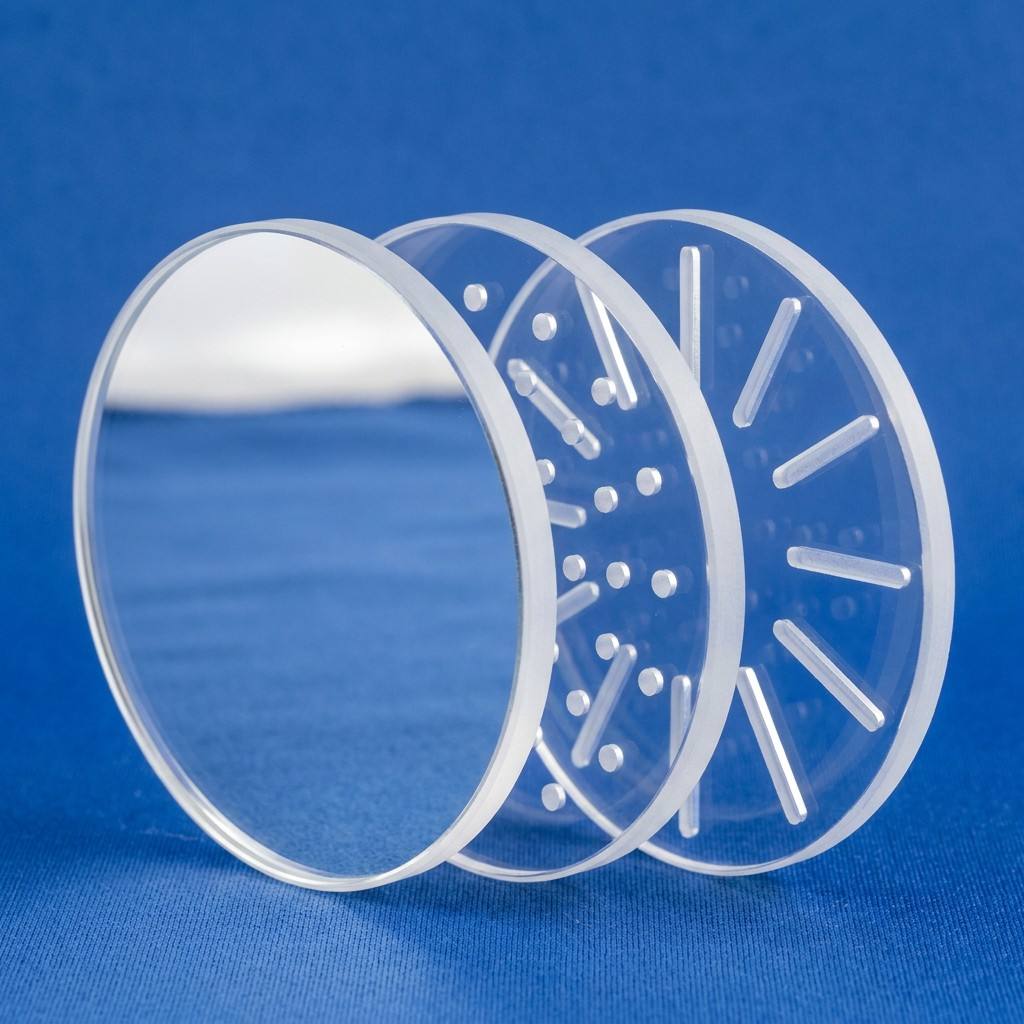
Refining complexes in the Midia-Năvodari cluster and offshore platforms operating in the Black Sea Continental Shelf require heavy-duty sight viewports capable of surviving sour gas (H₂S-rich atmospheres), continuous heating above 900 °C, and cyclic pressure shocks. Fused silica sight discs provide absolute zero outgassing and complete chemical resistance against acidic condenses.
3. Water Purification & Coastal Utilities
With aggressive environmental mandates governing Black Sea marine pollution and the coastal tourism strip (Mamaia to Mangalia), municipal wastewater plants and desalination units utilize high-transmittance ozone-free quartz tubes. These sleeves pass the critical 254 nm germicidal wave while shielding UV lamps from hydraulic pressure and scaling.
Emerging Industrial & Sourcing Trends in Constanța
The modernization of the port sector, driven by increased grain, energy, and container freight routing between Western Europe, Ukraine, the Caucasus, and Central Asia, is catalyzing several prominent procurement trends:
- Accelerated Replacement of Borosilicate with Quartz: Industrial maintenance technicians are actively replacing DIN 7080 standard borosilicate gauge glasses with custom-cut fused silica viewports on high-pressure pipelines to eliminate recurrent crazing, thermal micro-fracturing, and unscheduled maintenance shutdowns.
- Expansion of Black Sea Offshore Wind & Green Hydrogen: Proposed offshore green energy initiatives require optical monitoring sensors, pyrometric laser viewports, and high-dielectric quartz insulators capable of withstanding unmitigated marine salt fog exposure.
- Stringent Supply Chain Diversification: Romanian buyers are actively moving away from intermediate European distributors with lengthy 16-to-24-week backlogs, opting instead to establish direct relationships with primary quartz manufacturing facilities capable of delivering customized flame-working and CNC micro-milling within tight turnaround schedules.