Featured Fused Silica Sheets & Optical Substrates
Direct-from-factory fabricated quartz plates, micro-grooved inspection discs, and CNC custom shapes calibrated for Dutch high-tech R&D and industrial vacuum systems.
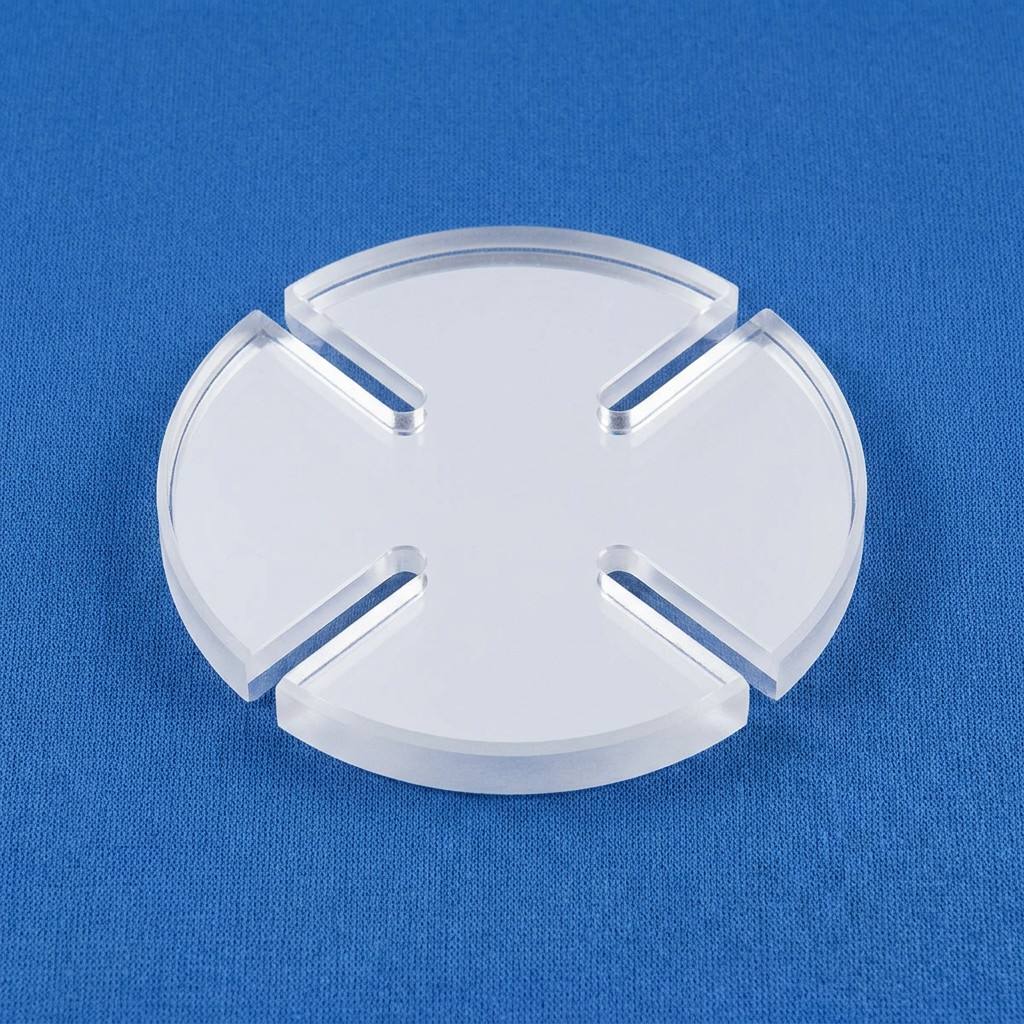
Quartz Glass Plate 0.5mm 1mm 2mm Thickness Fused Silica Clear Custom Size
- Thickness Tolerance: ±0.05 mm
- Deep-UV Transmission: >90% @ 254nm
- Surface Quality: 40/20 Scratch-Dig
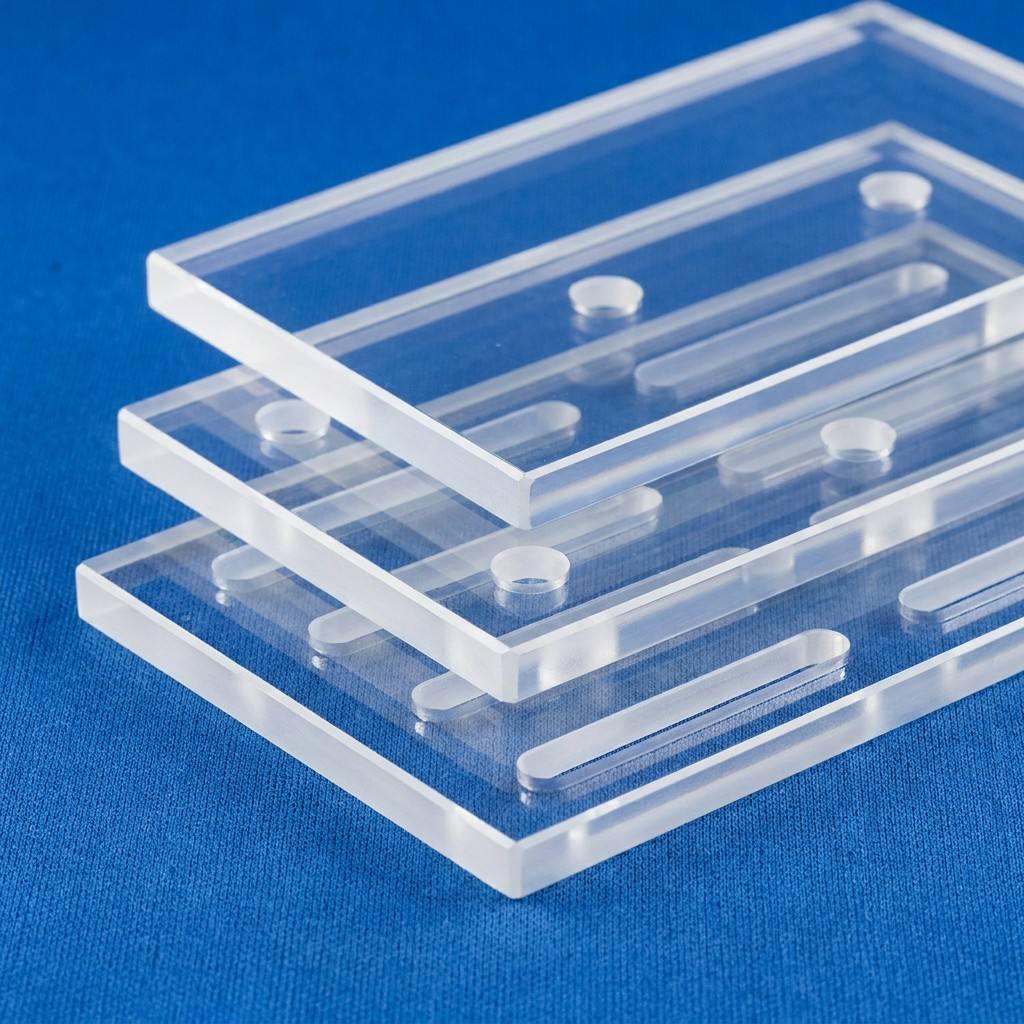
Quartz Disc with Groove Fused Silica Plate Clear Polished Custom Size
- Precision O-ring sealing grooves
- Double-side optical polish λ/4
- High vacuum & pressure retention
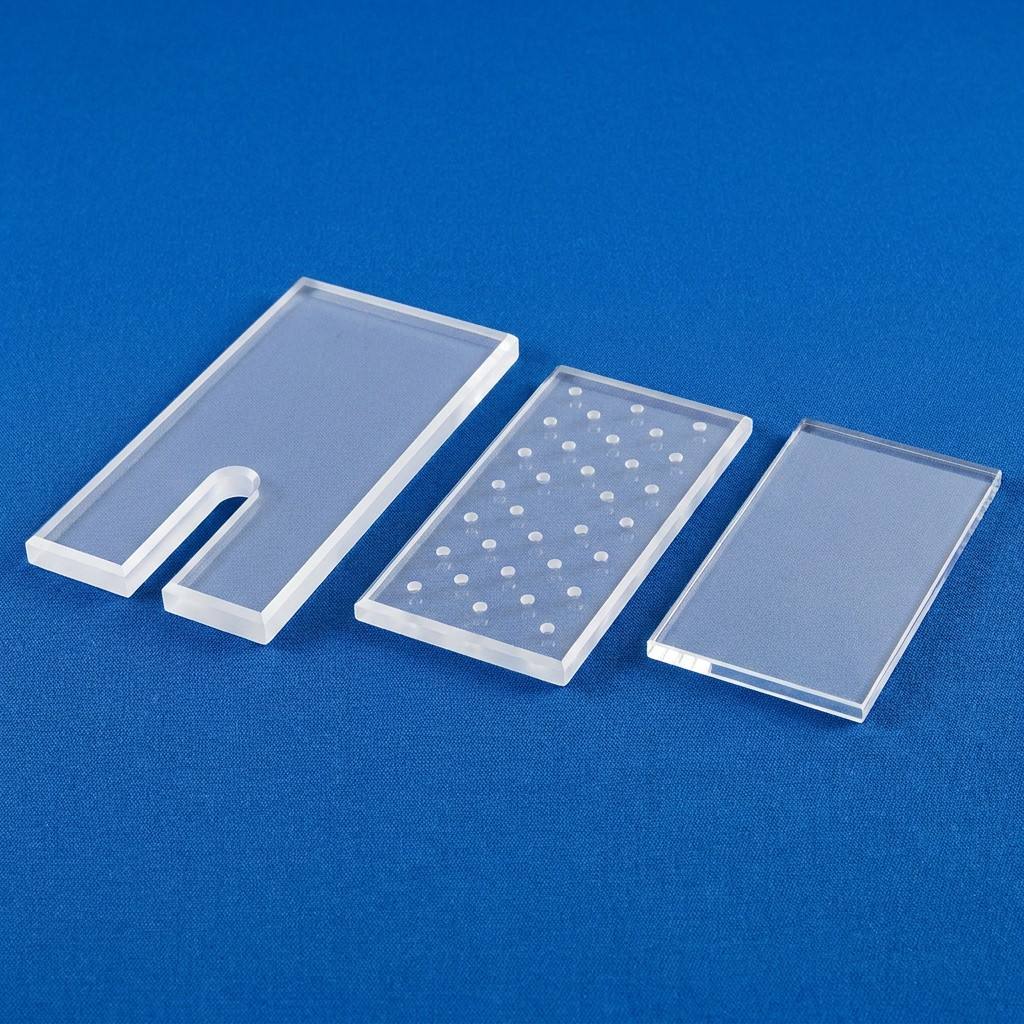
Quartz Oil Level Sight Glass Plate Fused Silica Clear Custom Size
- Continuous heat limit: 1,100°C
- Refinery & chemical resistance
- Ground safety chamfer edges

Round Quartz Plate Disc Fused Silica Clear Polished Custom Diameter
- Diameters: Ø10 mm to Ø600 mm
- Planetary double-side lapped
- Parallelism: <10 arcsec
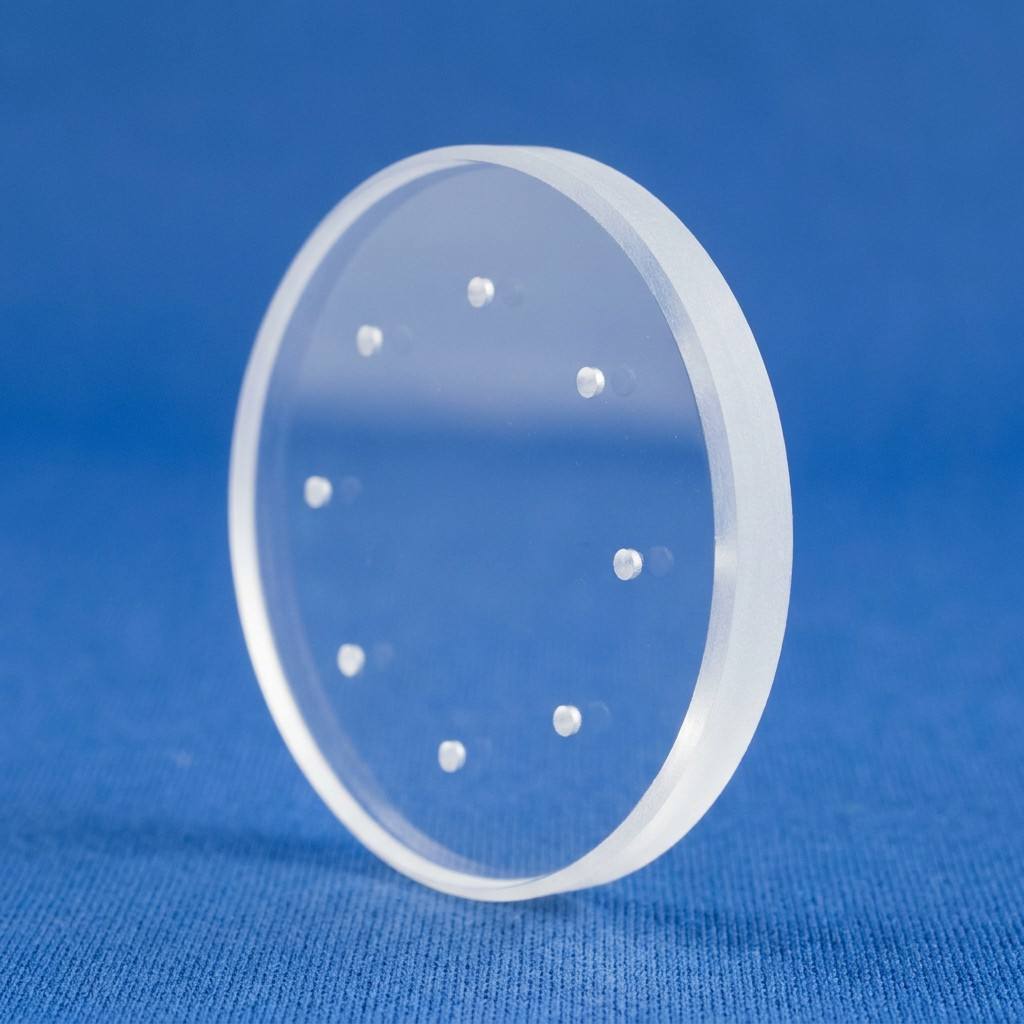
CNC Machined Quartz Plate Fused Silica Complex Shape Custom Size
- Micro-milled ports & stepped cutouts
- Dimensional accuracy: ±0.01 mm
- Clean flame-polished contours

Slotted Quartz Plate Grooved Fused Silica Sheet Precision Custom Size
- Diffusion furnace wafer positioning
- High mechanical strength @ high temp
- Non-contaminating trace metals

Quartz Plate 3mm 5mm 8mm Thickness High Purity Fused Silica Polished
- Thermal expansion: 5.5 × 10⁻⁷ /°C
- Bubble-free grade (DIN ISO 10110)
- Optically homogeneous throughout

Semiconductor Quartz Plate Fused Silica Substrate High Purity Custom
- Total metallic impurities: ≤20 ppm
- EUV/DUV window compatible
- Class 1000 cleanroom packaging
Synthetic Fused Silica vs. Natural Quartz Glass Sheets
Selecting optimal optical materials for deep UV transmission, extreme thermal shock resistance, and micro-machining tolerances across Greater Amsterdam industries.
Molecular Purity & Spectral Transparency
When selecting fused silica sheets for cutting-edge projects across the Amsterdam-Rotterdam tech corridor, precision optical and thermal engineers distinguish between synthetic fused silica (SiCl₄ derived) and high-purity natural fused quartz (SiO₂ crystal derived). Fused silica fabricated from chemical precursors provides exceptional ultraviolet transmission down to 185 nm, rendering it irreplaceable for excimer laser optics, semiconductor reticles, and UV curing systems utilized by Dutch instrumentation pioneers.
Conversely, fused quartz processed from refined silica sand—such as the premium feedstock processed at our Tuofeng production base in Donghai—exhibits unmatched thermal stability, low hydroxyl (OH) absorption in the infrared spectrum, and extraordinary resistance to high-temperature sag up to 1,150°C. With our raw sand refined to total metallic impurities ≤20 ppm, our sheets mitigate devitrification risks and optical scatter.
Thermal stability is dictated by our ultra-low Coefficient of Thermal Expansion (CTE) of 5.5 × 10⁻⁷ /°C. Engineers can instantaneously quench a red-hot sheet from 1,100°C into room-temperature water without fracturing, a mandatory specification for process viewing windows in North Sea maritime engineering, thermal oxidation reactors, and bio-catalytic distillation columns.
| Physical & Optical Properties | Standard Metric Value | Relevance to Amsterdam Tech |
|---|---|---|
| Silicon Dioxide (SiO₂) Purity | ≥ 99.99% - 99.999% | Eliminates wafer dopant contamination |
| Density | 2.20 g/cm³ | Lightweight structural optical mounting |
| Thermal Expansion Coeff. (CTE) | 5.5 × 10⁻⁷ /°C (20–320°C) | Near-zero thermal drift in laser cavities |
| Softening Point | 1,683 °C | Thermal processing margin in diffusion tubes |
| Annealing Point | 1,215 °C | Stress-free birefringence profile |
| Surface Roughness (Polished) | Ra < 0.5 nm / λ/10 P-V | High-power photonics & interferometry |
| Dielectric Constant (1 MHz) | 3.75 | High-frequency RF & microwave windowing |
| Refractive Index (nd @ 589nm) | 1.4585 | Consistent optical path dispersion |
Localized Application Scenarios Across Amsterdam
How our precision fused silica plates power mission-critical hardware in the Dutch semiconductor, photonic, and bio-pharmaceutical sectors.
Semiconductor & Lithography Substrates
Connecting seamlessly into the Brainport and Randstad semiconductor equipment manufacturing networks. Our high-purity fused silica plates act as wafer carriers, slotted quartz trays for high-temperature furnace tubes, and debris shields in DUV/EUV metrology tools, offering low trace metal impurities and resistance to thermal deformation during rapid cycle runs.
Amsterdam Science Park Photonics
Institutes and venture labs across Amsterdam Science Park, QuTech, and the PhotonDelta ecosystem utilize our double-side polished fused silica sheets (λ/10 flatness, 20/10 scratch-dig) for beam splitters, waveguide substrates, and cryogenic optical chambers operating near absolute zero where negligible thermal drift is critical.
Life Sciences & Microfluidics Flow Cells
The Amsterdam bio-tech corridor, encompassing Amsterdam UMC and adjacent diagnostic spin-offs, relies on ultra-thin 0.5mm and 1.0mm fused silica glass plates for flow cytometry windows and high-throughput DNA sequencing chips. Synthetic silica eliminates native fluorescence, optimizing signal-to-noise ratios during laser-induced fluorescence detection.
Strategic Industry Trends in the Netherlands & EU
As Europe implements the European Chips Act to secure domestic semiconductor resilience, suppliers across Amsterdam and Eindhoven require resilient supply chains for high-purity quartzware. Driven by advancements in sub-2nm lithography, quantum computing hardware, and sustainable industrial electrification, fused silica components must satisfy stringent purity profiles (≤20 ppm metals) alongside rapid custom machining turnaround. Our dedicated export manufacturing bridges Donghai’s raw mineral abundance directly to Amsterdam’s high-tech distribution channels with complete batch traceability.
Manufacturing Infrastructure & Quality Rigor
Integrated manufacturing spanning high-purity quartz sand refinement, continuous furnace drawing, 5-axis CNC diamond grinding, and certified export execution.
Donghai Cluster Integration
Operating a 33,000 m² (50-mu) facility backed by RMB 10 million in fixed assets located in China’s quartz capital, ensuring direct access to natural crystalline quartz and complete domestic supply security.
Provincial & National R&D
Developers of the 320 mm high-purity quartz tube for integrated circuits (Jiangsu Provincial S&T Project) and large 520 mm diameter high-purity components certified by national new product reviews.
Precision Cold & Flame Machining
Full-spectrum custom capability: precision surface slicing, planetary double-sided lapping, ultrasonic hole drilling, custom groove milling, and flame-polished edge relief manufactured strictly to CAD drawings.
Direct Air & Sea Logistics to AMS
Secure export casing engineered with customized multi-density pearl cotton and shock-resistant wooden crates, paired with express DDP/CIF shipping directly via Schiphol Airport (AMS) or Rotterdam Port.
Amsterdam Buyer FAQ: Technical & Sourcing Answers
Clear answers regarding EU customs compliance, dimensional tolerances, quality inspection reports, and shipping logistics.
Q1 What are the HS codes and customs procedures for importing quartz plates into the Netherlands?
Fused silica and fused quartz plates typically enter the European Union under HS code 7002.32.00 (tubes of other glass having a linear coefficient of expansion not exceeding 5x10⁻⁶ per Kelvin) or 7002.39.00 / 7006.00.90 for ground, polished, and edge-worked optical glass sheets. Our commercial invoices and packing declarations conform strictly to Dutch Douane requirements, complete with clear TARIC declarations to prevent clearance delays at Schiphol Airport (AMS) or Rotterdam Port.
Q2 Do VEZLO fused silica sheets comply with EU RoHS and REACH regulations?
Yes. Fused silica is 100% synthetic or natural silicon dioxide (SiO₂ ≥99.99%) without chemical plasticizers, heavy metals, or toxic dopants. Our products are fully compliant with EU Regulation (EC) No 1907/2006 (REACH) and Directive 2011/65/EU (RoHS), including restriction updates under Directive 2015/863. Material Safety Data Sheets (MSDS) and RoHS conformity certificates are provided with production batches upon request.
Q3 What surface flatness, parallelism, and scratch-dig tolerances can you achieve?
For high-precision optical windows and lithography substrates, we achieve surface flatness up to λ/10 per 25mm (λ = 632.8 nm), parallelism within < 10 arcseconds, and optical scratch-dig specifications of 20/10 or 40/20 per MIL-PRF-13830B (or Class 5/3x0.1 per ISO 10110). Standard industrial-grade viewports are polished to 60/40 scratch-dig with commercial flatness (λ/2 to 2λ), lowering unit costs while fulfilling mechanical pressure-seal requirements.
Q4 Can you fabricate complex profiles, stepped edges, and micro-grooving according to drawing?
Absolutely. We operate multi-axis CNC glass-machining centers capable of drilling counter-sunk holes, machining O-ring sealing grooves, creating stepped edge lips, and contouring intricate geometrical cutouts. Machining tolerances are maintained to ±0.01 mm (±10 μm). All cut edges are ground, chamfered, and flame-polished to eliminate micro-fractures that could propagate into cracks under thermal stress.
Q5 How does VEZLO safely pack thin, fragile quartz sheets for overseas freight?
Fragile quartz sheets (especially ultra-thin 0.5mm, 1mm, and 2mm substrates) receive multi-stage packaging. Each sheet is wrapped in scratch-proof lens paper or static-free PE protective film, encapsulated in custom-molded high-density EVA/pearl foam chambers, and sealed inside rigid, shock-absorbing export cartons. Volume consignments are boxed in fumigation-free composite wooden cases with drop-indicator sensors to ensure 100% intact arrival in the Netherlands.
Q6 What are standard production lead times and expedited courier options to Amsterdam?
For catalog sizes and standard flat plates, orders dispatch within 3–7 business days. Custom CNC machining or bespoke double-side polishing typically requires 10–18 business days. For urgent laboratory trials or fab maintenance in Amsterdam, we utilize express international air priority (DHL, FedEx, UPS) with guaranteed transit times of 3–5 working days directly to your facility door.
Q7 How does fused silica perform when exposed to aggressive acids and thermal cycling?
Fused silica offers superior chemical resistance across the entire pH spectrum, resisting virtually all acids (including HCl, HNO₃, and H₂SO₄) even at elevated temperatures. The only chemical compounds that attack fused silica are hydrofluoric acid (HF) and concentrated phosphoric acid (H₃PO₄) above 300°C. Its minimal thermal expansion coefficient enables safe cycling from 1,100°C to room temperature without thermal shock or crystallization.
Q8 Can you furnish spectral transmission charts and Certificate of Conformance (CoC)?
Yes. Every optical-grade order can be supplied with a formal Certificate of Conformance (CoC) outlining precise dimensional tolerances, material melt batch numbers, and spectrophotometer transmission scans covering the 190 nm to 2,500 nm range. This provides full traceability for quality management systems operating under ISO 9001 and Dutch CE standards.
Ready to Source High-Purity Fused Silica Sheets?
Submit your CAD files, mechanical sketches, or optical specifications. Our application engineering team will review your thermal, optical, and mechanical constraints and return an itemized factory quotation with feasibility guidance within 2 hours.