Featured Optical Quartz Plates & Viewports
Direct sourcing from high-purity raw melts to CNC-machined, optically polished substrates tailored for Glasgow laboratory instruments, marine vessels, and laser assemblies.

Procuring Optical Quartz Glass in Glasgow: The Engineering Benchmark
The city of Glasgow, anchoring Scotland's internationally recognized central photonics corridor, commands some of the most exacting specifications in precision optical engineering, laser development, and advanced semiconductor packaging found across the United Kingdom. From research hubs situated around the University of Glasgow’s James Watt Nanofabrication Centre and the Fraunhofer Centre for Applied Photonics (CAP) to commercial system integrators throughout Clyde Gateway and Lanarkshire, procurement teams require raw quartz substrates and polished optical plates that perform flawlessly under extreme conditions.
Optical quartz glass is not merely an alternative to standard borosilicate or soda-lime glass; it represents an amorphous material class dominated by tetrahedral Silicon Dioxide (SiO₂) networks bound by covalent bonds. This imparts a coefficient of thermal expansion (CTE) of only 5.5 × 10⁻⁷ /°C, an extraordinarily low figure that enables optical components to undergo severe thermal cycles—such as direct localized laser heating up to 1,000°C followed by immediate exposure to sub-zero Scottish coastal air—without catastrophic mechanical fracture or wavefront distortion.
Synthetic Fused Silica vs. Natural Fused Quartz: A Critical Decision for Scottish Engineers
A frequent technical hurdle encountered by buyers across Strathclyde and the Scottish Central Belt is distinguishing between Synthetic Fused Silica and Natural Fused Quartz. Fused quartz is engineered from high-purity natural quartz sand mined and processed in dedicated clusters, such as our home base in Donghai County. It contains total conventional metal impurity levels below 20 ppm, boasting extreme mechanical strength, high softening points (~1,683°C), and superb transmittance through the visible and near-infrared (NIR) spectrum up to 2,500 nm.
Conversely, synthetic fused silica is synthesized via the chemical vapor deposition (CVD) or flame hydrolysis of silicon tetrachloride (SiCl₄), yielding an amorphous material virtually free of metallic elements (metallic trace <1 ppm). This delivers pristine UV spectral transmittance extending deep into the deep ultraviolet (DUV) range down to 185 nm – 193 nm. Glasgow-based photonics developers working on excimer laser steering, lithographic projection, and quantum optical state preservation must evaluate both dielectric absorption parameters and solarization thresholds when finalizing BOM specifications.
Industrial & Research Deployments Across Greater Glasgow
Examining how high-purity fused silica and precision quartz windows power the regional photonics ecosystem, naval engineering, and clean-tech developments.
Ultrafast & Industrial Laser Cavities
Glasgow hosts premier laser design teams specializing in DPSS, femtosecond, and disk laser engines. Our double-side polished fused silica plates serve as output couplers, Brewster windows, and substrate plates capable of withstanding Laser Induced Damage Thresholds (LIDT) exceeding 10 J/cm² at 1064 nm.
Subsea Optics & Offshore North Sea Sensing
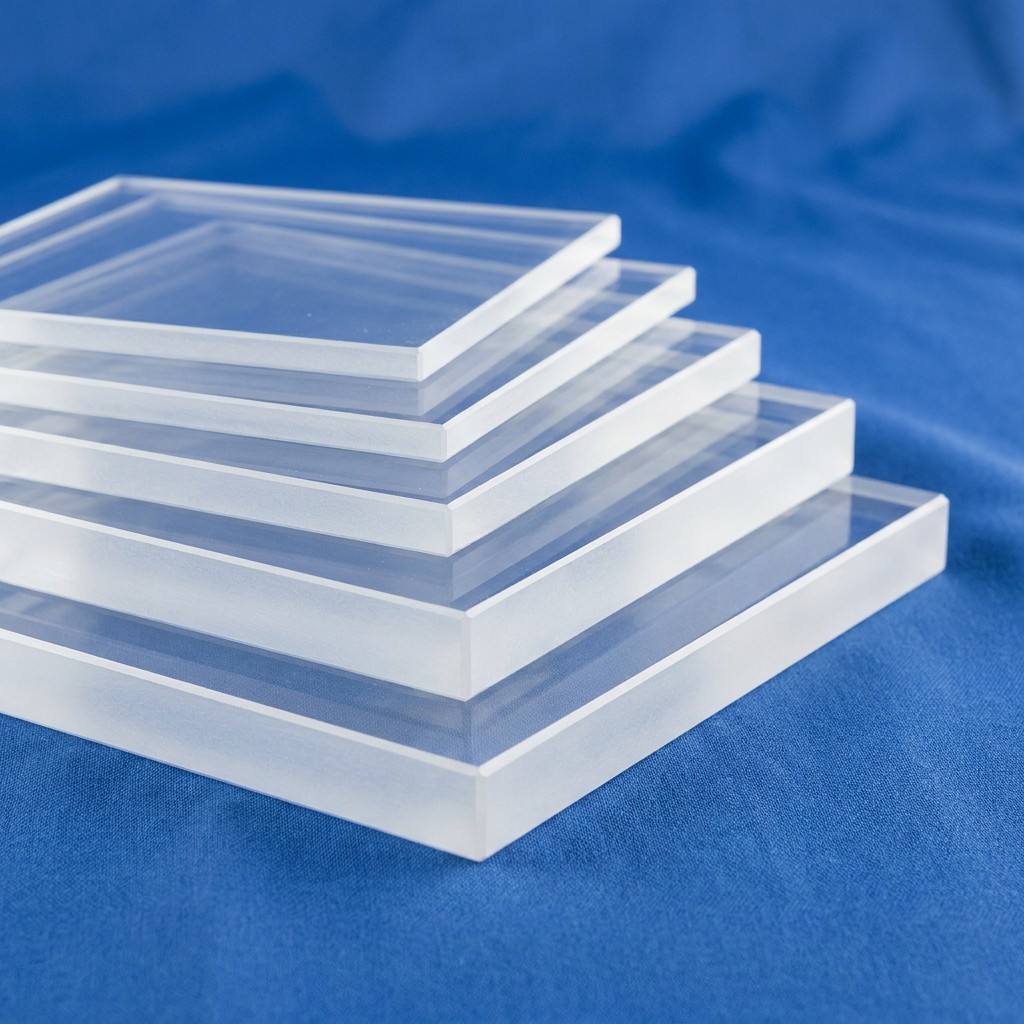
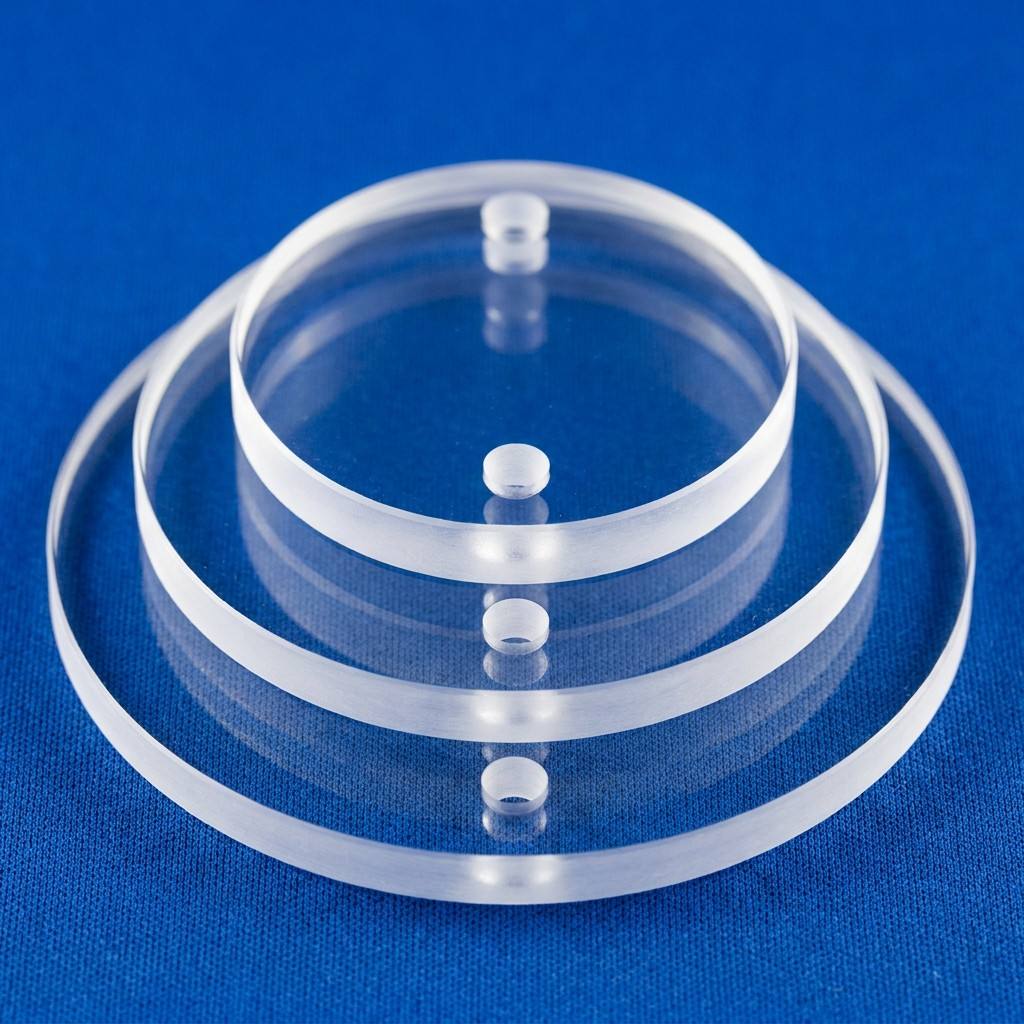
With Glasgow functioning as the engineering nerve-center for North Sea marine technology, deep-sea exploration subs and pipeline inspection probes depend on high-pressure quartz viewport discs (10mm to 30mm thick) that resist hydrostatic pressures beyond 300 bar while maintaining optical clarity.
Quantum Technologies & Cold Atom Cells
The University of Glasgow and quantum incubators in the West End require vacuum-compatible, ultra-low fluorescence quartz plates and spectroscopy cells. High homogeneity (Striae Grade A) eliminates wavefront aberrations in magneto-optical traps (MOTs) and quantum gravimetry setups.
Biophotonics & Medical Diagnostic Flow Cells
From high-throughput DNA sequencing hardware to fluorescence spectroscopy platforms engineered across Scotland's life-science corridors, custom 0.5mm to 1mm ultra-thin fused quartz windows ensure transmission down to 200 nm without autofluorescence interference.
Heavy Engineering, Boilers & Clyde Foundries
Steeped in shipbuilding and thermal engineering traditions along the River Clyde, industrial plants utilize thermal-shock sight glass discs for continuous boiler monitoring, refractory inspection, and high-temperature oil-level gauges capable of enduring thermal spikes up to 1,200°C.
Semiconductor & Optoelectronic Epitaxy
Supporting III-V compound semiconductor foundries situated in the Central Belt, we manufacture quartz furnace carrier boats, high-purity viewports, and wafer cleaning tanks offering impervious chemical resistance against boiling aqua regia, nitric, and sulfuric acids.
Emerging Technology Trends Influencing Scottish Quartz Glass Procurement
The Scottish photonics industry contributes over £1.2 billion annually to the national economy, supported by the Scottish Optoelectronics Association (SOA). As Glasgow spearheads the UK's next-generation manufacturing revolution under Net-Zero 2045 initiatives, structural transformations in quartz component specifications are accelerating across three primary fronts:
1. Shift Toward Sub-Nanometer Surface Roughness (Ra < 0.5 nm): Traditional mechanical polishing with Ra ~ 1.5 nm is no longer adequate for the cavity mirrors and resonator plates integrated into Glasgow's commercial optical clocks and lidar sensor networks. Precision buyers increasingly specify double-sided chemical-mechanical planarization (CMP) and ion-beam finishing to suppress scatter loss at shorter visible and UV wavelengths.
2. Stringent Demands on Laser Damage Resistance in Green & Blue Regimes: With Glasgow facilities developing advanced frequency-doubled (532 nm) and tripled (355 nm) solid-state and fiber lasers for precision micro-machining of battery foils and medical stents, synthetic quartz substrates must show zero bubble inclusion (Class 0 according to DIN 3140) to prevent internal micro-explosions caused by multiphoton absorption.
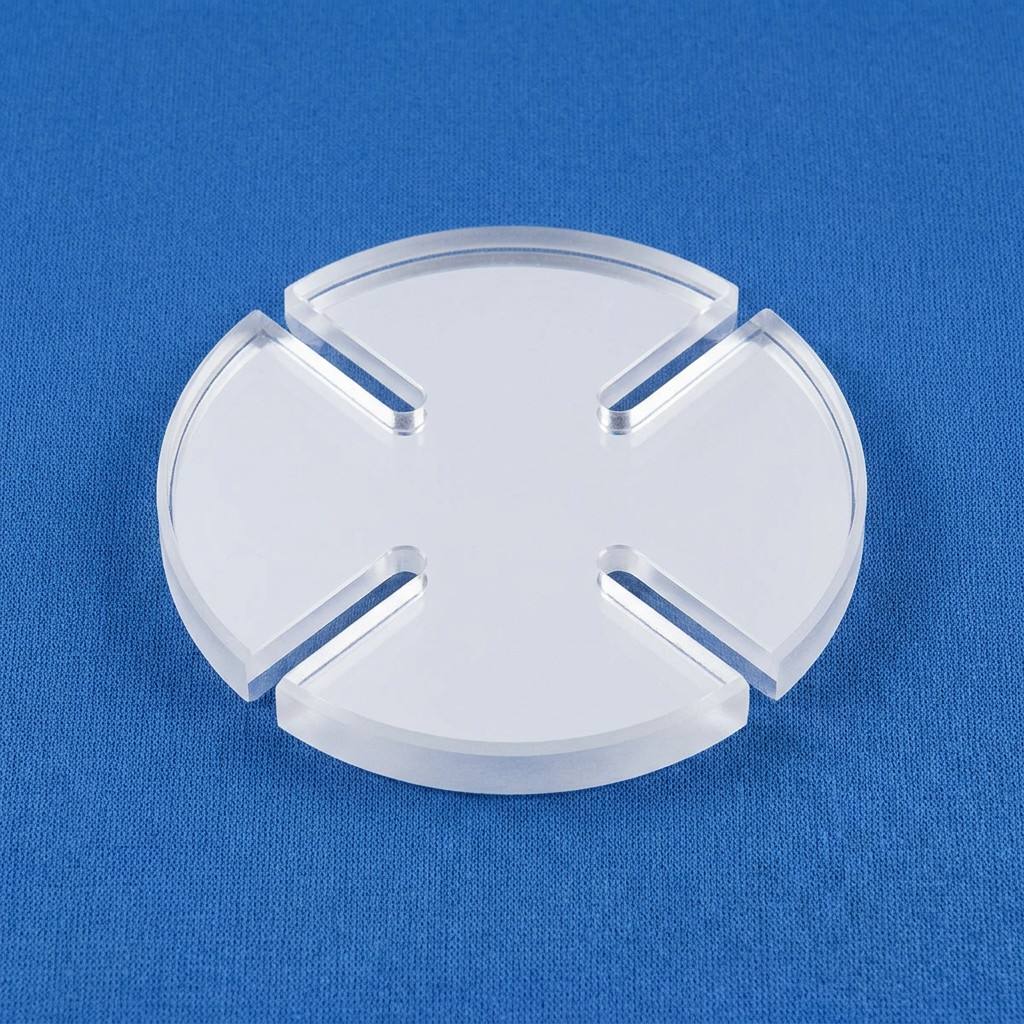
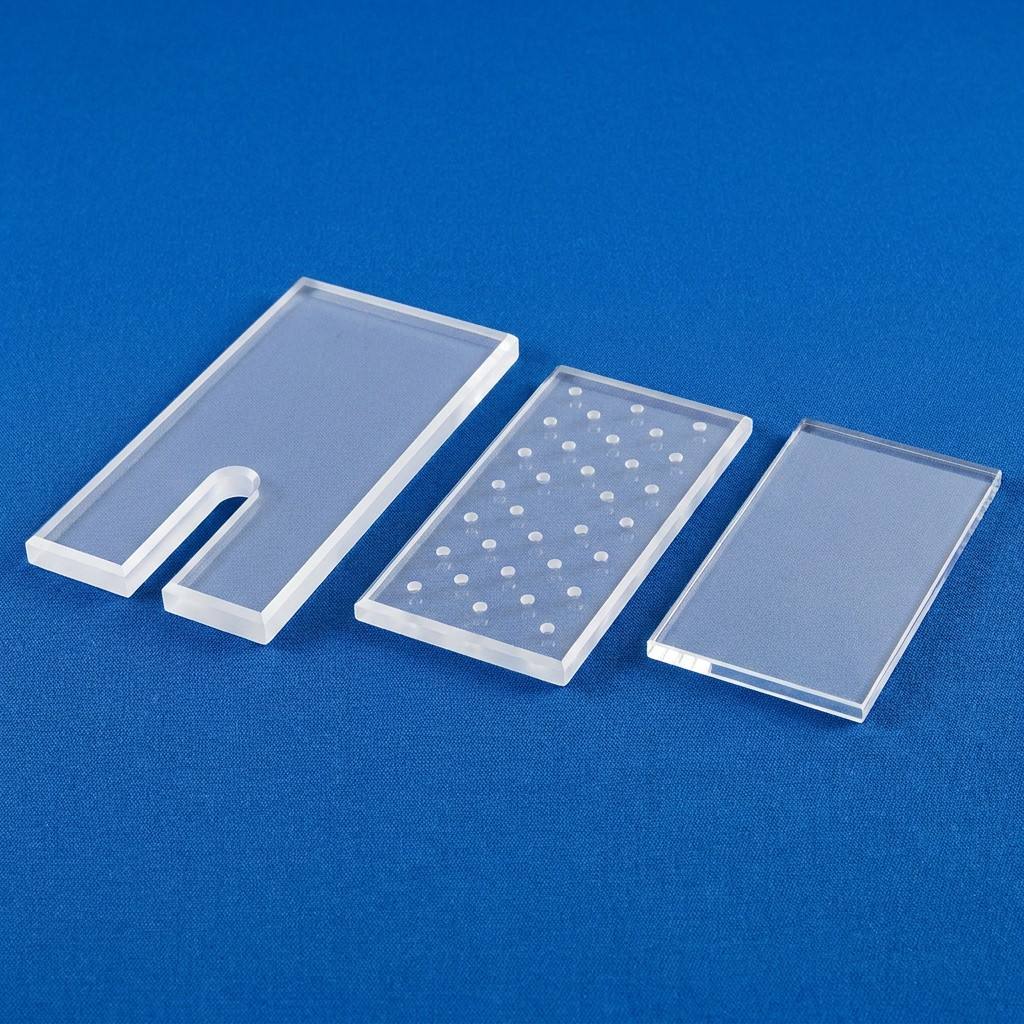
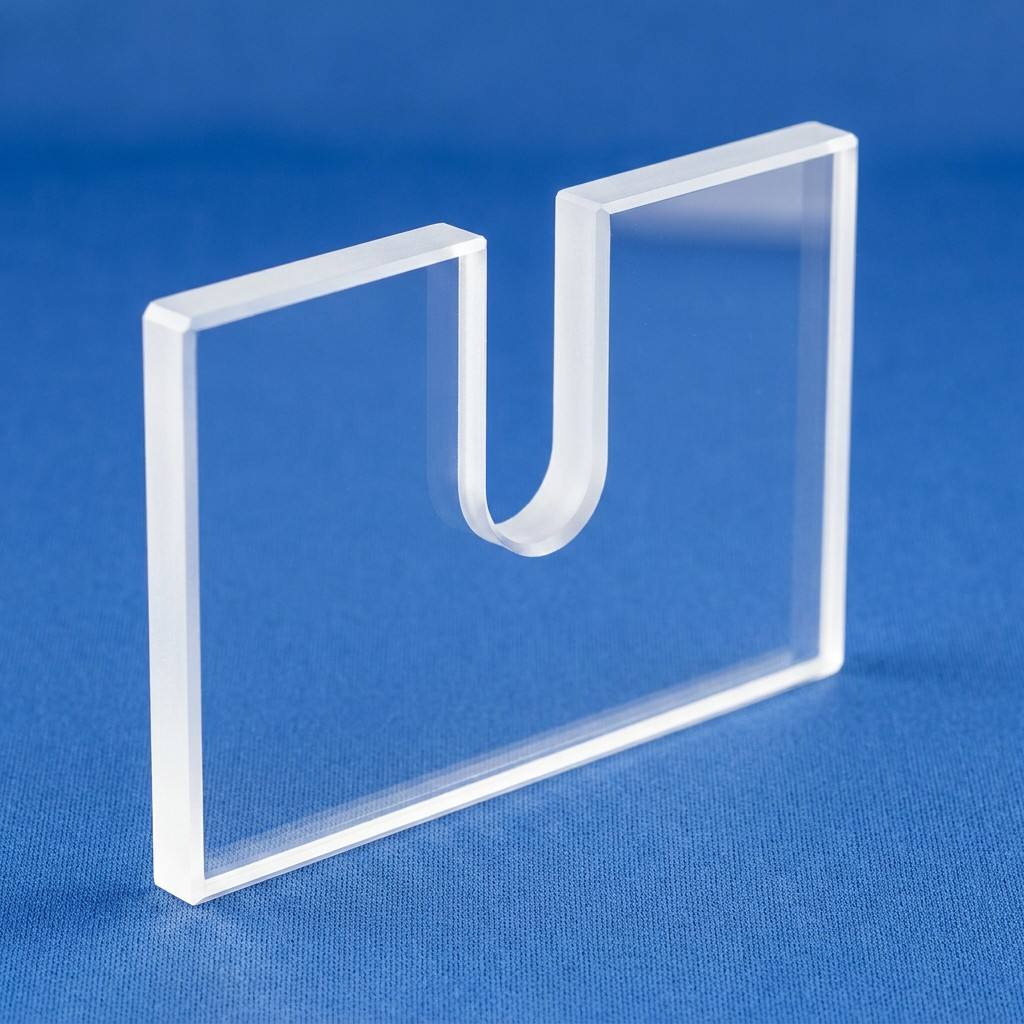
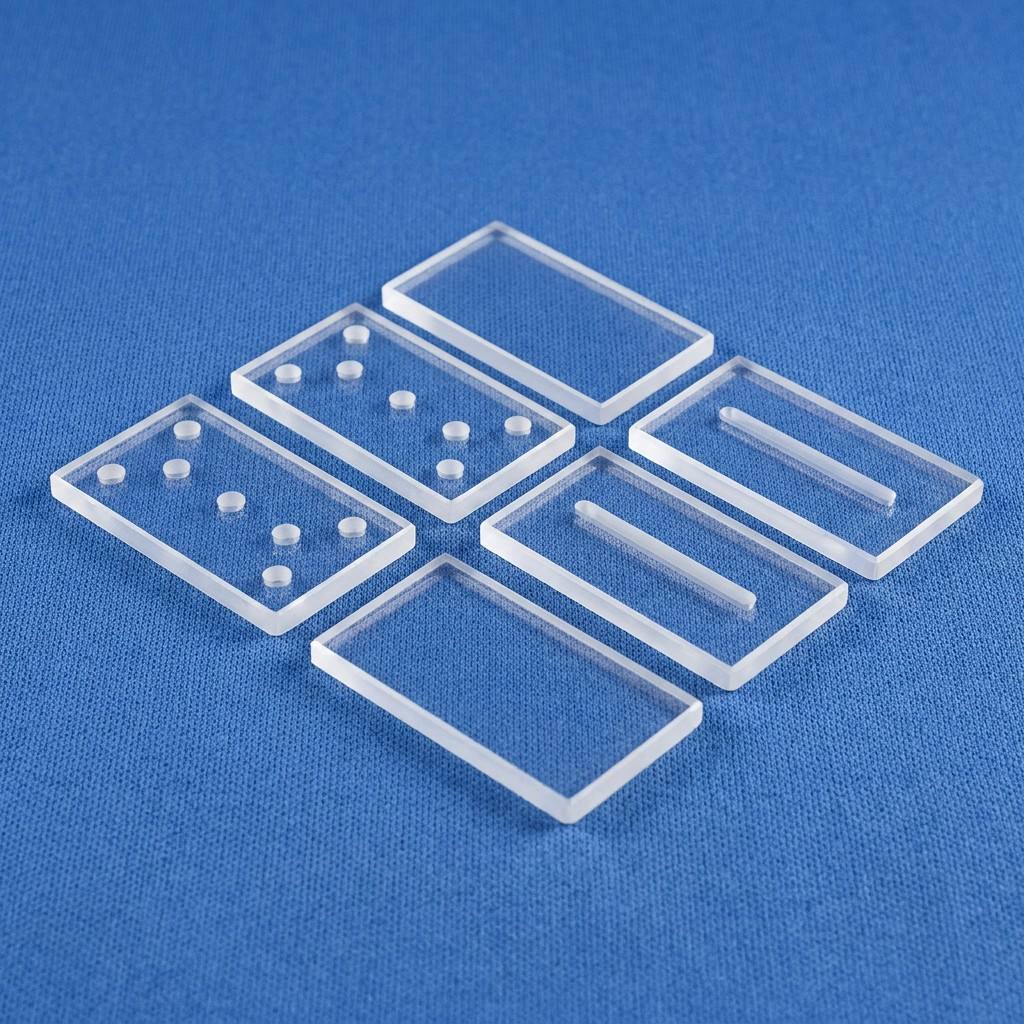
3. Direct-to-CAD CNC Micro-Machining: Local original equipment manufacturers (OEMs) are eliminating secondary assembly steps. By ordering quartz plates pre-machined with counter-bored mounting holes, bevels, stepped rims, and laser-etched fiducials, companies based around Hillington and East Kilbride reduce cycle times, minimize optical stress risers, and eliminate internal breakage risks during mechanical assembly.
Optical Quartz Physical & Dielectric Properties
Comprehensive engineering datasheet compiled for mechanical designers, optical physicists, and technical procurement specialists.
| Physical / Optical Parameter | Standard Fused Quartz (Natural) | Synthetic Fused Silica (DUV Grade) | Operational Impact for Buyers |
|---|---|---|---|
| Chemical Purity (SiO₂) | ≥ 99.99% | ≥ 99.9999% | Prevents trace metal leaching and solarization discoloration. |
| Spectral Transmission Range | 260 nm – 2,500 nm | 185 nm – 2,100 nm | Synthetic silica chosen for UV-C/excimer; quartz for VIS-NIR optics. |
| Refractive Index (nd @ 587.6 nm) | 1.4585 | 1.4584 | Predictable dispersion for achromatic optical systems and lenses. |
| Thermal Expansion (0–300°C) | 5.5 × 10⁻⁷ /°C | 5.2 × 10⁻⁷ /°C | Near-zero thermal drift prevents optical power distortion in lasers. |
| Maximum Operating Temp (Continuous) | 1,100 °C | 1,050 °C | Safe for continuous high-temperature furnace and boiler sight viewing. |
| Softening Point | 1,683 °C | 1,600 °C | Defines the flame-working and vacuum sealing threshold. |
| Surface Flatness Capability | λ/4 to λ/10 per 25 mm | Up to λ/20 per 25 mm | Prevents phase front distortion in interferometric applications. |
| Surface Quality (Scratch-Dig) | 60-40 (Standard) | 20-10 or 10-5 (Laser Grade) | Minimizes high-fluence light scattering and beam clipping losses. |
VEZLO Quartz Advantage: Direct Manufacturing Control for Scottish Industry
Sourcing optical-grade quartz components for international deployment requires an uncompromising balance of source-level mineral purity, specialized machining capabilities, and frictionless export logistics. As an integrated manufacturer operating across 50 mu (≈33,000 m²) in Donghai County—the acknowledged quartz capital of China—VEZLO Quartz eliminates trading middlemen, delivering complete provenance traceability from raw quartz crystal to final packaged shipments arriving at Glasgow Airport (GLA) or Grangemouth port terminals.
1. Proprietary Smelting & Refining Architecture: Supported by fixed assets exceeding RMB 10 million and ongoing annual R&D investments surpassing RMB 5 million, our facility operates proprietary continuous melting, electric vacuum fusing, and gas refining lines. Our technical pedigree includes leading the Jiangsu Provincial Science & Technology Support Project for large-scale integrated circuit 320 mm tubes and pioneering 520 mm large-diameter high-purity vessels recognized under national new product reviews.
2. CNC Cold Processing & Custom Geometry: Whether your Glasgow blueprint calls for 0.5mm ultra-thin laser cut slides, 30mm pressure discs, counter-sunk boiler windows, or stepped round viewports, our production floor is equipped with 5-axis CNC ultrasonic milling, high-precision surface grinders, double-side planetary lapping machines, and Class 1,000 cleanroom packaging cells.
3. Export Verification & Rapid B2B Turnaround: Every export consignment undergoes rigorous testing: spectrophotometric transmission scanning, polarized stress analysis for residual birefringence, dimensional CMM verification, and helium leak testing for vacuum flanged assemblies. With an average technical engineering response window under 2 hours and a reorder rate exceeding 50% among international buyers, Scottish clients enjoy seamless factory-direct cooperation backed by Alibaba Trade Assurance and verified audits.
Frequently Asked Questions by Glasgow Procurement Teams
Clear, direct answers regarding custom optical tolerances, international logistics, customs documentation, and material compliance.
Request an Engineering Consultation & Rapid Quotation
Submit your component drawings (PDF, DXF, or STEP format), required dimensional tolerances, and operating environment parameters. Our technical engineering desk will review feasibility and provide a factory-direct quotation within 2 hours.