
Semiconductor & Lithography
Explore our production lineup manufactured to ISO 9001 and DIN standard tolerances, serving R&D laboratories, optical systems fabricators, and high-temperature processing lines across Kraków and the Małopolska industrial belt.
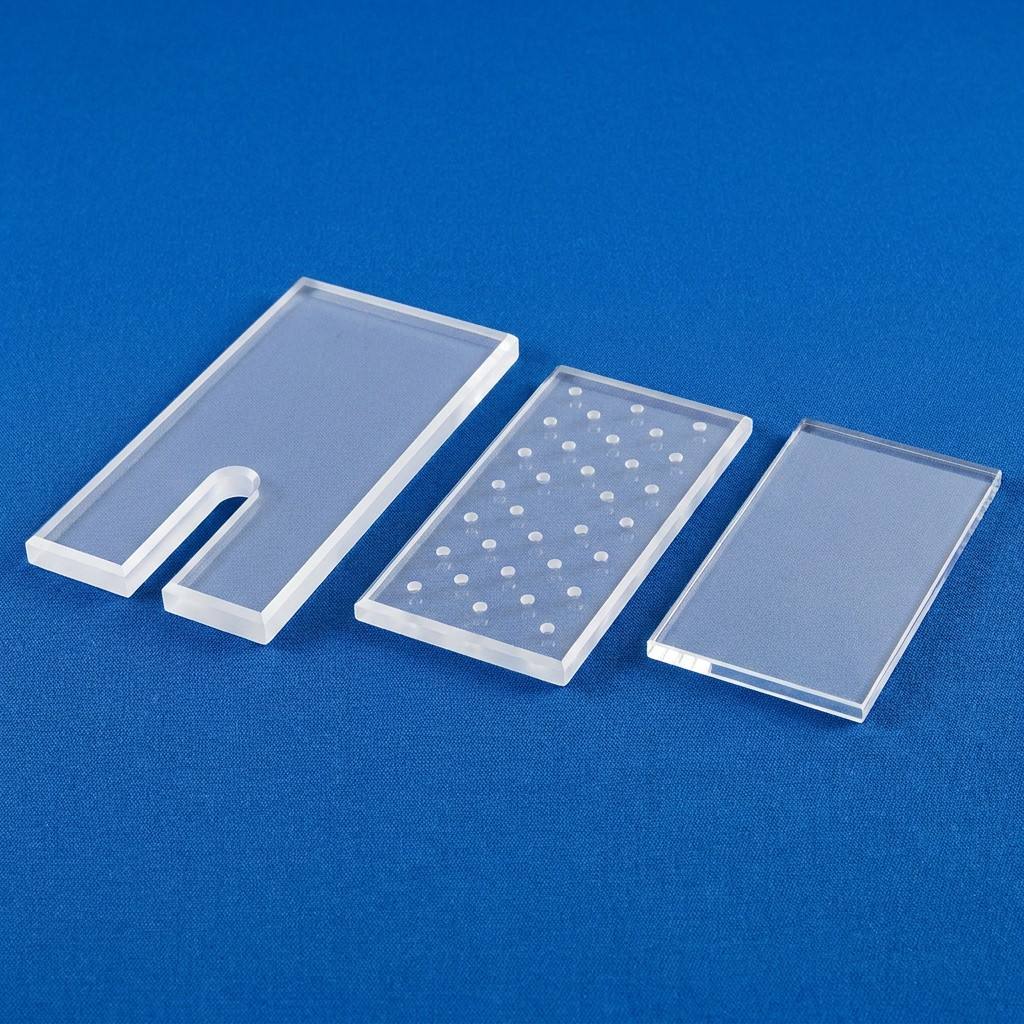
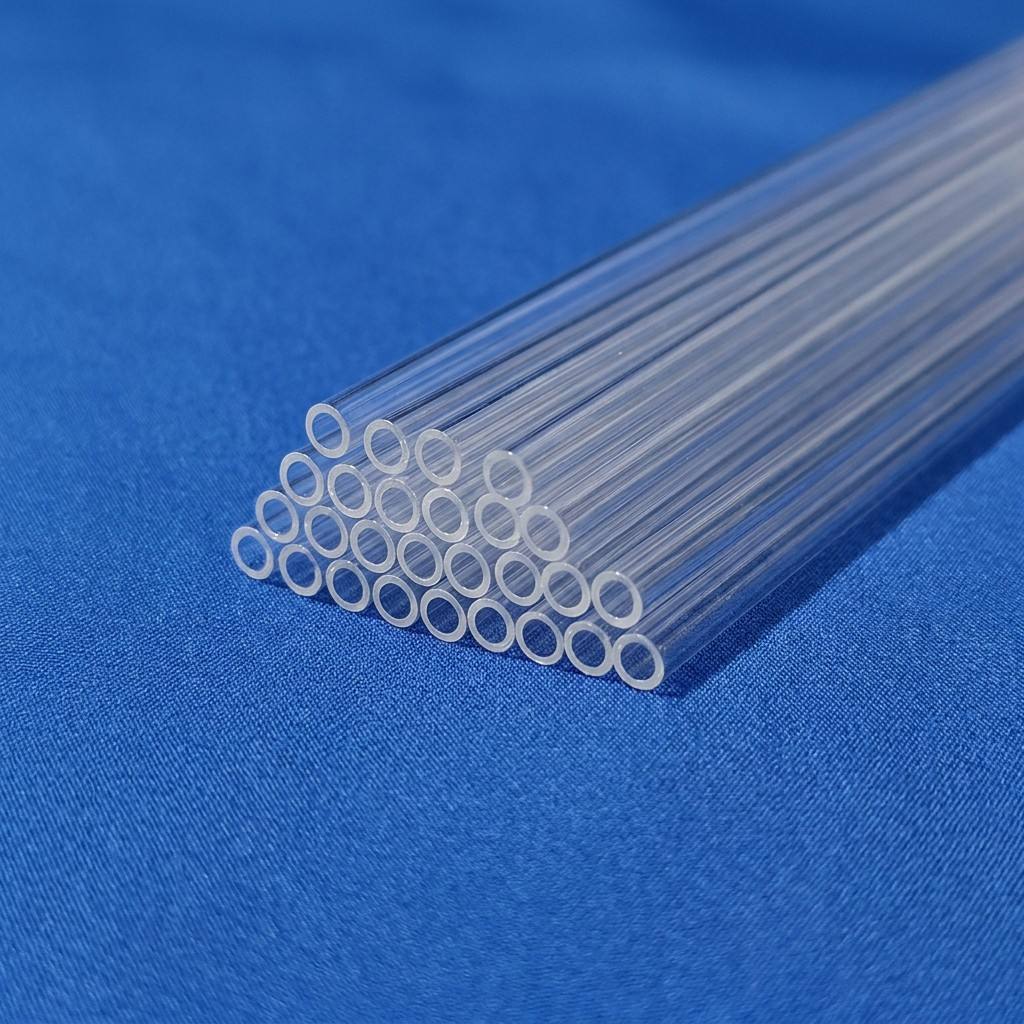


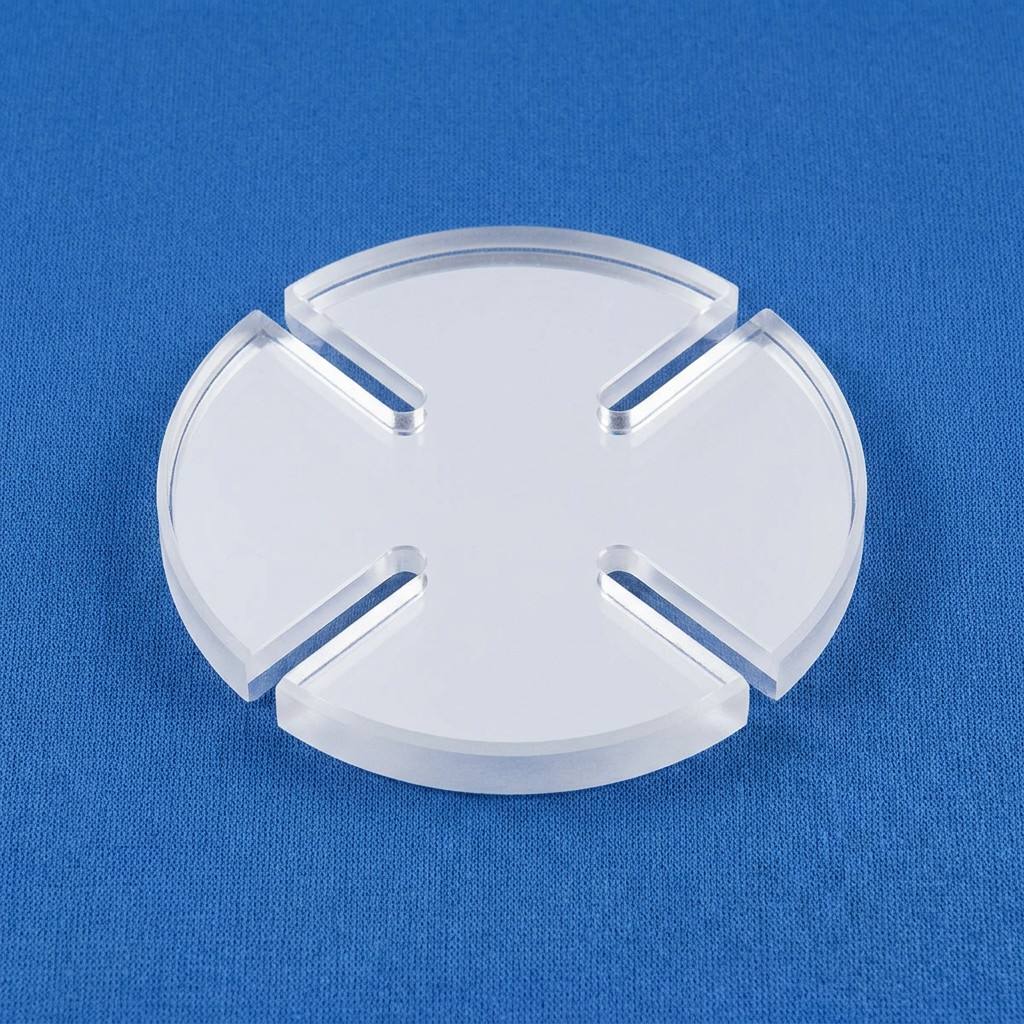


A comparative evaluation of amorphous silicon dioxide (SiO₂) morphology, thermal shock resistance, and spectral throughput for high-demand optical, vacuum, and semiconductor systems.
In precision engineering, the choice between commercial borosilicate glasses and engineered fused quartz or synthetic fused silica dictates system survival in harsh operational environments. Transparent quartz glass is composed almost entirely of amorphous silica (≥99.99% SiO₂), rendering it virtually isotropic and free of crystalline boundaries. This molecular purity yields an extraordinarily low linear coefficient of thermal expansion (CTE) of approximately 5.5 × 10⁻⁷ /°C between 20°C and 320°C. For industrial plants and research cleanrooms throughout Kraków, this allows a fused silica window heated to 1100°C to be instantaneously quenched in cold water without catastrophic mechanical failure or micro-fracturing.
Optical transmittance remains another primary differentiator. Standard soda-lime or borosilicate materials present severe absorption bands in the ultraviolet (UV) region below 300 nm due to metallic trace dopants such as iron oxide (Fe₂O₃) and titanium dioxide (TiO₂). By leveraging natural crystal and high-purity sand with aggregate metal impurity thresholds controlled to ≤ 20 ppm, our UV-grade fused silica plates deliver optical transmission exceeding 90% across the deep ultraviolet (DUV 190–260 nm), right through the visible spectrum, and reaching into the near-infrared (NIR) wavelengths up to 2,500 nm, interrupted only by the characteristic OH⁻ absorption fundamental at 2.73 µm.
| Physical / Mechanical Property | High-Purity Fused Quartz (JGS2) | Synthetic Fused Silica (JGS1 / UV Grade) | Borosilicate Glass 3.3 (Reference) |
|---|---|---|---|
| SiO₂ Chemical Purity | ≥ 99.99% | ≥ 99.999% | ≈ 81% |
| Thermal Expansion Coefficient (20–320°C) | 5.5 × 10⁻⁷ /°C | 5.2 × 10⁻⁷ /°C | 33 × 10⁻⁷ /°C |
| Continuous Max Working Temp | 1100 °C | 1150 °C | 450 °C |
| Short-Term Softening Point | ≈ 1683 °C | ≈ 1730 °C | ≈ 820 °C |
| UV Cutoff Wavelength (T = 50%) | ≈ 220 nm | ≈ 175 nm | ≈ 310 nm |
| Refractive Index (nd at 589.3 nm) | 1.4585 | 1.4584 | 1.4730 |
| Dielectric Strength (20°C, 1 MHz) | 25–40 kV/mm | 30–45 kV/mm | 15–20 kV/mm |
| Hydroxyl (OH⁻) Content Options | 150–200 ppm (Standard) | < 5 ppm (Water-free) to 1200 ppm (UV) | N/A (Multi-component) |
Double-sided planetary chemical-mechanical polishing (CMP) achieving surface roughness down to Ra < 0.5 nm, flatness of λ/4 to λ/10 per 100 mm aperture, and scratch-dig specifications compliant with ISO 10110 and MIL-PRF-13830B.
Diamond ultrasonic CNC edging, beveling, circular hole trepanning, stepped bores, and precision chamfering. Dimensional tolerances held strictly within ±0.02 mm on custom viewing port substrates and square wafer plates.
Every cut and ground quartz sheet undergoes multi-stage thermal annealing in computer-controlled electric gradient ovens up to 1215°C to eliminate internal birefringence, residual hoop stresses, and thermal shock vulnerability.
How our fused quartz plates and custom viewport sheets integrate into academic research clusters, photonic equipment, and industrial processing hubs across Lesser Poland.
Kraków is recognized not only as Poland's historic cultural epicenter but as a primary technical engine of Central Europe. Anchored by institutions like the AGH University of Krakow (Akademia Górniczo-Hutnicza), the Jagiellonian University, the Solaris National Synchrotron Radiation Centre, and commercial technology operators within the Kraków Technology Park (Krakowski Park Technologiczny), demand for ultra-pure optical glass spans diverse scientific disciplines:
Non-fluorescent synthetic fused silica windows engineered for synchrotron end-stations, beam position monitors, and soft X-ray/VUV spectroscopy cells requiring negligible solarization and ultra-low background luminescence.
Double-side polished substrate plates deployed in laser processing equipment, UV lithography testing, and optoelectronic sensors developed by photonics startups in the Zabierzów and Rybitwy commercial sectors.
Acid-resistant fused silica covers, wafer carriers, and ultra-flat photomask blanks capable of withstanding concentrated piranha solutions (H₂SO₄ + H₂O₂), boiling aqua regia, and hydrofluoric acid etching environments.
Heavy-duty, thermal-shock resistant quartz boiler sight glasses, oil level monitor viewports, and thermal furnace windows installed across metallurgy workshops, glassworks, and chemical processing facilities throughout the greater Kraków metropolitan industrial zones.
Key supply chain transformations influencing engineering procurement, quality auditing, and technical specifications across southern Poland.
The manufacturing and procurement landscape in Kraków is undergoing a decisive shift driven by regional capital investments, EU-backed cleantech mandates, and the European Chips Act. Engineering procurement managers and research lab directors are moving away from intermediaries and legacy stockists towards direct factory partnerships that offer verified material pedigrees. Key developments shaping local quartz demand include:
1. Escalating Demand for Deep-UV (DUV) and Excimer-Compatible Substrates: With Kraków's universities and spin-offs expanding into advanced quantum photonics, femtosecond laser micromachining, and micro-fluidic diagnostics, standard optical glass no longer suffices. Buyers require synthetic grade (JGS1) sheets tested for transmission down to 193 nm with zero internal bubble inclusions (DIN 58927 Class 0/1) to prevent catastrophic beam degradation.
2. Decarbonization and Industrial Furnace Upgrades in Małopolska: The legacy industrial belt across Nowa Huta and nearby Tarnów/Oświęcim is accelerating the transition toward hydrogen-fueled atmosphere furnaces and vacuum sintering. These systems operate at aggressive thermal cycles exceeding 1100°C under fluctuating pressure differentials, necessitating thick-walled quartz viewports with certified dimensional stability and polished chamfers to eliminate stress riser points.
3. Direct-to-Factory Traceability & Regulatory Alignment: Supply chain predictability has become paramount for Polish buyers. Engineers now mandate rigorous batch certifications for each consignment—including RoHS 3, REACH compliance, spectral spectrophotometer scans, and dimensional verification reports—delivered directly from primary melters rather than third-party distributors.
Rooted in Donghai County, Jiangsu Province—globally acknowledged as the quartz synthesis capital—VEZLO Quartz Products Co., Ltd. controls every manufacturing phase from raw high-purity natural silica sand refinement to precision CNC grinding and optical laser polishing.
With an extensive 33,000 m² (50-mu) modernized production base and RMB 10 million in dedicated fixed assets, we integrate state-of-the-art continuous electric fusion furnaces and hydrogen-oxygen flame processing to serve high-reliability industrial markets worldwide.
Clear, direct answers concerning mechanical tolerances, optical grades, customs clearance into Poland, and delivery logistics.
To ensure our engineering department returns a fully vetted technical quotation within 2 hours, please review the 5 key parameters below.
Specify outer diameter, thickness, length, width, and required dimensional tolerances (e.g., standard ±0.1 mm vs. precision ±0.02 mm). Attach CAD vector files if step profiles or holes are required.
State your required transmission bandwidth: Deep-UV (JGS1), Visible/Industrial (JGS2), or Infrared (JGS3 / water-free). Indicate if anti-reflective (AR) coating is needed.
Detail maximum exposure temperatures, continuous working thermal ramp rates, pressure differential (e.g., Ultra-High Vacuum vs. positive hydraulic bar), and chemical contact medium.
Whether you require single prototype substrates for laboratory bench testing in Kraków or continuous scheduled batch deliveries for high-temperature furnace manufacturing, our technical engineering office is ready to evaluate your CAD drawings.