Featured Quartz Optical Windows & Plates
Precision-fabricated from natural fused quartz and high-purity synthetic fused silica. Available in standardized dimensional stock or custom CNC geometries conforming to ISO 10110 and MIL-PRF-13830B optical metrology standards.
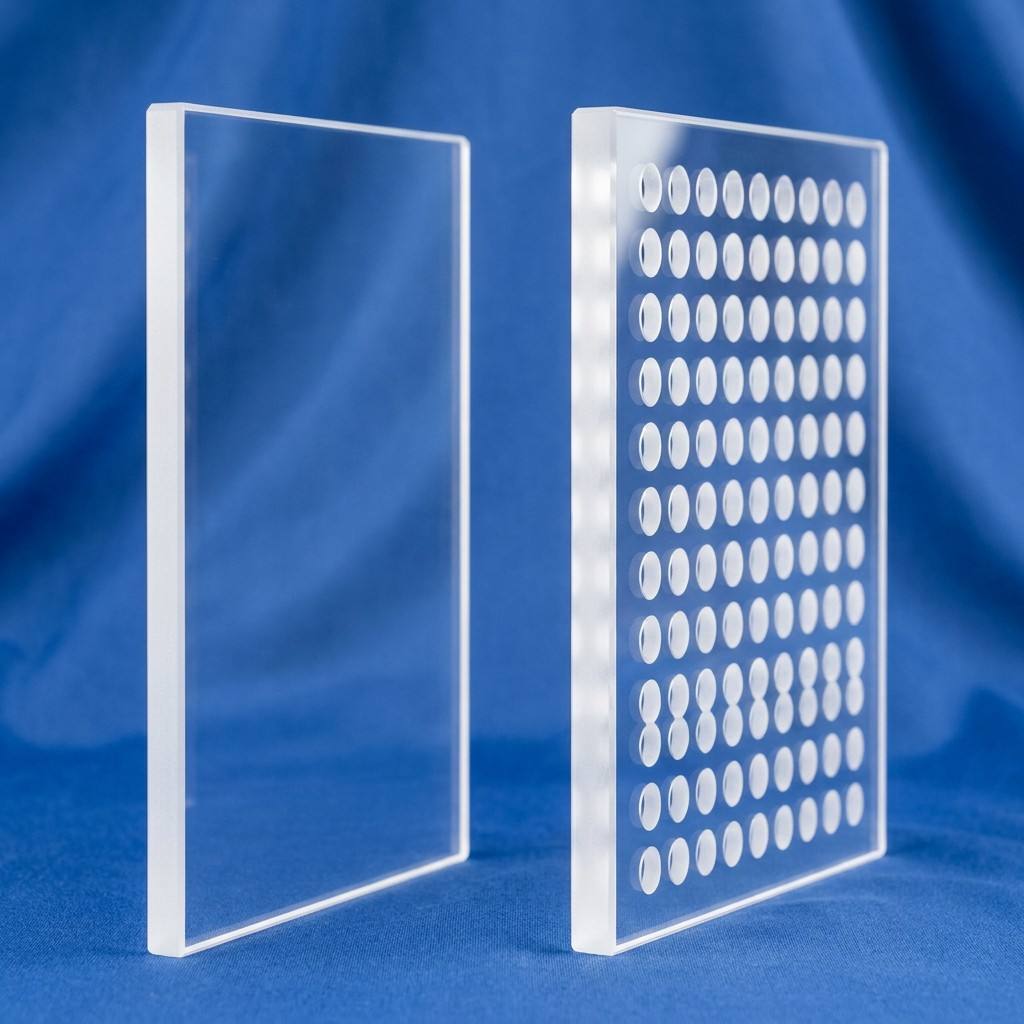
Quartz Glass Plate for Vacuum Chamber Viewport High Purity Custom
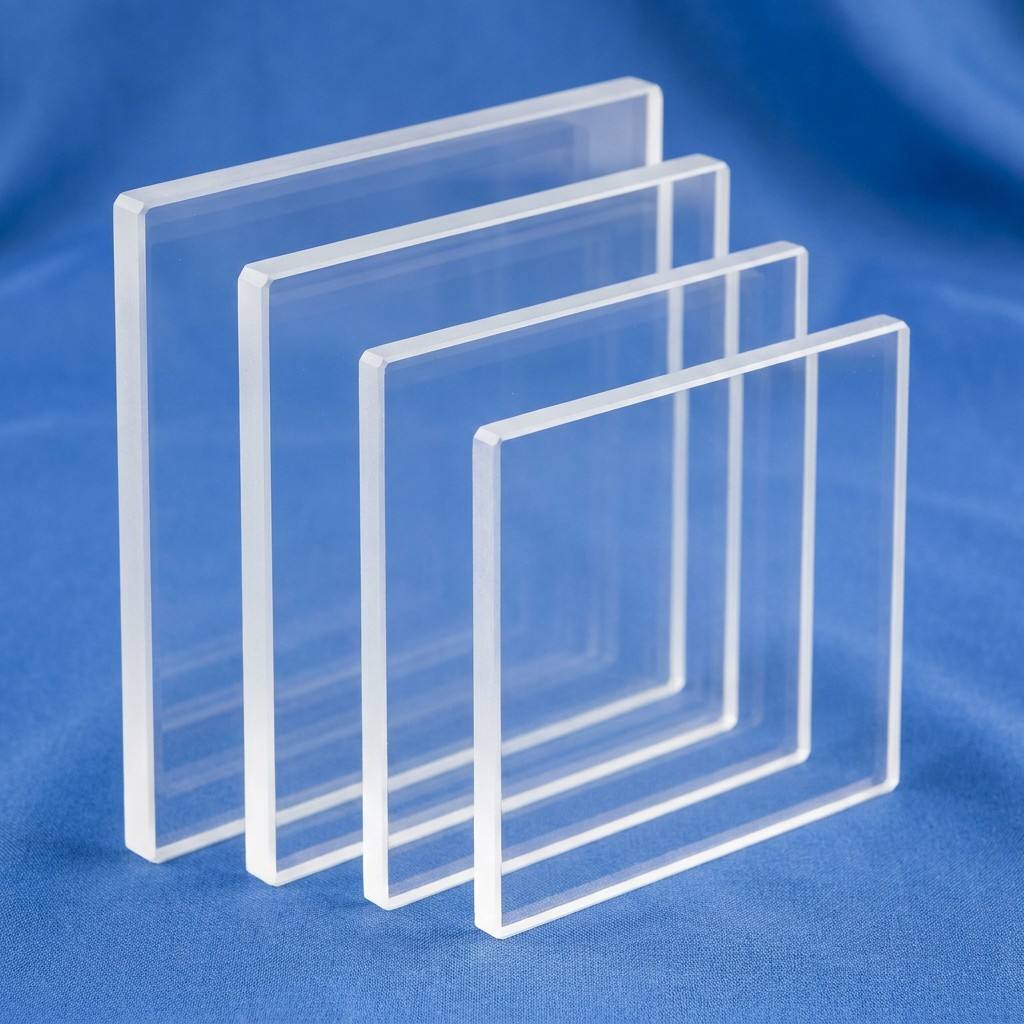
Laser Cut Quartz Glass Plate Fused Silica Precision Custom Size
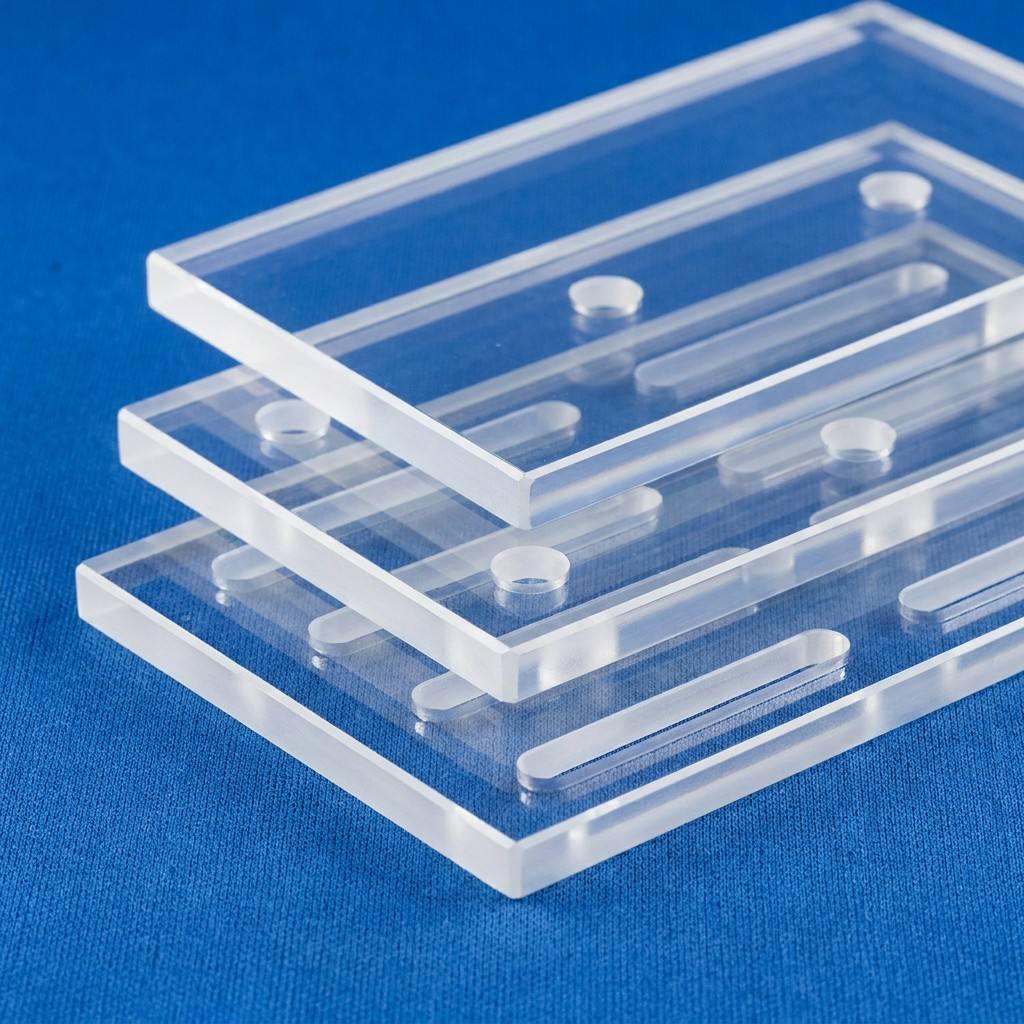
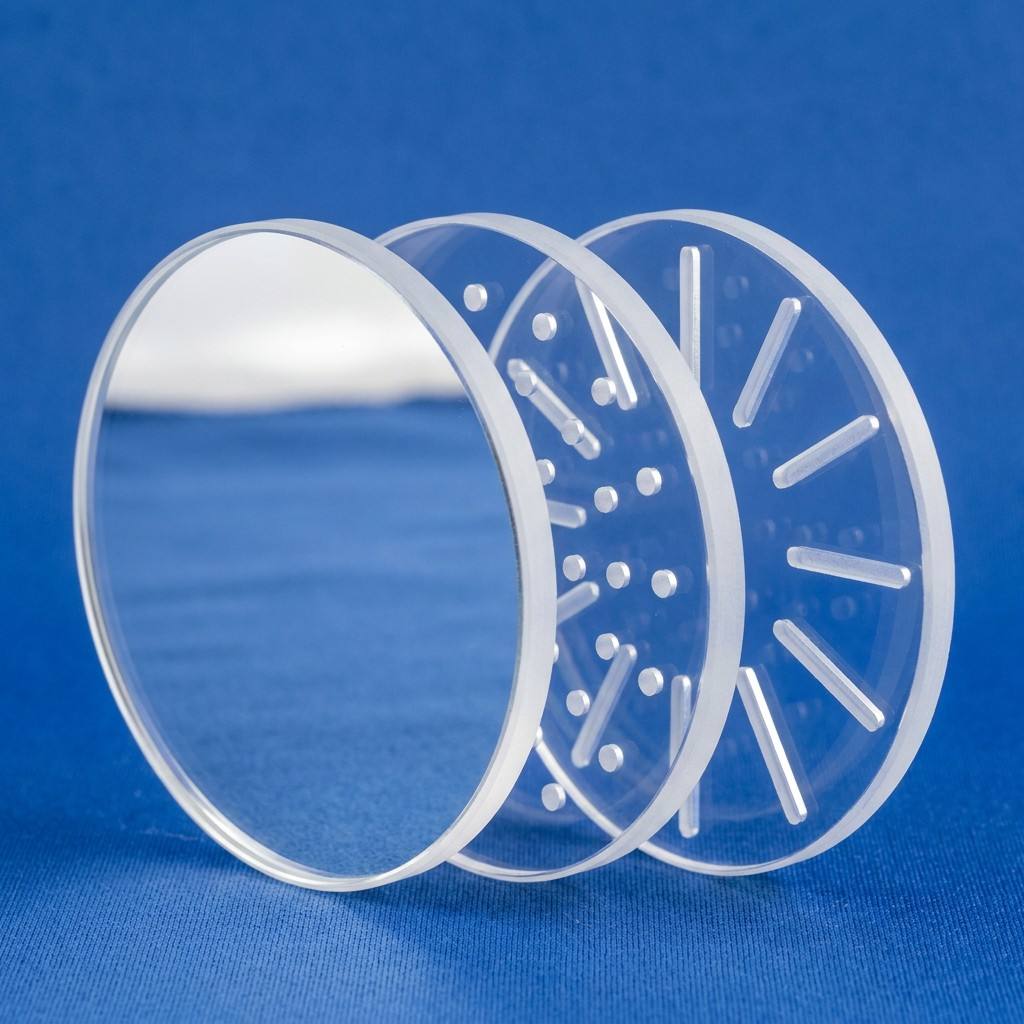
Quartz Disc with Groove Fused Silica Plate Clear Polished Custom Size

Quartz Viewport Glass Plate Vacuum Chamber Fused Silica Custom Size

Square Quartz Plate Fused Silica Sheet Beveled Edge Polished Custom Size
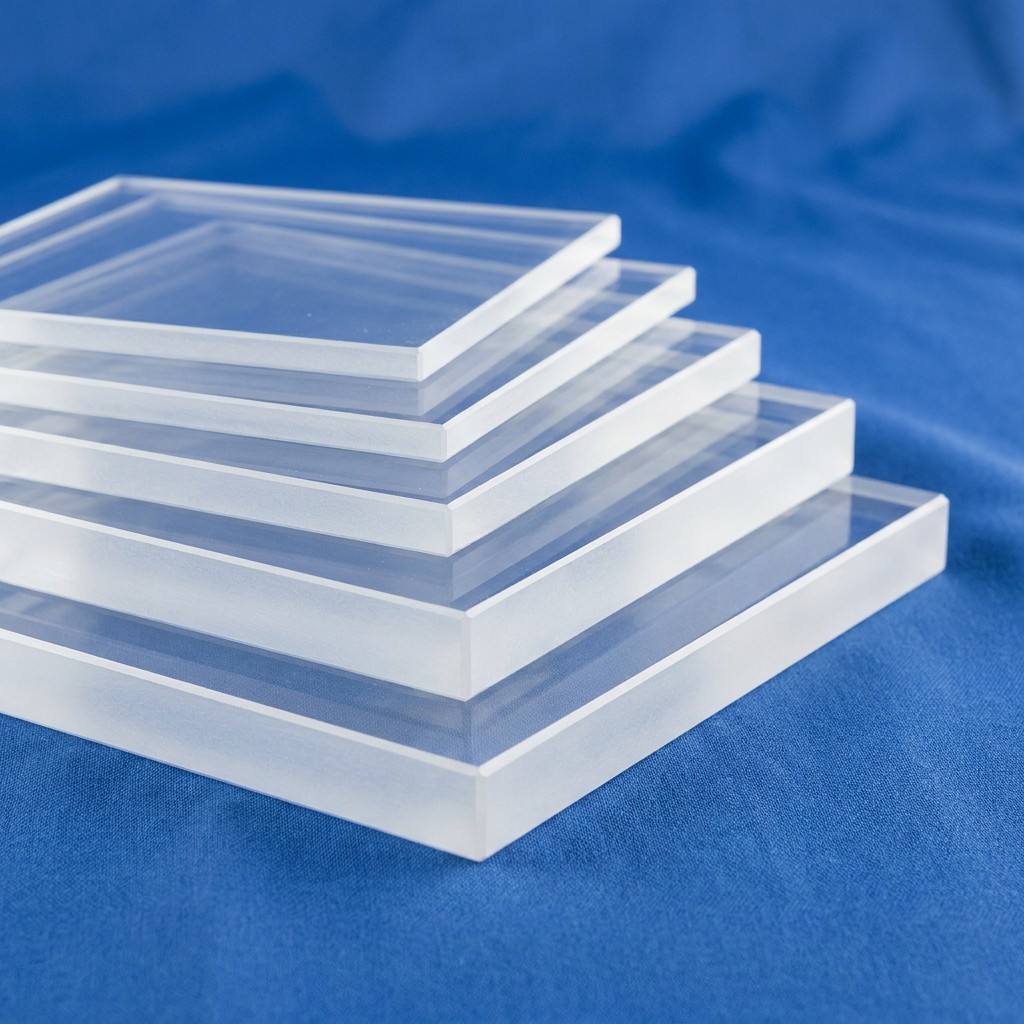
Quartz Fireplace Viewing Glass Plate Heat Resistant Fused Silica
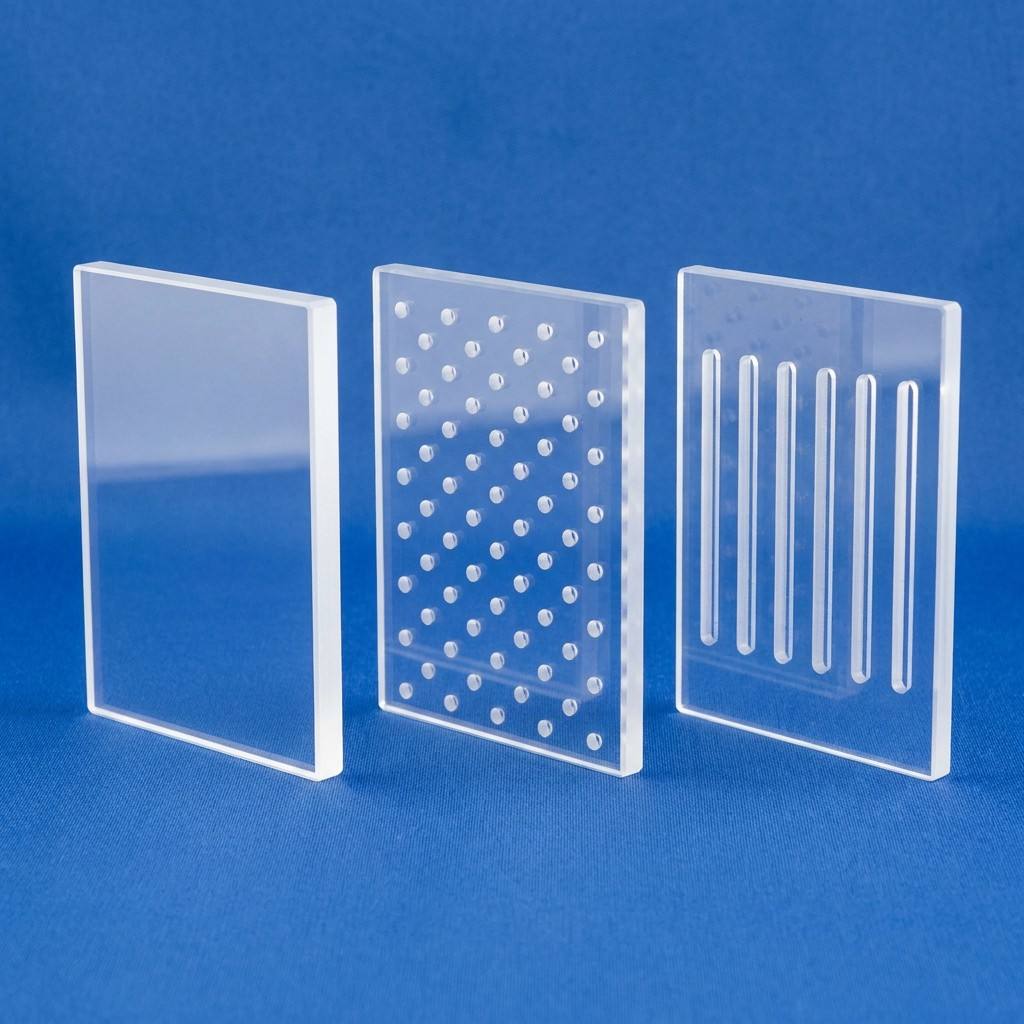
Drilled Quartz Plate Multi Hole Fused Silica CNC Machined Custom
Rectangular Quartz Plate Fused Silica Clear Precision Cut Custom Size
Optical Quartz Material Classifications & Engineering Thresholds
Selecting the appropriate fused silica or fused quartz substrate requires matching specific ultraviolet absorption edges, hydroxyl ($-\text{OH}$) content, and chemical purity to operational wavebands and thermal profiles.
In high-precision electro-optical systems, spectroscopy instruments, and vacuum monitoring ports across Nicosia research laboratories, optical windows serve as an essential barrier between ambient conditions and controlled physical environments. The performance of an optical window is fundamentally limited by the molecular structure of the silicon dioxide ($\text{SiO}_2$) matrix. We manufacture components utilizing two core metallurgical routes: Electric Fused Quartz (Natural), formed by melting high-purity natural silica sand in high-temperature vacuum furnaces, and Synthetic Chemical Vapor Deposition (CVD) Fused Silica, derived from silicon tetrachloride ($\text{SiCl}_4$) precursor gas oxidation.
1. UV, Optical, and Infrared Spectral Windows (JGS1, JGS2, JGS3 Comparison)
Our processing facility delivers optical windows tailored to specific electromagnetic spectra, categorizing materials into standard international and equivalent Chinese National Standards (GB/T 12442):
- JGS1 (Synthetic Ultraviolet Fused Silica / Corning 7980 / Suprasil Equivalent): Synthetic amorphous silica synthesized via flame hydrolysis. Free from metallic impurities (Fe, Ti, Al ≤ 0.1 ppm) and bubble-free (DIN 3140 Class 0). Delivers transmission exceeding 90% down to 185 nm without solarization under continuous excimer laser irradiation. Ideal for Deep-UV (DUV) laser optics, photolithography, and UV fluorescence detection.
- JGS2 (Optical Grade Fused Quartz / Homosil Equivalent): Manufactured from high-purity natural quartz crystals. Demonstrates exceptional transmission across the visible and near-infrared spectra (260 nm to 2,500 nm). While containing trace hydroxyl radicals ($-\text{OH} \approx 30\text{--}50\text{ ppm}$) and minor aluminum inclusions, it provides structural strength and thermal shock stability at an economical cost. Widely specified for viewport windows, solar simulator optical ports, and industrial view cells.
- JGS3 (Infrared Fused Quartz / Infrasil Equivalent): Vacuum-melted synthetic or natural quartz treated to strip virtually all hydroxyl ions ($-\text{OH} ≤ 2\text{--}5\text{ ppm}$). This process completely eliminates the characteristic deep infrared absorption bands at 1,380 nm, 2,200 nm, and 2,730 nm, unlocking continuous transmission up to 3,500 nm in the mid-infrared region. Essential for thermal imaging viewports, $\text{CO}_2$ laser optics, and Fourier-Transform Infrared (FTIR) spectroscopy.
| Physical / Optical Property | JGS1 (Deep UV Silica) | JGS2 (Standard Optical Quartz) | JGS3 (Water-Free IR Quartz) |
|---|---|---|---|
| Transmission Range (T ≥ 80%) | 185 nm – 2,500 nm | 220 nm – 2,600 nm | 260 nm – 3,500 nm |
| Hydroxyl ($-\text{OH}$) Content | ≤ 1,200 ppm (High OH) | 30 – 150 ppm | ≤ 5 ppm (Dry/Low OH) |
| Total Metallic Impurities | ≤ 1.0 ppm | ≤ 15 – 20 ppm | ≤ 10 ppm |
| Refractive Index ($n_d$ at 589.3 nm) | 1.4585 | 1.4584 | 1.4584 |
| Thermal Expansion Coeff. ($20\text{--}320^\circ\text{C}$) | $5.4 \times 10^{-7} / \text{K}$ | $5.5 \times 10^{-7} / \text{K}$ | $5.5 \times 10^{-7} / \text{K}$ |
| Maximum Service Temp (Continuous) | 1,100 °C | 1,150 °C | 1,180 °C |
| Laser Damage Threshold (1064nm, 10ns) | > 15 J/cm² | > 7.5 J/cm² | > 10 J/cm² |
Precision Quartz Windows in the Nicosia Ecosystem
As the capital of Cyprus and the primary administrative, educational, and technological nexus in the Eastern Mediterranean, Nicosia exhibits distinct technical demands for high-purity optical components across specialized sectors.
Concentrated Solar Thermal (CSP) & Solar Fuels
Nicosia is a recognized hub for concentrated solar power innovation, driven by institutions such as The Cyprus Institute (CyI) and its PROTEAS Facility. High-flux solar simulators, molten-salt receivers, and thermochemical solar reactor chambers require quartz optical windows capable of withstanding concentrated radiation exceeding 1,000 suns (1 MW/m²). Our custom-annealed fused silica viewports resist extreme radial temperature gradients without catastrophic mechanical fracture.
University Research & Laser Spectroscopy
Advanced physics, chemistry, and materials science laboratories at the University of Cyprus (UCY) and nearby research centers routinely operate ultra-fast femtosecond lasers, Raman spectrometers, and thin-film RF sputtering systems. We fabricate high-homogeneity ($\Delta n \le 1 \times 10^{-6}$), low-wavefront distortion ($\lambda/10$ @ 632.8 nm) quartz substrates to prevent phase disruption and minimize beam divergence in precision photonics setups.
Biomedical Instrumentation & Diagnostics
Nicosia's growing biomedical and pharmaceutical R&D cluster utilizes customized quartz flow cells, UV transparent cuvettes, and microfluidic observation plates. Unlike conventional borosilicate or sodalime glass, our synthetic fused silica components exhibit virtually zero auto-fluorescence under UV illumination, ensuring baseline signal accuracy during high-sensitivity fluorescence DNA sequencing and cellular analysis.
Environmental & Marine Remote Sensing
Institutions in Nicosia monitoring the Eastern Mediterranean marine atmosphere and offshore hydrocarbon installations utilize LiDAR, radiometers, and optical gas sensors. Our optical windows feature chemical inertness against saline mist, sulfuric aerosols, and environmental weathering, ensuring uncompromised optical transmission without surface pitting over years of continuous field deployment.
Procurement Trends & Supply Resilience in Cyprus
Operating on an island economy within the European Union presents specific logistical, tariff, and lead-time variables for scientific procurement officers and equipment fabricators in Nicosia.
Procuring custom optical materials in Cyprus has historically involved layered distributor markups and extended supply lead times from Central Europe or North America. Sourcing managers in Nicosia are increasingly adopting direct-from-manufacturer procurement models to streamline costs, reduce technical translation errors, and maintain tight project delivery dates. Key factors shaping the Nicosia sourcing landscape include:
1. Direct Factory Customization Over Rigid Catalog Constraints
Standard off-the-shelf optical windows often fail to satisfy bespoke dimensions required by experimental setups or custom vacuum flanges (such as non-standard KF, CF, or ISO viewport mountings). Nicosia engineering teams require fast-turnaround custom machining — including ultrasonic hole drilling, specialized stepped O-ring grooves, and beveled peripheral edges — built directly to CAD drawings (.DXF, .STEP, .DWG).
2. Air Cargo Agility to LCA (Larnaca) and PFO (Paphos)
Because Nicosia is located inland approximately 45 kilometers from Larnaca International Airport (LCA), optical shipments via priority air freight (DHL, FedEx, UPS) can clear Cypriot customs and arrive at Nicosia laboratories within 4 to 6 business days after dispatch from our manufacturing facility in Donghai. Plywood crating with multi-layered polyethylene and custom shock-absorbing foam prevents transit vibration damage across multi-leg flight corridors.
3. Transparent Documentation for European Union Border Compliance
Cyprus adheres strictly to European Union customs regulations. Importing optical components into Nicosia requires accurate Combined Nomenclature (CN) / TARIC classification (typically Heading 700231 or 700600), comprehensive Certificates of Conformity (CoC), and detailed material test reports (including transmission spectrophotometer traces and Zygo interferometer surface scans). We provide complete export documentation to ensure seamless clearance with the Department of Customs and Excise in Cyprus.
Sub-Millimeter CNC Cold Working
5-axis ultrasonic CNC milling centers ensure complex stepped viewports, elliptical geometries, and countersunk mounting holes are executed with precision tolerances down to ±0.02 mm.
Optical Surface Polishing & Flatness
Double-sided planetary chemical-mechanical polishing (CMP) delivers surface roughness Ra < 0.5 nm, laser-grade surface figure of $\lambda/4$ to $\lambda/10$, and low scratch/dig ratings (20/10).
Anti-Reflective Thin-Film Coating
Custom multi-layer dielectric anti-reflective (AR) coatings (single wavelength, dual band, or broadband BBAR 250-400 nm / 400-700 nm / 1064 nm) achieve surface reflection R < 0.25% per surface.
Why Nicosia Technical Teams Source from VEZLO Quartz
Combining raw material sovereignty in China's quartz capital with state-certified research and development excellence.
Donghai Production Hub
Operating a dedicated 33,000 m² manufacturing base in Donghai County, Jiangsu — the world-renowned epicenter of silicon dioxide synthesis and high-purity quartz melting.
Provincial Science Enterprise
Holder of Jiangsu Provincial Science & Technology projects for large-diameter fused tubes and substrates up to 520 mm, backed by annual R&D investments exceeding RMB 5 million.
Rigorous Metrology QA
Each batch undergoes spectrophotometric transmission verification, helium mass spectrometer leak detection (rates < $1 \times 10^{-10}\text{ mbar}\cdot\text{l/s}$), and polarization birefringence stress checks.
Direct Fast Consultation
Dedicated technical support with rapid response times under two hours. Direct engineering reviews ensure your drawings are optimized for manufacturability and cost efficiency.
Buyer FAQ: Quartz Optical Windows for Nicosia & Cyprus
Direct technical answers addressing international shipping, vacuum seal integration, thermal tolerances, and custom optical specifications.
What are the typical lead times for custom quartz optical windows delivered to Nicosia?
How do I determine whether my Nicosia laboratory requires JGS1, JGS2, or JGS3 material?
- Choose JGS1 Synthetic Fused Silica if you work in the deep UV spectrum (185 nm to 260 nm), utilize excimer lasers (193 nm, 248 nm, 308 nm), or require zero autofluorescence for biomedical imaging.
- Choose JGS2 Fused Quartz for general visible and near-infrared applications (350 nm to 2,000 nm), standard vacuum chamber observation ports, and high-temperature furnace sight glasses.
- Choose JGS3 Dry Quartz if your system operates in the infrared band (2,000 nm to 3,500 nm) to avoid the $-\text{OH}$ water absorption dips that obscure spectroscopic data around 2,700 nm.
Can VEZLO Quartz manufacture optical windows mounted directly into CF or ISO vacuum flanges?
How are delicate optical glass components packaged to prevent damage during transit to Cyprus?
What documentation is provided to support Cypriot customs and university procurement audits?
What is the maximum operating temperature and thermal shock limit of your quartz viewports?
Accelerate Your Optical System Development in Nicosia
Whether you are engineering a custom solar thermal receiver, replacing ultra-high vacuum viewport windows, or building next-generation laser optics, our technical engineering team is ready to analyze your technical drawings and provide competitive, factory-direct quotes.